+86 15633683072
Walk into any pipe fabrication shop, and you'll see the same problem. Some jobs need 1-inch stainless tubing. Others need 36-inch carbon steel pipe. And sometimes, you need to weld a storage tank so large that no welding head can clamp around it.
Different pipe diameters demand different welding approaches. An automatic pipe welding machine that works beautifully on small tubing will fail on large-diameter pipe. And a machine built for large pipe is overkill for small sanitary tubing.
Here's how to match the right automatic pipe welding machine to your pipe size — from 3mm tubing to massive tank seams — based on what we've learned from three decades of building welding equipment.
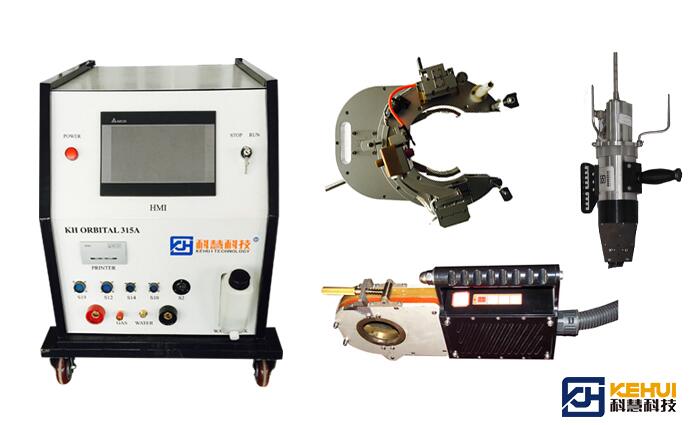
Pipe diameter isn't just a number. It determines everything about the welding process:
Heat management. Small pipes heat up fast. Large pipes sink heat away from the weld zone.
Fit-up tolerance. Small pipes need precision alignment. Large pipes have more ovality and gap variation.
Access. Small pipes fit inside closed heads. Large pipes require open heads that clamp from the outside.
Travel distance. The welding head must travel further around large diameters, which affects gas coverage and heat buildup.
In the industry, pipe diameters are generally classified as follows:
| Classification | Diameter Range |
|---|---|
| Small-diameter | Up to 114 mm (4.5") |
| Medium-diameter | 114 mm to 480 mm (4.5" to 19") |
| Large-diameter | 480 mm and above (19"+) |
But in orbital welding practice, the equipment categories don't always follow these exact boundaries. Here's how we classify them for welding purposes.
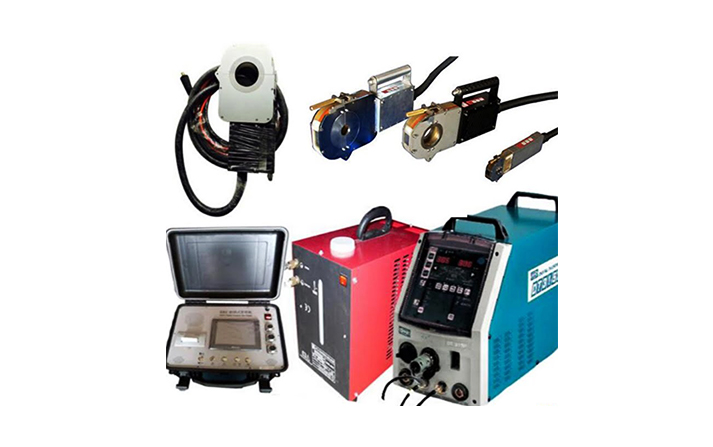
Small-diameter pipes — typically under 180mm — are the domain of the closed-head automatic pipe welding machine.
A closed-head machine seals the weld zone inside a gas-tight chamber. The torch rotates inside the chamber, and inert gas floods the space before and during welding. The result: perfect gas coverage, zero oxidation, and contamination-free welds.
Why closed head for small pipes:
Thin walls. Small pipes often have thin walls (schedule 10 and below). Oxidation control is critical.
High purity. Small-diameter tubing is common in semiconductor, pharmaceutical, and food processing — applications where any discoloration means rejection.
Tight spaces. Closed heads are compact and fit where open heads can't reach.
Typical applications:
TIG welding 1-inch stainless pipe — pharmaceutical water-for-injection lines
TIG welding 2-inch stainless pipe — sanitary tubing in food processing
TIG welding 3-inch stainless pipe — chemical process piping
6 inch pipe welding — industrial process lines in moderate-purity applications
Our KHGC closed-head automatic pipe welding machine covers tube diameters from 3mm to 180mm. It's built for high-purity pipe to pipe joint applications where weld quality can't be compromised.
When to use closed head:
Tube diameters under 180mm
Thin-wall stainless steel or titanium
High-purity or sanitary applications
Autogenous welding (no filler wire)
Applications requiring documented weld data
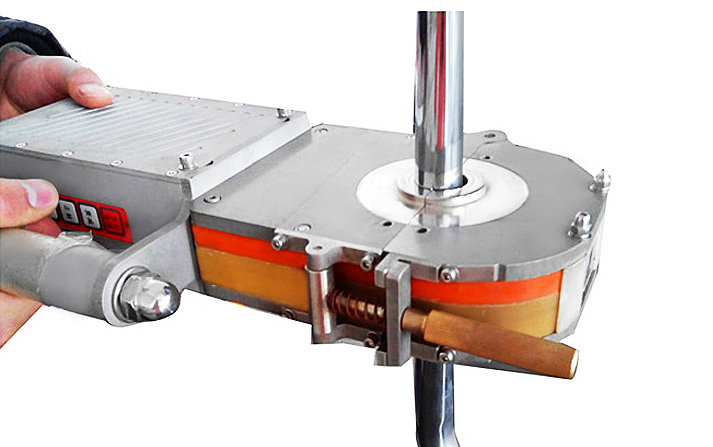
As pipe diameters grow beyond 180mm, closed heads become impractical. The sealed chamber would need to be enormous, and setup time would kill productivity.
This is where the open-head automatic pipe welding machine takes over.
An open-head machine clamps around the outside of the pipe. The torch travels along a track that wraps the circumference. The weld zone is exposed to air — which is fine for carbon steel and heavy-wall stainless.
Why open head for medium to large pipes:
Wire feeding. Open heads can add filler wire, which is essential for multi-pass welding on thick-wall pipe.
Wider diameter range. One head can cover a broad range of sizes with different collets.
Faster setup. No chamber to seal. No purge to wait for. Clamp and go.
Field-friendly. Open heads work outdoors, on construction sites, and in shipyards.
Typical applications:
Pipeline construction (oil, gas, water)
Process piping in petrochemical plants
6 inch pipe welding on schedule 40 and above
Pipe-to-elbow and pipe-to-flange joints
Our KHGK open-head automatic pipe welding machine handles pipe diameters from 16mm to 300mm. It supports wire feeding for multi-pass welding on carbon steel, stainless steel, and alloy steel. The pipe to pipe joint quality is consistent and repeatable, even on thick-wall applications.
When to use open head:
Pipe diameters from 16mm to 300mm
Thick-wall pipe (schedule 40 and above)
Carbon steel, alloy steel, or stainless steel
Applications requiring filler wire (multi-pass welding)
Field work or outdoor environments
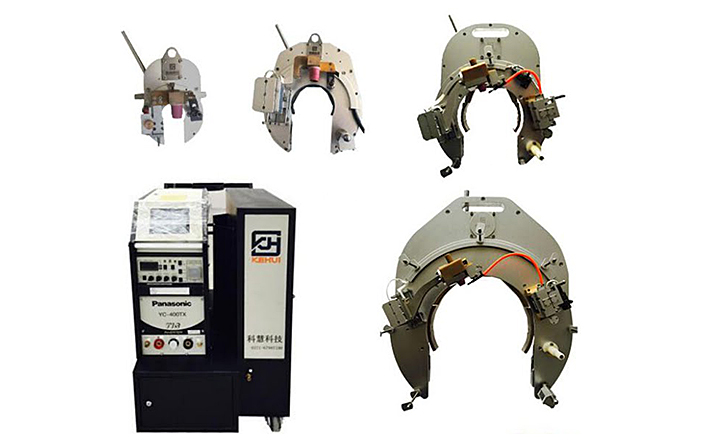
Once pipe diameters exceed 300mm — or when you're welding storage tanks with unlimited diameters — neither closed nor open heads work well.
Open heads get heavy and awkward. Closed heads are impossible. You need a different approach entirely: the welding carriage.
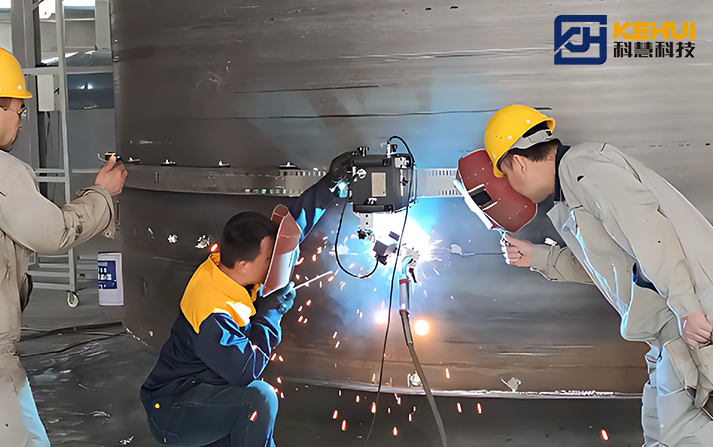
A welding carriage rides on a track that wraps around the pipe or tank. The carriage carries the welding torch and travels along the track, depositing a consistent weld bead.
Types of welding carriages:
Magnetic welding carriage. Uses magnetic wheels to adhere to ferromagnetic surfaces. Ideal for large-diameter carbon steel tanks where you can't clamp a track.
Track-mounted welding carriage. Runs on a rigid or flexible track. The track is clamped or magnetically attached to the work surface.
Flexible track systems. For extra-large tanks, soft rails can be custom-fabricated to the exact circumference. This is where customization becomes essential.
Why welding carriages for large work:
Unlimited diameter. The track is as long as you need it. No diameter limit.
Portable. The carriage is lightweight and can be moved between jobs.
Versatile. Works on flat plate, curved plate, vertical seams, and circumferential seams.
Field-ready. Carriages operate on construction sites, in shipyards, and on storage tank projects.
Typical applications:
Storage tank construction (water, oil, chemical)
Large-diameter pipeline girth welds
Field-erected pressure vessels
Shipbuilding and offshore fabrication
Customization:
One of the biggest advantages of welding carriages is their flexibility. Soft rails can be cut to any length, allowing the carriage to follow the exact circumference of any tank, regardless of diameter. For large diameter pipe welding on unusually shaped vessels, this customizability is a game-changer.
When to use a welding carriage:
Pipe diameters exceeding 300mm
Storage tank welding (any diameter)
Field work where clamping a head is impractical
Applications requiring custom track lengths
| Pipe Diameter Range | Recommended Solution | Key Features | Best For |
|---|---|---|---|
| 3mm – 180mm | Closed Head (KHGC) | Sealed chamber, perfect gas coverage, no oxidation | Small-diameter stainless, high-purity, sanitary, pharmaceutical |
| 16mm – 300mm | Open Head (KHGK) | Wire feeding, fast setup, wide diameter range | Medium to large pipe, pipeline, petrochemical, field work |
| 300mm+ / Unlimited | Welding Carriage (Magnetic or Track) | Unlimited diameter, portable, custom track lengths | Storage tanks, large-diameter pipelines, field fabrication |
Cross-over range: For pipe diameters between 16mm and 180mm, either closed or open head can work. The choice depends on material and application — stainless and high-purity favors closed head; carbon steel and field work favors open head.
Here's a simple decision framework:
Step 1: Measure your pipe diameter range.
Under 180mm and mostly stainless → closed head
16mm to 300mm and mostly carbon steel → open head
Over 300mm → welding carriage
Step 2: Consider your materials.
Stainless, titanium, high-purity → closed head or open head with excellent gas coverage
Carbon steel, alloy steel → open head
Step 3: Consider your environment.
Shop work, cleanroom → closed head
Field work, outdoor → open head or welding carriage
Step 4: Consider your production volume.
High volume, same size pipes → dedicated machine
Mixed sizes, varied jobs → versatile machine or multiple heads
A single automatic pipe welding machine cannot do everything. The physics of welding a 1-inch tube are fundamentally different from welding a 36-inch pipe. Heat input, gas coverage, travel speed, and fit-up tolerance all change with diameter.
That's why we build multiple solutions:
KHGC closed head for small pipe welding from 3mm to 180mm
KHGK open head for medium to large pipe from 16mm to 300mm
Magnetic and track welding carriages for large diameter pipe welding on tanks and vessels
If you weld across the full range, you may need more than one solution. But the right solution for each diameter range will pay for itself in reduced rework, faster cycles, and consistent quality.
Answer: It depends on the machine. Closed-head machines typically handle 3mm to 180mm. Open-head machines handle 16mm to 300mm. Welding carriages handle unlimited diameters with custom track lengths. No single machine covers all diameters.
Answer: No. Different diameters require different welding approaches. Small pipes need closed heads for gas coverage. Medium to large pipes need open heads for wire feeding. Very large pipes and tanks need welding carriages. Choose based on your diameter range.
Answer: Use closed head for small-diameter pipes (under 180mm) with thin walls, stainless steel, or high-purity requirements. Common applications include pharmaceutical, semiconductor, and food processing where oxidation cannot be tolerated.
Answer: Use open head for medium to large pipes (16mm to 300mm) with thick walls, carbon steel, or field work. Open heads support wire feeding for multi-pass welding and set up faster than closed heads.
Answer: Welding carriages are the best solution for large tanks. They ride on magnetic or flexible tracks that wrap around the tank. The track length can be customized to the exact circumference, making them suitable for any tank diameter.
Answer: Yes. Welding carriages can use soft rails (flexible tracks) that are cut to custom lengths. This allows the carriage to follow the exact circumference of any tank, regardless of diameter. For extra-large tanks, this customization is essential.
Zhengzhou Kehui Technology Co., Ltd
Email: info@zzkehui.com





 Chinese
 English
 OA
OA Current location:
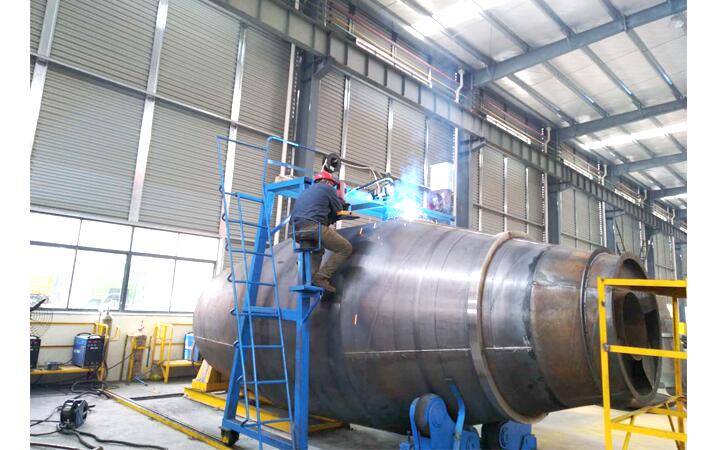 Concrete Mixer Drum Robotic Welding Solutions
 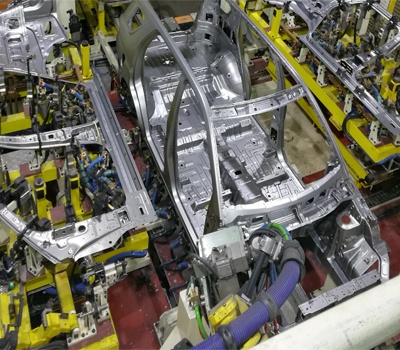 Automobile Body Production Line Welding Fixtures
 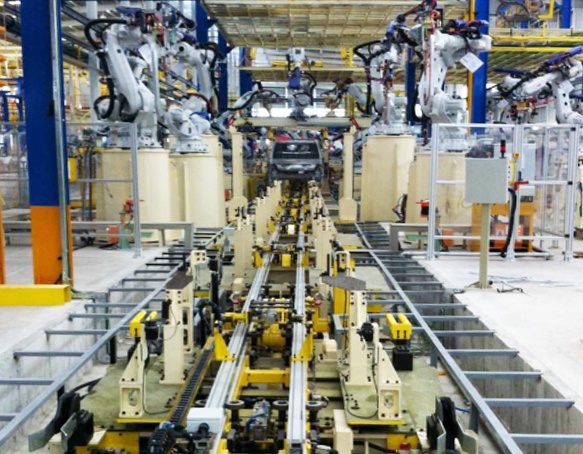 Automotive Body Welding Automated Manufacturing Solutions
 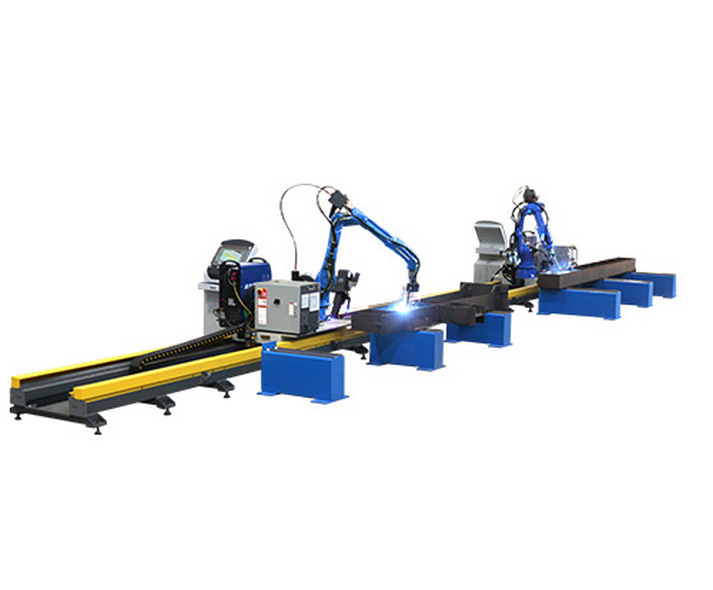 Free-Teaching Programming Welding Robot Cell For I Beam Welding
 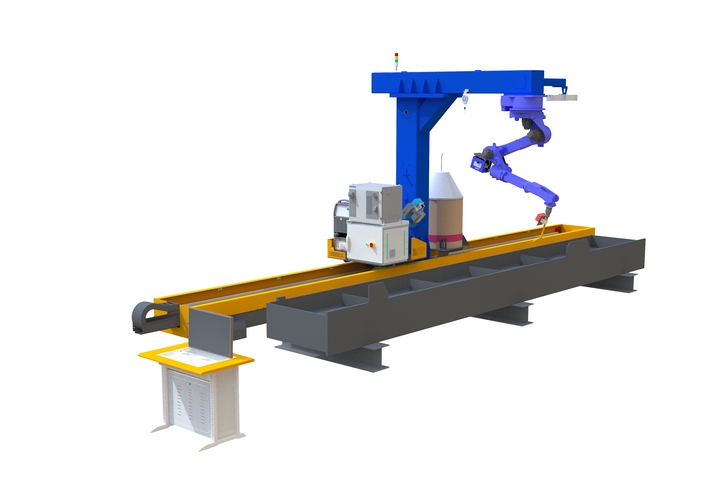 No Programming Required Robotic Welding Systems for H beam Welding Line