+86 15633683072
Walk into any heat exchanger manufacturing shop and you'll see the bottleneck. It's not the shell rolling or tube bending—it's the tube-to-tubesheet joint. Thousands of tubes, each needing a perfect weld.
We've been building tube to tubesheet welding equipment since 1994. We've helped boiler manufacturing and pressure vessel manufacturing shops transform their production, and we've seen what happens when the wrong machine is chosen.
Here's how to pick the right heat exchanger welding machine for your floor.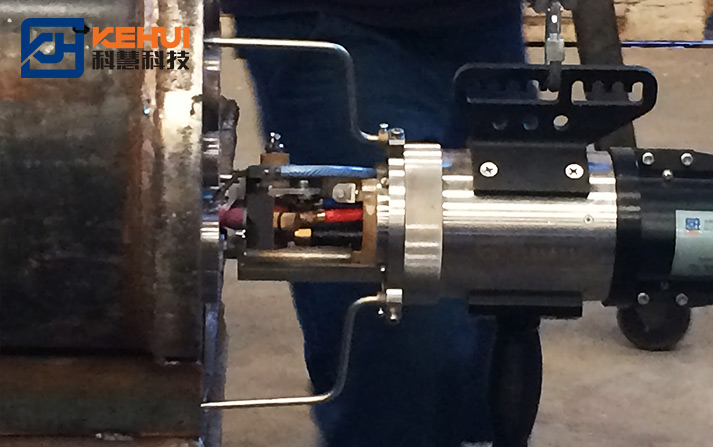
Don't start with a brochure. Start with your actual tubes.
Tube diameter range – A tube to tubesheet welding machine that handles 25mm tubes won't help if your next job is 12mm or 80mm. You need a machine that covers your real range.
Wall thickness – Thin-wall stainless (under 2mm) behaves completely differently from thick-wall carbon steel. The tubesheet welding process parameters for one will ruin the other.
Materials – Carbon steel, stainless steel, titanium, nickel alloys – each demands different heat input and gas coverage. Stainless steel tube welding needs tight heat control to avoid oxidation; titanium needs full shielding.
Production volume – Are you welding 50 tubes a day or 500? The best tube to tubesheet welding machine for heat exchangers for low volume is not the same as for high volume.
We once had a customer who bought a premium tube to tubesheet welding machine designed for 50mm tubes – but they welded mostly 20mm. They fought the machine for six months. The tube to tubesheet welding equipment wasn't bad – it was just wrong for their work.
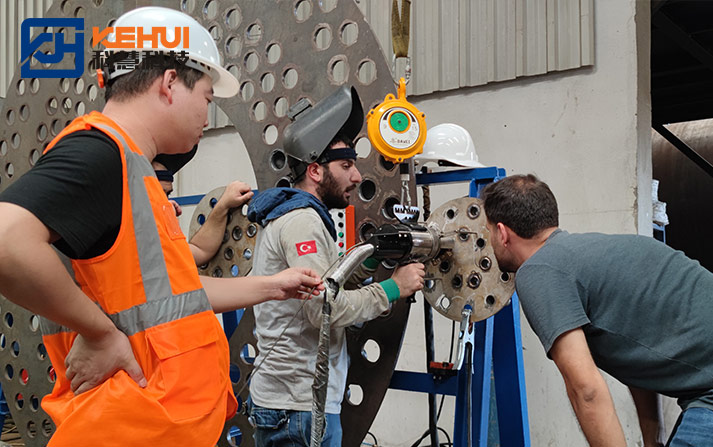
A welding head clamps onto the tube, but the operator still controls parameters. Better than pure hand welding, but consistency depends on skill.
When it works: Low volume, varied sizes, shops with experienced welders.
When it doesn't: High volume, multiple shifts, high turnover – consistency drifts.
The machine handles everything: positioning, arc start, travel, wire feed, data logging. A modern machine like the KHB12-80 uses servo drive (accuracy ±0.02mm) and stores parameters for different tubes.
When it works: High volume, production environments, shops that need repeatable welding and documented quality.
When it doesn't: One‑off custom jobs with constantly changing sizes – setup time eats the gains.
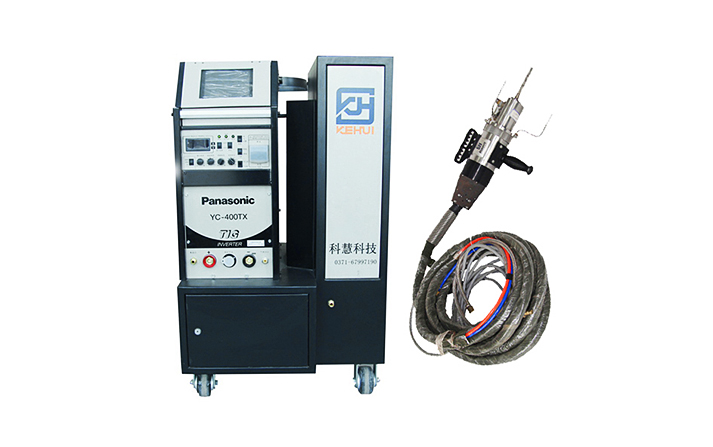
Your tube to tubesheet welding equipment must cover your diameters. Most cover a range (e.g., 12‑80mm). Some go smaller or larger. Match the machine to your actual work, not the widest range.
Pro tip: If you weld multiple ranges, look for a machine with interchangeable heads or collets – cheaper than buying multiple machines.
Your heat exchanger welding machine must handle your materials.
Stainless steel tube welding – Needs precise heat and gas coverage to prevent oxidation.
Carbon steel – More forgiving, but needs different parameters.
Titanium/nickel alloys – Most demanding; need closed‑chamber shielding.
A reputable tube to tubesheet welding machine factory will ask about your materials before recommending a machine. If they don't, that's a red flag.
Basic – Handles arc and travel; manual positioning.
Mid‑range – Adds automatic wire feed and parameter storage.
High‑end – Adds servo positioning, visual centering, full data logging.
The right level depends on your volume. A shop welding 100 tubes/day doesn't need the same automation as one welding 1,000/day.
Real talk: We've seen shops buy fully automated tube to tubesheet welding equipment and never use half the features. And we've seen shops buy basic and outgrow it in six months. Know your volume and growth trajectory.
This doesn't show up on the spec sheet, but it matters most. A tube to tubesheet welding machine is only as good as the operator. If your supplier doesn't provide proper training, you'll spend months figuring it out, and your first 500 welds will be a mess.
We learned this the hard way – shipped a machine with a manual, customer never got it running, never bought from us again. Now every tube to tubesheet welding machine we sell includes on‑site training at the customer's facility.
When evaluating tube to tubesheet welding equipment, ask: “Who trains my operators? What happens at 2 AM?” The answers tell you a lot about the tube to tubesheet welding machine factory you're dealing with.
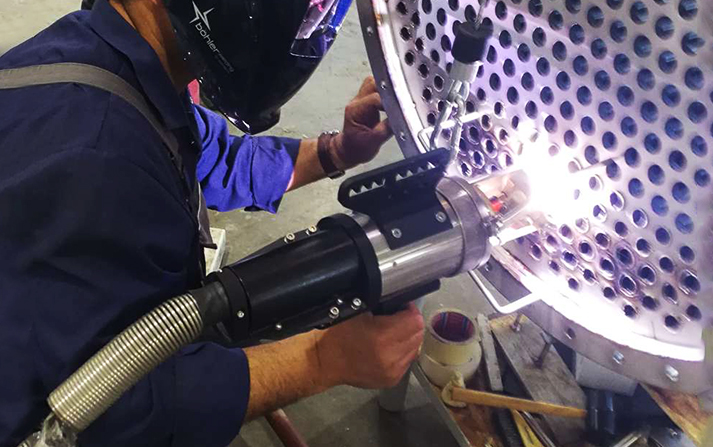
The gap between Chinese and Western brands has narrowed significantly. A reputable China tube to tubesheet welding machine manufacturer offers:
Technology comparable to international standards – servo drives, dual‑pulse power, visual centering.
30‑50% lower pricing – without compromising quality.
Faster delivery and customization.
Global experience – many now export to 50+ countries.
The key is choosing the right tube to tubesheet welding machine factory. Look for:
Track record – at least 15‑20 years.
Customer references – especially in your industry and region.
On‑site training – will they send an engineer to your facility?
Spare parts availability – can you get parts quickly?
Kehui, for example, has been manufacturing tube to tubesheet welding equipment since 1994 – 32+ years of experience. The KHB12‑80 handles 12‑80mm tubes for flat end and outer fillet welding. Exported to 50+ countries, with on‑site training worldwide.
The rework math is brutal. A 5% rework rate on 2,000 tubes means 100 tubes to cut out and redo. Each costs labor, materials, and schedule time. A good tube to tubesheet welding machine can cut rework to under 1%.
Speed matters, but consistency matters more. A fast machine with inconsistent welds creates rework. The best tube to tubesheet welding machine for heat exchangers produces the same quality on tube #1 and tube #1,000.
Operators are the bottleneck. Skilled welders are hard to find. A tube to tubesheet welding machine reduces dependence on them – one operator can monitor multiple machines.
Data is becoming mandatory. Customers demand weld traceability. Modern tube to tubesheet welding equipment logs every parameter – gold during audits.
Choosing the right tube to tubesheet welding equipment is half the battle – the other half is choosing the right manufacturer.
Experience – 15‑20+ years means they've solved more problems.
References – ask for customers running their machine for 2+ years. Call them.
Training & support – will they send an engineer? How fast are spare parts? Who answers at 2 AM?
Factory visit – see their quality control, talk to engineers.
Customization – can they adapt to your specific needs?
Total cost of ownership – factor in training, support, spare parts, rework reduction.
Question 1: What is a tube to tubesheet welding machine?
It's automated orbital TIG welding equipment that joins tubes to tubesheets in heat exchangers and boilers, ensuring leak‑tight seals with consistent, repeatable results.
Question 2: How do I choose the right tube to tubesheet welding machine?
Match it to your tube diameter range, wall thickness, materials, and production volume. Also consider automation level, training, and total cost of ownership.
Question 3: What materials can be welded?
Carbon steel, stainless steel, titanium, and nickel alloys. Stainless needs precise heat/gas control; titanium requires closed‑chamber shielding.
Question 4: What industries use tube to tubesheet welding machines?
Heat exchanger, boiler, and pressure vessel manufacturing, plus power generation, petrochemical, pharmaceutical, and food processing.
Question 5: Should I choose a manual or automatic tube to tubesheet welding equipment?
Automatic for high volume, consistency, and documented quality; manual suits low‑volume, varied jobs with skilled welders.
Question 6: How do I choose a tube to tubesheet welding machine manufacturer?
Look for 15+ years' experience, global references, on‑site training, spare parts availability, and transparent total‑cost‑of‑ownership pricing.
Zhengzhou Kehui Technology Co., Ltd
Email: info@zzkehui.com





 Chinese
 English
 OA
OA Current location:
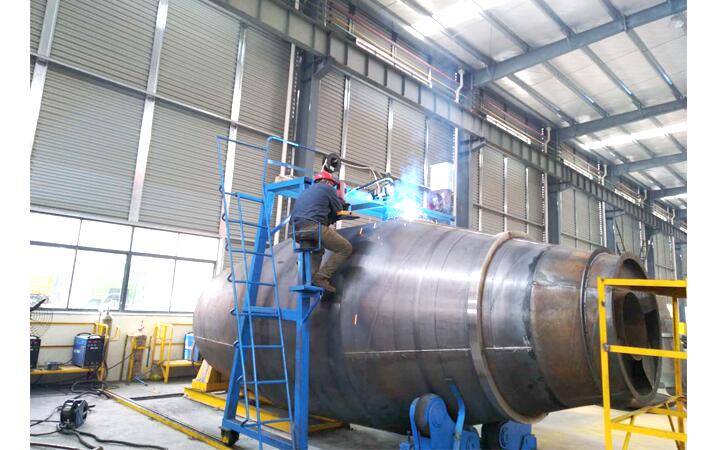 Concrete Mixer Drum Robotic Welding Solutions
 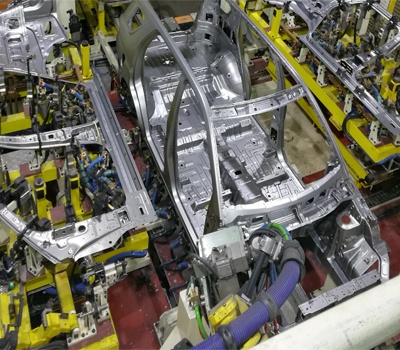 Automobile Body Production Line Welding Fixtures
 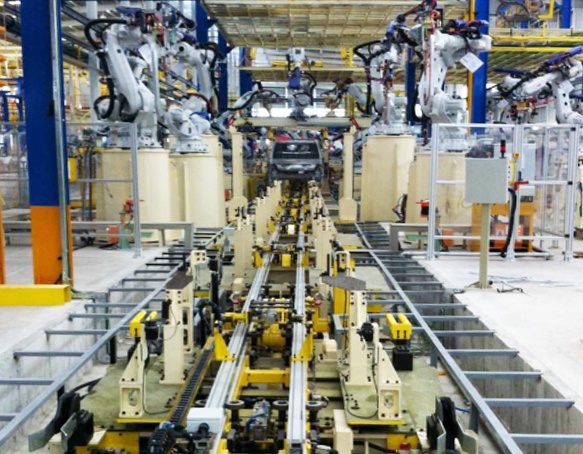 Automotive Body Welding Automated Manufacturing Solutions
 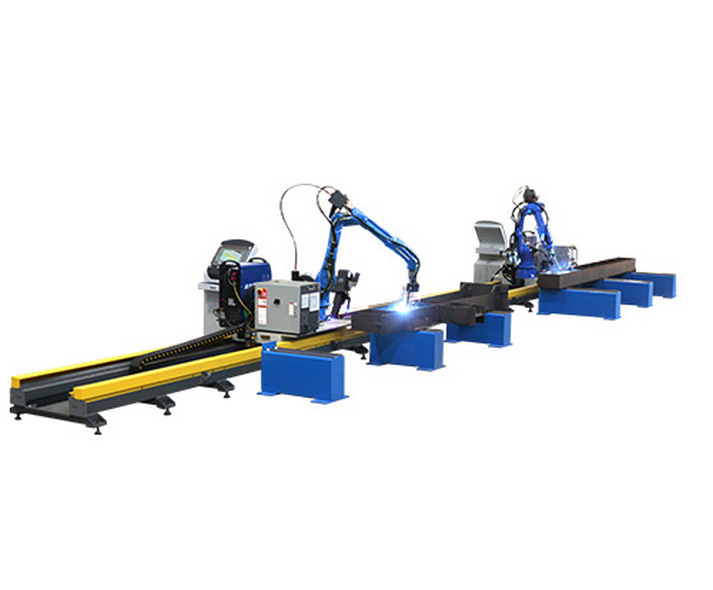 Free-Teaching Programming Welding Robot Cell For I Beam Welding
  No Programming Required Robotic Welding Systems for H beam Welding Line