+86 15633683072
Walk into a welding shop in Rotterdam, then fly to a fabrication yard near Dammam. The welders speak different languages. The safety signs look different. But the core problem is the same: not enough skilled people, too many parts to weld.
However, the path to welding automation solutions is not the same in these two regions. What works in Germany may fail in the Kingdom. What solves a problem in Saudi Arabia may be overkill in France. After deploying robotic welding integration projects across both regions, we have learned the hard way where the real differences lie.
This article compares the welding automation landscape in Saudi Arabia and Europe. We look at market drivers, technical challenges, regulatory environments, and workforce realities. If you are searching for industrial robotic solutions or evaluating welding automation companies for cross‑regional projects, this guide is for you.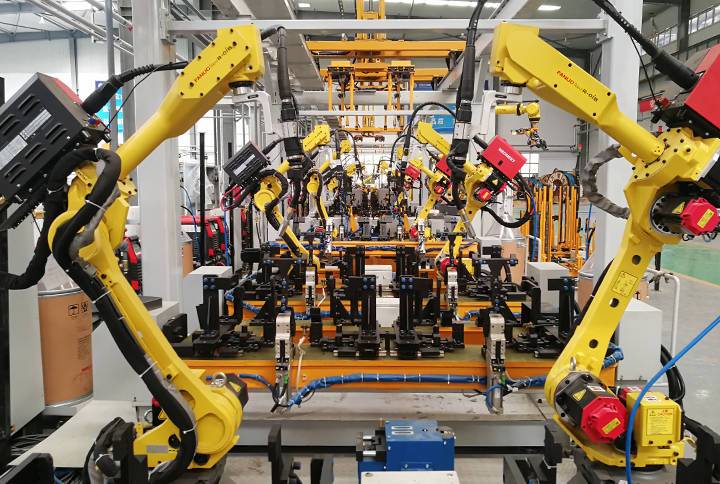
The numbers tell the first part of the story.
The welding market in Saudi Arabia, UAE, and Qatar was valued at USD 470.1 million in 2024 and is projected to reach USD 673.5 million by 2030, growing at a CAGR of 6.30%. That is healthy growth, driven by giga‑projects like NEOM, Red Sea Global, and the Riyadh metro expansion. Vision 2030 is pouring billions into infrastructure, manufacturing, and energy.
Europe is a different scale entirely. The European welding equipment market stood at USD 12.22 billion in 2025 and is forecast to reach USD 15.69 billion by 2030, advancing at a 5.13% CAGR. Europe represented 23.01% of the global welding equipment market, while Middle East & Africa contributed just 5.33%. European growth is driven not by new mega‑projects but by replacement cycles, automation upgrades, and the need to offset an aging workforce.
For welding automation companies operating in both regions, these different market dynamics require different strategies.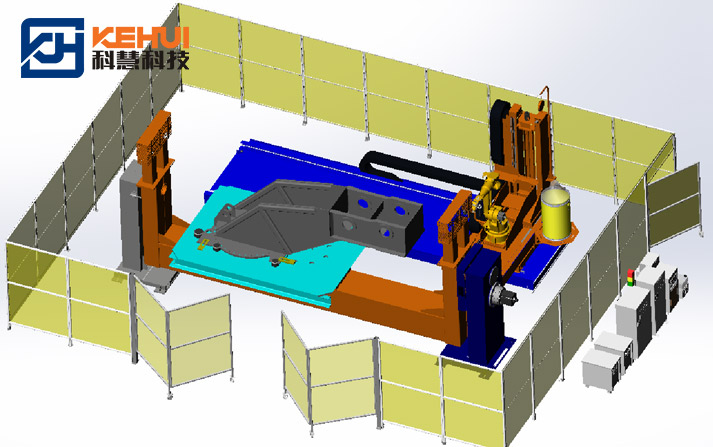
Both regions face a shortage of certified welders. But the reasons are different.
In Europe, the shortage is demographic. The EU has identified welders as a skills shortage occupation. Industry surveys warn that Europe alone may need 100,000 additional certified welders by 2028. The average welder is close to retirement, and younger workers prefer programming over grinding. This is why industrial robotic solutions are being adopted not for cost savings but for survival. Manufacturers across the continent install robotic welding integration cells to offset the welder gap and meet ISO 3834 quality demands.
In Saudi Arabia, the shortage is about localisation and the scale of demand. The country is building projects that require around 1.5 million tons of steel, and the construction pipeline creates unprecedented demand for welding capacity. Saudi manufacturers are increasingly adopting robotic and automated welding cells to address productivity targets, quality consistency, and long‑term workforce optimisation. At the same time, workforce skill gaps in advanced welding automation create operational constraints.
The difference matters for welding automation solutions. In Europe, welding automation companies must design cells that existing welders can learn quickly—intuitive interfaces, offline programming, and collaborative options. In Saudi Arabia, industrial robotic solutions must often work alongside a less experienced workforce, requiring more robust error prevention, remote support capabilities, and extensive on‑site training.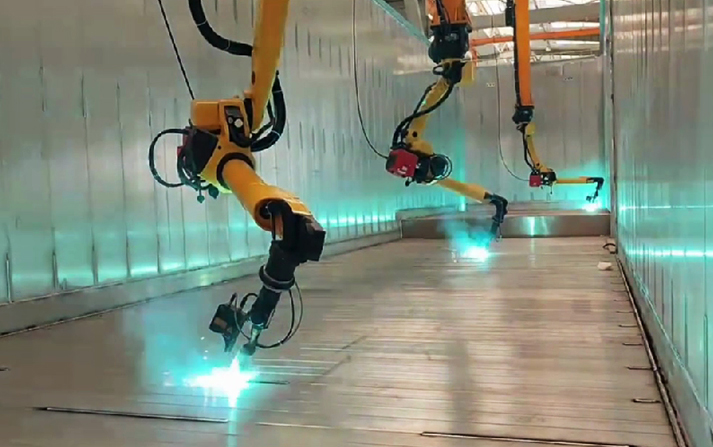
This is where the physical reality of each region creates completely different technical challenges.
Saudi Arabia’s extreme environmental conditions—scorching temperatures exceeding 50°C, high dust particulate levels, and saline atmospheric exposure—create demands that European integrators rarely consider. An automated robotic welding system that runs fine in a climate‑controlled German factory may overheat, ingest dust, or suffer connector corrosion in a Riyadh fabrication yard.
A 2023 Saudi Engineering Journal review identified that 78% of welding equipment failures in the region were linked to environmental factors. For welding automation companies serving the Kingdom, this means specifying industrial‑grade cooling, sealed electronics, and dust‑resistant components. It means designing cells that can operate in semi‑outdoor environments where air conditioning is not always available.
Europe faces the opposite challenge: brownfield integration. Many European factories are old, with limited floor space, outdated electrical infrastructure, and legacy equipment that must be integrated with new automation. The main barriers to using collaborative robots in welding at European SMEs include the lack of general robot knowledge and integration complexity with existing production lines.
Robotic welding integration in Europe often means retrofitting into spaces never designed for robots—low ceilings, narrow aisles, and power supplies that struggle with modern welding equipment. This requires compact cell designs, modular components, and creative fixture solutions that welding automation solutions providers in greenfield Saudi projects rarely need.
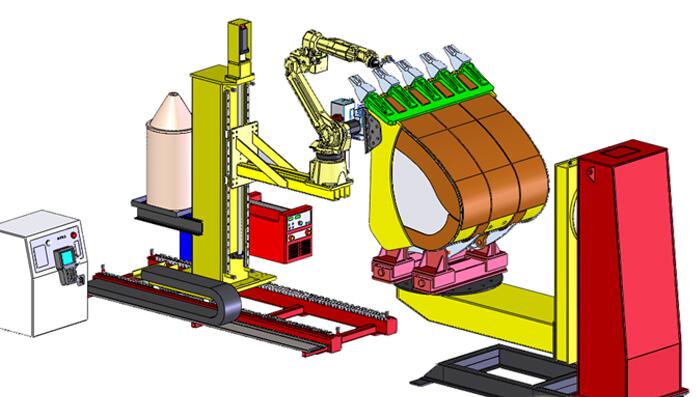
The regulatory environment could not be more different.
Europe has mature, complex, and constantly evolving standards. In 2025 alone, new harmonised standards under the Machinery Directive took effect, including EN 17942:2024 with safety requirements for welding equipment. EN ISO 14732:2025 specifies requirements for qualification of welding operators and weld setters for mechanized and automatic welding of metallic materials. CE marking is mandatory, and compliance requires navigating ISO 10218, ISO 13849, and European machinery safety directives.
For welding automation companies selling into Europe, CE certification is non‑negotiable. This means documented risk assessments, safety circuit validation, and compliance with EN ISO 3834 quality requirements for welding. The standard sets forth quality assurance guidelines for fusion welding of metallic materials, covering welder qualification, welding coordination personnel, and documentation.
Saudi Arabia is moving in the same direction, but the enforcement and maturity differ. The Kingdom is rapidly adopting international standards, but the compliance burden is lower for local projects. However, for industrial robotic solutions destined for Saudi Aramco or other major players, international certifications are increasingly required. The trend is clear: Saudi is accelerating toward European‑level standards as part of Vision 2030’s industrial development goals.
The practical implication? Welding automation companies serving both regions must maintain CE certification and ISO 3834 compliance while understanding where Saudi requirements are still evolving.
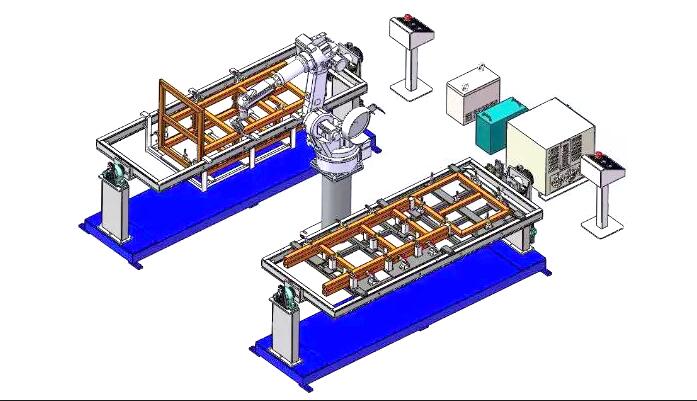
Saudi Arabia is defined by mega‑projects. NEOM alone is driving massive automation investments. The partnership between NEOM and Samsung C&T will establish rebar cage assembly factories, automating assembly with robotic welding and clamping techniques, reducing labour by 80% and costs by 40%. This is the scale of industrial robotic solutions in the Kingdom: high‑volume, high‑throughput, greenfield installations designed from the ground up for automation.
In the oil and gas sector, large‑diameter pipeline projects require automatic welding processes adapted to different working conditions. The integrated systems significantly enhance standardisation and construction efficiency.
Europe’s application mix is more fragmented. Automotive remains dominant—the UK robotic welding market is expanding due to increasing automation adoption in manufacturing, though high initial investment costs remain a barrier. Heavy equipment, shipbuilding, and wind energy are growing segments. Fincantieri, the Italian shipbuilder, is testing humanoid welding robots for naval manufacturing, equipped with AI, advanced manipulation, and vision systems to monitor welding seams.
The difference shapes welding automation solutions. In Saudi, welding automation companies build large‑scale, high‑throughput cells for projects measured in millions of tons of steel. In Europe, the same companies must also deliver flexible, compact solutions for SMEs running mixed‑model production.
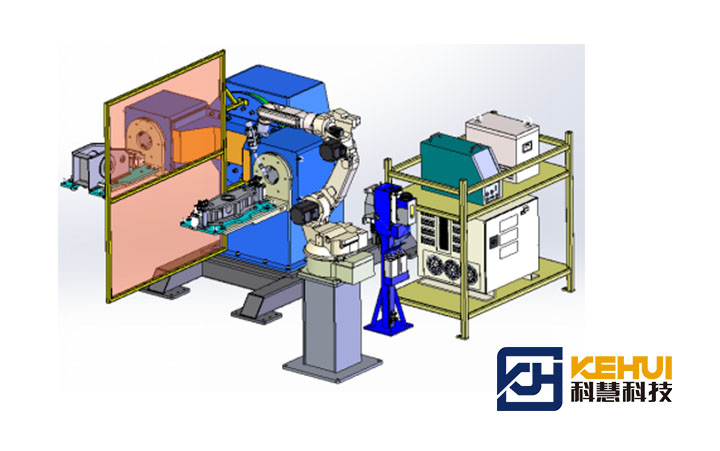
After deploying robotic welding integration projects in Ireland, the UK, France, Bulgaria, Saudi Arabia, Indonesia, and the Philippines, we have observed consistent differences in customer priorities.
European customers ask first about CE certification, ISO standards, and safety documentation. They want offline programming capabilities because their skilled welders are expensive and cannot spend days teaching points. They worry about floor space constraints and integration with legacy systems. They ask about training—how quickly can our existing team take over?
Saudi customers ask about throughput first. How many parts per shift? How many shifts can the cell run? They worry about extreme temperatures, dust, and power stability. They ask about remote support and spare parts availability because they are often far from major service centres. They want on‑site commissioning and intensive training for their local technicians.
A qualified provider of industrial robotic solutions must answer both sets of questions.
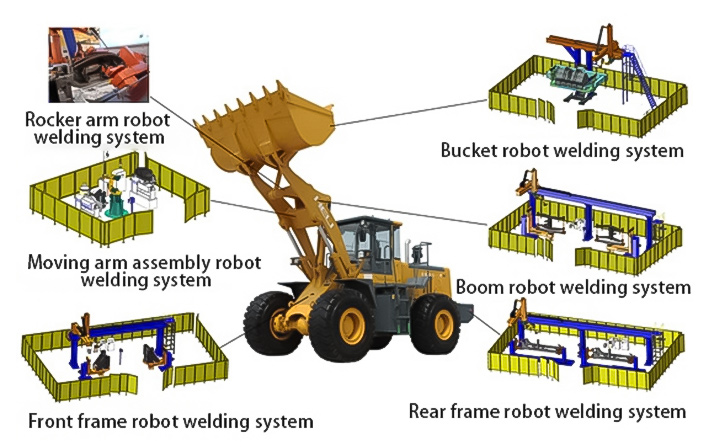
We have been delivering welding automation solutions since 1994. That is three decades of designing, integrating, and commissioning robotic welding integration cells for manufacturers across the globe. Our welding automation companies team has completed projects in over fifty countries, including Ireland, Indonesia, the Philippines, the UK, France, Bulgaria, and Saudi Arabia.
Our approach is consistent regardless of region: we start with your parts, your materials, and your production targets. We do not sell generic cells. We engineer welding automation solutions that fit your specific challenges—whether that is 50°C desert heat or a cramped 100‑year‑old factory in Lyon.
We do not manufacture robots. We integrate them. We select the right robotic platform from brands like ABB, FANUC, Yaskawa, or KUKA based on your application, not on a distributor’s inventory. Then we build the complete industrial robotic solutions cell: positioners, seam tracking, safety systems, and data logging.
Our engineers travel to your site for installation, commissioning, and training. We hold CE certification and maintain ISO 3834 documentation. Our pricing is competitive. Our lead times are short because we maintain inventory and know our supply chain.
When you partner with us, you are not buying a robot brand. You are buying three decades of robotic welding integration experience across the world’s most demanding welding environments.
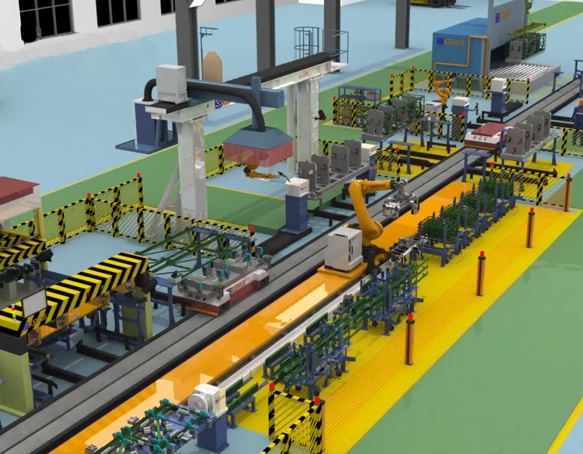
Saudi Arabia and Europe both need welding automation. The drivers are different—mega‑projects and Vision 2030 on one side, labour shortages and replacement cycles on the other. The challenges differ—extreme environment adaptation versus brownfield integration. But the solution is the same: experienced welding automation companies delivering proven welding automation solutions with global support.
We have worked in both regions. We understand both sets of challenges. And we are ready to help you automate—wherever your factory is located.
Send us your part drawings and production volumes. We will design industrial robotic solutions that work on your floor, in your climate, under your standards.
Zhengzhou Kehui Technology Co., Ltd
Email: info@zzkehui.com





 Chinese
 English
 OA
OA Current location:
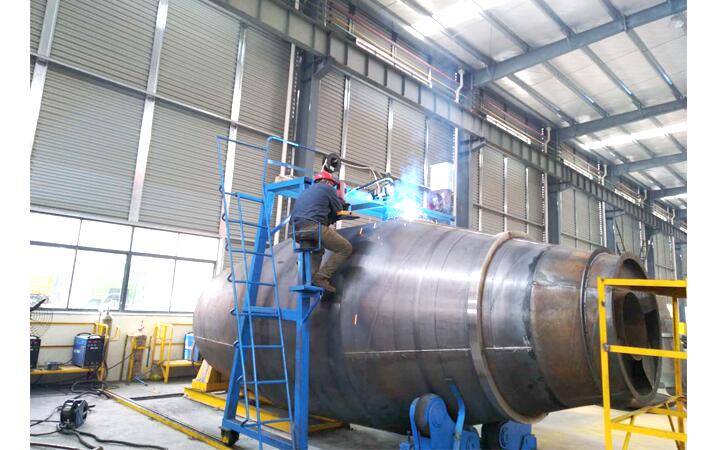 Concrete Mixer Drum Robotic Welding Solutions
 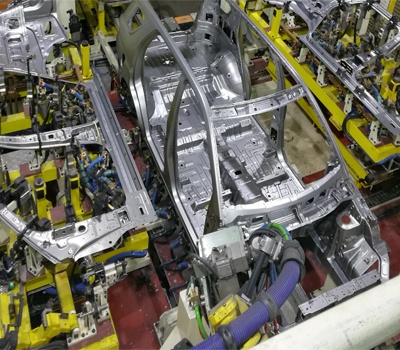 Automobile Body Production Line Welding Fixtures
 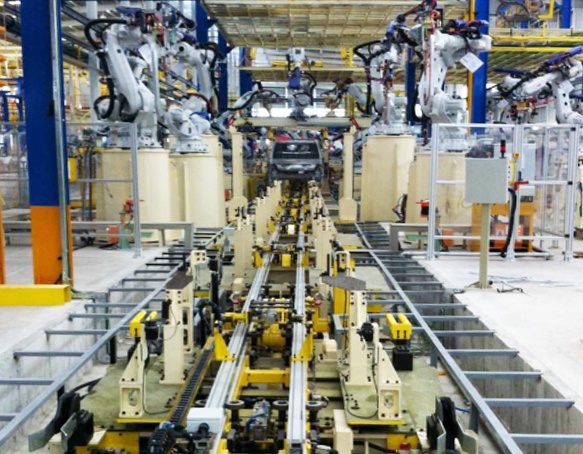 Automotive Body Welding Automated Manufacturing Solutions
 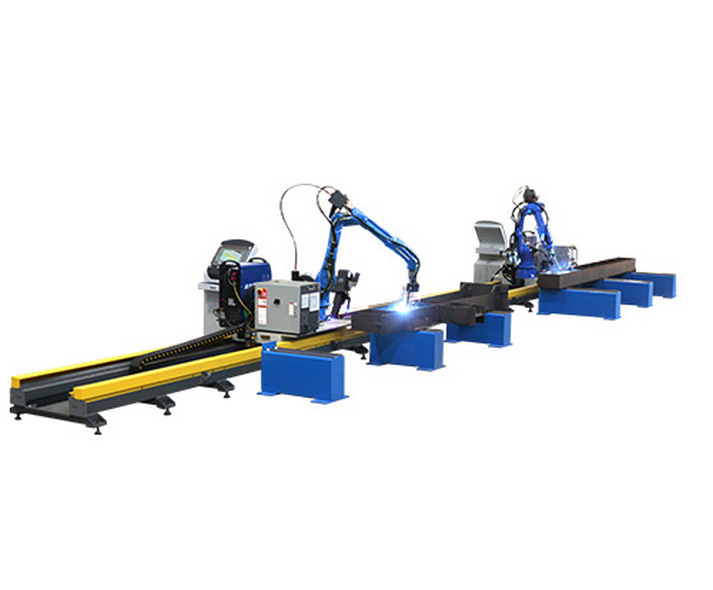 Free-Teaching Programming Welding Robot Cell For I Beam Welding
 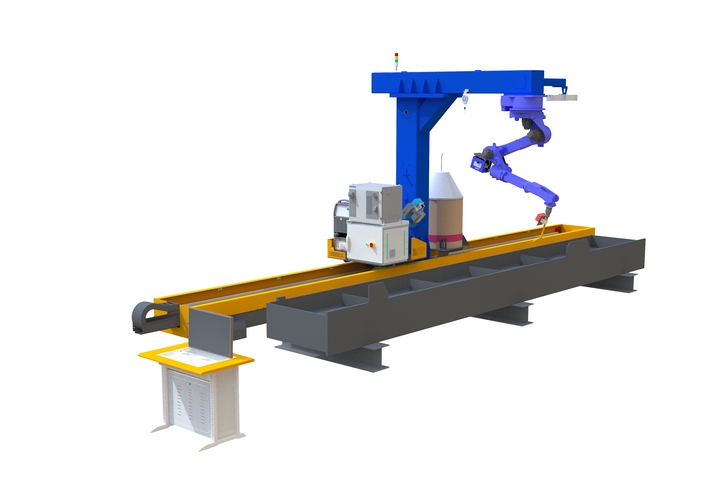 No Programming Required Robotic Welding Systems for H beam Welding Line