+86 15633683072
Stand on any pipeline right-of-way and watch a manual welder crawl through a ditch to weld a 36-inch pipe to pipe joint, and you'll understand why the industry is desperate for a better way.
Oil and gas pipeline construction is brutal on welders. The pipe doesn't rotate—you weld around it. Wind blows your shielding gas away. Fit‑up is never perfect. One bad weld means cutting it out and starting over.
The reliability of oil and gas transportation depends on weld quality. That's why the industry is shifting toward automation. But the question isn't whether to automate—it's how.
Here's what we've learned about pipe to pipe welding in oil and gas pipeline construction after decades of building equipment for this industry—from the shop floor, not the boardroom.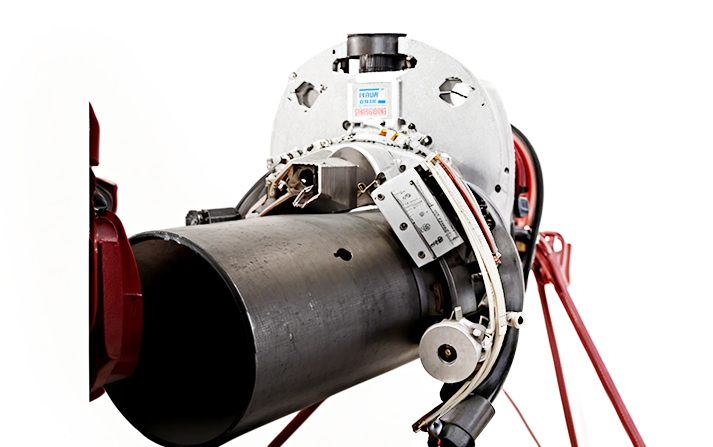
Pipeline diameters are getting larger. Wall thicknesses are increasing. Steel grades are climbing. The demands on every pipe to pipe joint have never been greater.
A pipeline carrying natural gas at 1,500 psi doesn't care about your procedure—it cares about results. If a pipe to pipe joint fails, the consequences range from expensive repairs to catastrophic damage. That's why the pipe welding joint types used in oil and gas pipeline construction are subject to the strictest standards in the industry.
Manual and semi‑automatic welding methods fall short due to poor quality, low efficiency, and high labor intensity. The welder shortage is real. And the physical demands of large diameter pipe welding—crawling inside pipes, working overhead, welding in extreme temperatures—are driving experienced welders out of the trade.
A modern automatic pipeline welding machine changes everything. It can weld around a stationary pipe with consistent parameters, no fatigue, and near‑zero rework.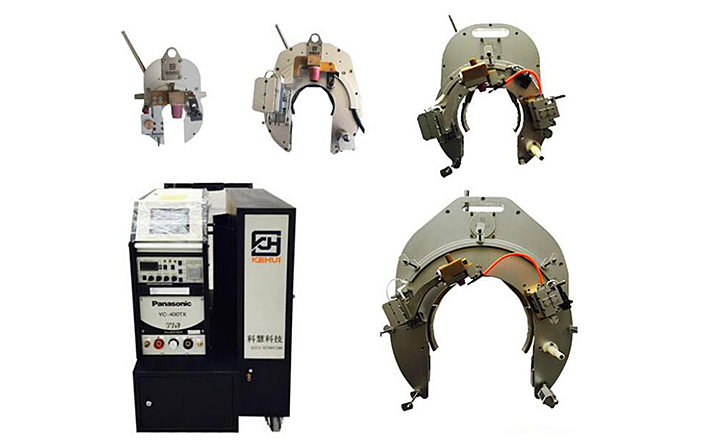
For decades, pipe to pipe welding in oil and gas pipeline construction relied on skilled welders using SMAW or semi‑automatic GMAW. These methods work, but they have fundamental limitations:
Consistency depends on the operator. Skill varies with fatigue, experience, and conditions.
Speed is limited. Manual welding is slow. On a 100‑mile pipeline, that adds weeks.
Quality is variable. Manual pipe to pipe joint welding typically has rejection rates of 5‑10%.
Labor is scarce. Finding qualified welders for large diameter pipe welding is increasingly difficult.
A modern automatic pipeline welding machine uses orbital technology—a torch rotates mechanically around a stationary pipe. The pipe welding joint types that can be welded automatically include butt joints, fillet welds, and branch connections.
What makes automatic welding different:
Consistency. Fixed arc length, travel speed, and gas coverage on every pipe to pipe joint.
Speed. One automatic pipeline welding machine does the work of multiple manual welders.
Quality. Fewer defects, less rework, consistent pipe to pipe joint quality.
Data. Every weld parameter is recorded for traceability.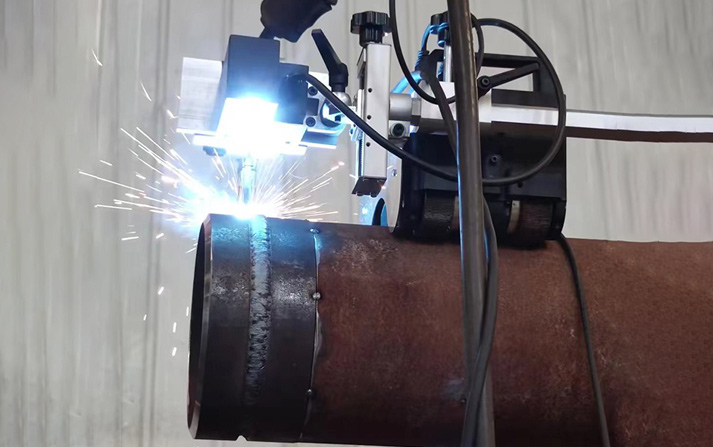
Pipeline welding challenges in oil and gas pipeline construction are unique. You're in a trench, a desert, or a swamp—not a climate‑controlled shop.
The problem: In the field, the pipe is in the ground. The automatic pipeline welding machine must travel around the pipe.
The solution: Orbital welding systems use a head that rotates around the stationary pipe. No pipe rotation required.
The problem: Field‑beveled pipe ends rarely match. The gap varies. Alignment shifts.
The solution: Advanced automatic pipeline welding machine systems use arc‑based seam tracking to follow the joint, achieving tracking accuracy of 0.35 mm. The machine adapts to what the pipe is actually doing.
The problem: Wind, rain, humidity, and temperature extremes affect weld quality.
The solution: Automatic pipeline welding machine systems use closed heads or wind shielding. Parameters are stored and repeatable—no guessing.
The problem: Thick‑wall pipelines require multiple passes. Poor heat control causes defects.
The solution: An automatic pipeline welding machine controls heat input precisely on every pass and can pause to let the pipe cool.
The problem: The industry needs hundreds of thousands of new welders.
The solution: Pipeline welding automation reduces the skill required. The operator sets up and monitors—the automatic pipeline welding machine does the welding. One operator can monitor multiple machines.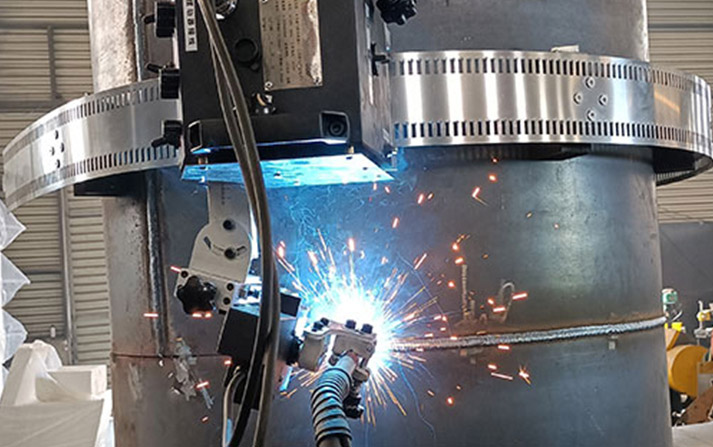
The pipe welding joint types used in oil and gas pipeline construction are governed by API Standard 1104, covering butt, fillet, and socket welds in carbon and low‑alloy steel piping.
| Joint Type | Description | Typical Application |
|---|---|---|
| Butt joint | Pipe ends aligned and welded together | Mainline pipeline welding |
| Fillet weld | Pipe to fitting or flange | Branch connections, fittings |
| Socket weld | One pipe inserted into another | Small‑bore piping (under 2") |
| Groove weld | Beveled pipe ends with full penetration | High‑pressure, critical service |
An automatic pipeline welding machine stores parameters for each joint type and can switch between them quickly.
API 1104 requires welded joints to meet specific quality standards. An automatic pipeline welding machine with data logging provides the documentation needed to prove compliance.
The numbers don't lie. Automatic pipeline welding machine technology is transforming oil and gas pipeline construction.
China's "Four Full‑Capacity" pipeline welding robotic system has achieved large‑scale application, supporting pipe diameters from 33 mm to 1,422 mm, operating on slopes up to 30 degrees across mountains, deserts, and swamps.
Key results:
Full diameter coverage: 33 mm to 1,422 mm
Complex terrain adaptability: Slopes up to 30 degrees
Full weld‑joint‑type compatibility: Straight pipe, bends, tie‑ins
Fully automated welding and AUT inspection
Another study on CRC automatic welding for large‑diameter subsea pipelines achieved a first‑pass qualification rate of 99.2% —15 times that of traditional SMAW.
Orbital welding has revolutionized pipeline construction and maintenance. It's now commonly used in pipeline construction, offshore drilling, natural gas processing, and refineries.
We've been building automatic pipeline welding machine systems since 1994, supplying oil and gas pipeline construction projects across five continents.
The biggest mistake: Assuming automation eliminates the need for skilled operators. It doesn't. The automatic pipeline welding machine changes the operator's role—from torch manipulator to process supervisor. The best operators know how to troubleshoot the machine and read signs of impending problems.
The second mistake: Treating the pipe to pipe joint as an afterthought. The automatic pipeline welding machine is only as good as the preparation. If the bevel isn't right, if the gap varies too much, if the pipe isn't clean—the machine will produce a bad weld.
What works: Consistent preparation, qualified procedures, regular maintenance, and operators who understand the automatic pipeline welding machine—not just how to start it, but how to read what it's telling them.
Answer: The main pipe welding joint types are butt joints (pipe ends aligned and welded together), fillet welds (pipe to fitting or flange), and socket welds (one pipe inserted into another). Butt joints are most common for mainline welding.
Answer: A pipe to pipe joint is where two sections of pipe are joined by welding. In oil and gas pipeline construction, these joints are made by electric‑arc welding. The quality of each pipe to pipe joint is critical to pipeline safety and integrity.
Answer: Automatic pipeline welding machine systems deliver consistent quality, higher speed, lower labor costs, and full traceability. With large diameter pipe welding and higher‑grade steels becoming the norm, manual methods can't keep up with quality and efficiency requirements.
Answer: Pipeline welding challenges include: the pipe doesn't rotate (all‑position welding), fit‑up variation, environmental conditions (wind, temperature, humidity), heat buildup in multi‑pass welding, and the shortage of skilled welders.
Answer: An automatic pipeline welding machine uses orbital technology—a head rotates around the stationary pipe. Systems like China's "Four Full‑Capacity" support diameters from 33 mm to 1,422 mm, using arc‑based seam tracking to adapt to fit‑up variation.
Answer: Manual pipe to pipe joint welding typically has rejection rates of 5‑10%. Automatic pipeline welding machine systems can achieve first‑pass qualification rates above 99%—sometimes 15 times higher than traditional methods.
Answer: Yes. Automatic pipeline welding machine systems are designed for oil and gas pipeline construction in remote locations. Systems like China's robotic system operate across mountains, deserts, and swamps, handling wind, temperature extremes, and limited workspace.
If you're looking for an automatic pipeline welding machine with field‑proven reliability and comprehensive training and support, read our guide [Why Choose KEHUI Orbital Welding Machine].
Zhengzhou Kehui Technology Co., Ltd
Email: info@zzkehui.com





 Chinese
 English
 OA
OA Current location:
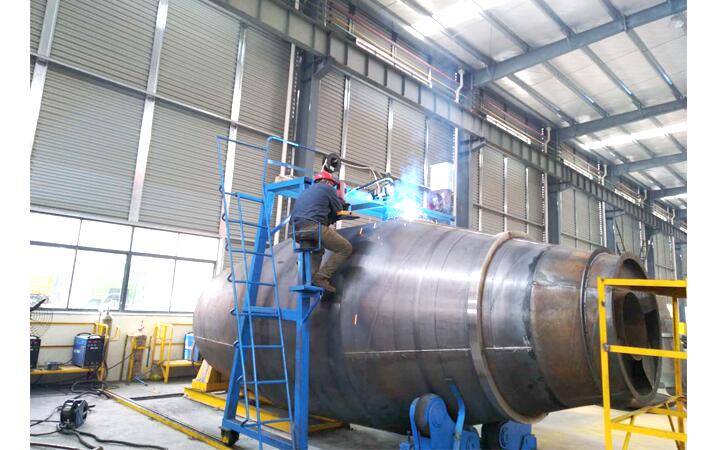 Concrete Mixer Drum Robotic Welding Solutions
 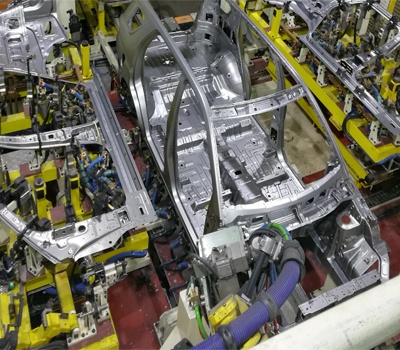 Automobile Body Production Line Welding Fixtures
 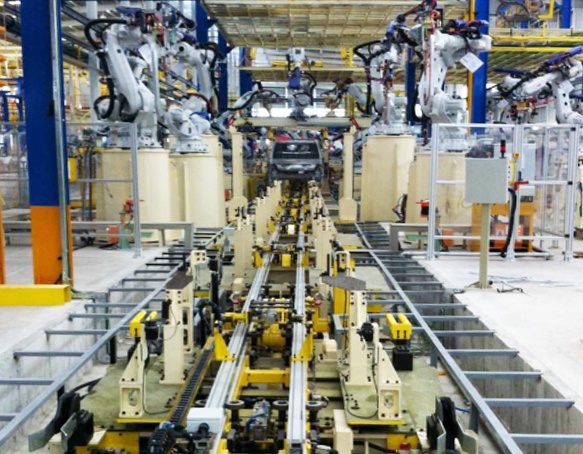 Automotive Body Welding Automated Manufacturing Solutions
 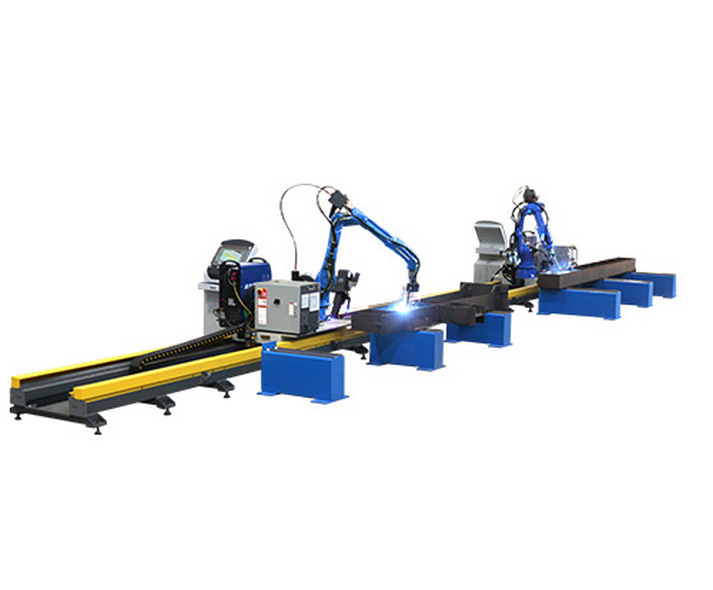 Free-Teaching Programming Welding Robot Cell For I Beam Welding
 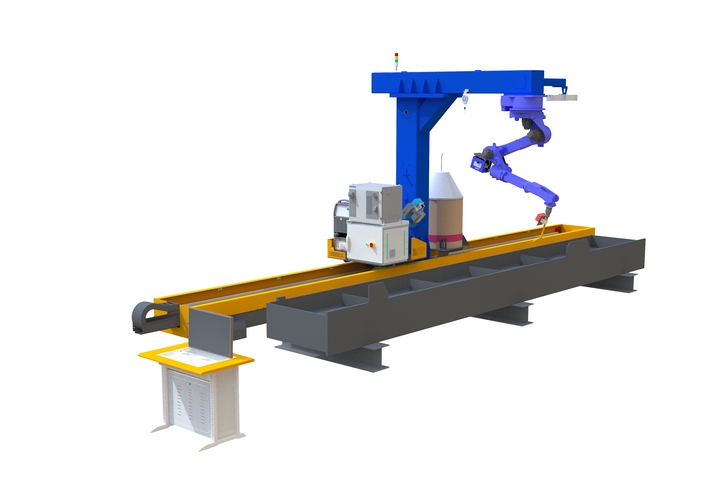 No Programming Required Robotic Welding Systems for H beam Welding Line