+86 15633683072
Two shops reach opposite conclusions about the same tank of oil. The first sees acid value and viscosity inside the supplier’s range and keeps running—then a batch comes out soft or cracked, because the oil’s cooling behavior had already moved while the chemistry numbers stayed quiet. The second sees a cooling curve that “still looks usable” and ignores a water content climbing toward the fire-risk zone. Both shops ran a quench oil testing program. Both read the results wrong, because they treated two different kinds of evidence as if they were interchangeable.
This article sets out the structure of a replacement decision: chemical and safety indicators establish whether the oil is still safe and chemically serviceable; the cooling curve establishes whether the oil still delivers the cooling pathway the part requires. CQI-9 requires both, not because they are redundant, but because they answer different questions.
CQI-9 4th Edition, Section 3.14, requires in-use quench oil to be tested every six months, covering water content, percent suspended solids, total acid number, viscosity, flash point, and a cooling curve. Many internal and external auditing agencies—CQI-9 and NADCAP among them—expect quarterly checks in practice, and the second edition of CQI-9 itself once required quarterly cooling curve checks before the frequency was changed to semi-annual in later editions. For water-based polymers, CQI-9 requires concentration and quenchability; the standard does not mandate a specific quenchability method, but suggests a cooling curve, viscosity, or titration.
What CQI-9 does not provide is a replacement threshold. The specification range and warning limits are “based on the vendor’s requirements and recommendations,” and ASTM D664 is explicit that “any condemning limits must be empirically established”. Passing an audit means the testing was done and recorded. It does not mean the oil is still fit for the part. The replacement decision sits between the standard’s minimum and the shop’s own baseline.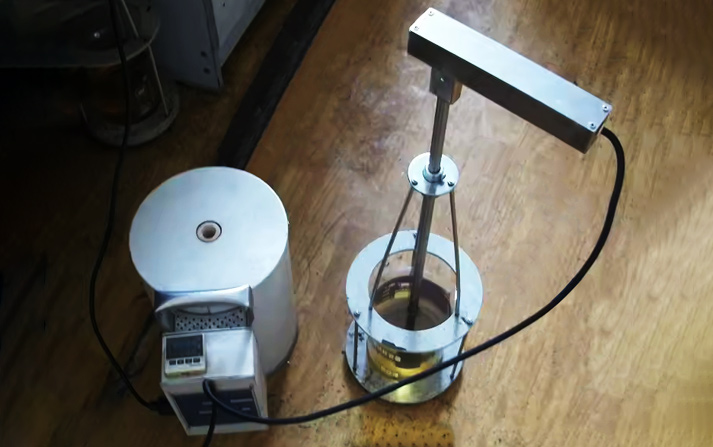
The quench oil testing panel is not a single verdict. Each test sits on a different boundary.
Water content and flash point are safety boundaries. If flash point drops below the accepted range or water content exceeds it, the oil can cause fires during operation; water can also indicate a leak in a water-cooled component such as a furnace door. These are not “the oil is worn out” signals—they are “the oil is becoming dangerous” signals.
Viscosity is a heat-transfer and contamination boundary. Increased viscosity typically means oxidation or thermal decomposition and results in decreased heat transfer rates; a decrease may indicate contamination. A common practice is to flag a viscosity change beyond roughly ±15–20% of the new-oil baseline.
Total acid number is an oxidation boundary. As the oil breaks down and oxidizes, acid value rises, and this can cause the maximum cooling rate to increase, which in turn can produce cracking or distortion on parts. Suggested replacement benchmarks in the literature range from 1.0–1.5 mgKOH/g for a used oil, while some industrial guidance uses TAN > 2.0 mgKOH/g as a replacement trigger. The divergence itself is the point: the number is plant- and oil-specific, not universal.
Suspended solids are a surface-quality and cooling-uniformity boundary. Some are expected, but if the quantity becomes too high it can affect part brightness and produce soft spots, because the contaminants may not cool the parts at the same rate as the oil.
None of these indicators directly answers “will this oil still harden this part, and will it crack it?” They establish whether the oil is safe, whether it is oxidizing, and whether contamination is accumulating. They do not resolve the temperature-resolved cooling pathway.
A quenching medium cooling curve records the temperature–time history of an ISO 9950 probe quenched into the oil and extracts maximum cooling rate, temperature at maximum cooling rate, cooling rate at 300°C, characteristic temperatures, and time to reach 600/400/200°C. That temperature-resolved data is what the chemical panel cannot supply.
The key behavior in a degrading oil is counterintuitive. As quench oil ages, the vapor blanket stage shortens, the maximum cooling rate increases, and the cooling curve shifts up and to the right—while hardenability actually decreases. A shop that reads only “maximum cooling rate is still inside the supplier’s band” can miss the fact that the vapor phase has shrunk or disappeared, which is the part of the curve that governs whether a section hardens or develops soft spots. Houghton’s documentation of a severely oxidized oil makes the gap concrete: the used oil showed a maximum cooling rate of 91.0 versus 78.8 for new oil, and a vapor phase that was “practically non-existent” —the combination that signals a badly degraded quench oil. A chemical panel on the same oil would show elevated TAN and viscosity; it would not show that the vapor phase had collapsed.
This is where a quenching instrument built for curve acquisition changes the decision. The ivf SmartQuench platform, for example, was developed specifically for quenchant performance monitoring and troubleshooting, with software that evaluates cooling curves from several viewpoints and supports comparison against baseline data. Its role in a replacement decision is not to replace the chemical panel—it is to show whether the metal quenching process is still receiving the cooling sequence the part was qualified on. In the heat treatment process, the cooling curve is the functional evidence that sits alongside the chemical evidence.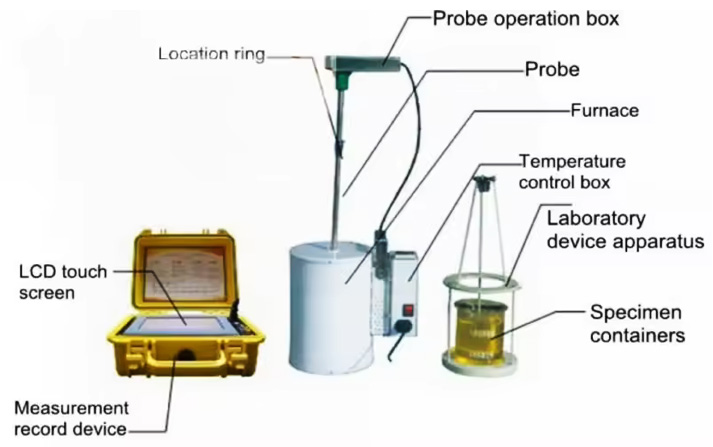
The useful question is not “which indicator is more important.” It is what to do when the chemical panel and the cooling curve point in different directions.
| Chemical panel | Cooling curve | What it means | Recommended action |
|---|---|---|---|
| Within range | On baseline | Normal | Continue CQI-9 monitoring at the required frequency |
| Out of range (water, flash point, TAN) | Still near baseline | Safety or chemical risk present, functional shift not yet visible | Address the safety item first (dehydration, filtration, additive); increase cooling curve frequency, because functional drift can lag chemical drift |
| Within range | Clearly shifted (vapor phase shortened, 300°C rate moved, characteristic temperature dropped) | Functional degradation without a chemical “alarm” | Treat the cooling curve as the primary replacement/intervention signal; check whether filtration or additive correction can restore the curve |
| Out of range | Clearly shifted | Chemical and functional degradation together | Replace the oil; investigate the root cause (water leak, excessive oil temperature, contamination source) |
The matrix turns replacement from a binary judgment into a conditional decision. It also makes the role of the KHR-A Quenchometer concrete: the instrument’s 300°C cooling rate, characteristic temperatures, and curve overlay against a stored baseline are what populate the second column. A smart quenching tester in this sense is not a device that produces a single “pass/fail” number—it is a device that makes the direction and magnitude of change visible against the tank’s own history. Without a baseline, a cooling curve is only a snapshot; with a baseline, it becomes a replacement criterion.
The KHR-A Quenchometer is manufactured by Zhengzhou Kehui Technology (Kehui Group), founded in 1994. Kehui’s founder is a technical specialist in this field, and the company was the first domestic Chinese manufacturer to independently develop and manufacture quenching medium cooling performance testers. The KHR-A carries patent ZL 2008 2 0069148.0 and is designed for oil, polymer, water-based, salt, and gas quenching media. Kehui’s quenching detectors have covered approximately 95% of the Chinese domestic market, with an installed base spanning chemical, boiler, pressure vessel, engineering machinery, military, and nuclear power applications.
For a shop making a quench oil testing-driven replacement decision, the relevant claim is narrow: the KHR-A is a quenching instrument that records the quenching medium cooling curve at the tank, against a stored baseline, and reports the parameters that correspond to the functional side of the decision—maximum cooling rate, 300°C cooling rate, characteristic temperatures, and time to temperature. It does not replace the laboratory panel for water, TAN, viscosity, or flash point. It supplies the functional evidence those tests cannot.
CQI-9 4th Edition Section 3.14 requires every six months for in-use oil, covering water, suspended solids, TAN, viscosity, flash point, and cooling curve. Many auditing agencies, including NADCAP, expect quarterly checks in practice, and some plants test monthly for high-volume tanks. The standard is the floor, not the ceiling.
Acid value is an oxidation indicator, and elevated TAN can raise the maximum cooling rate, contributing to cracking or distortion. But the condemning limit is plant-specific—literature benchmarks range from 1.0–1.5 to over 2.0 mgKOH/g—and ASTM D664 states that limits must be empirically established. A TAN number without a cooling curve leaves the functional question unanswered.
As the oil oxidizes, the vapor blanket stage shortens or disappears and the maximum cooling rate rises, but the loss of the vapor phase changes the cooling sequence in a way that can leave a section under-cooled or produce soft spots. The maximum rate alone does not capture this; the quenching medium cooling curve does.
ivf SmartQuench provides curve acquisition and evaluation software that allows the cooling curve to be compared against a reference and interpreted across multiple parameters—the kind of comparison that turns a single test into a trend. It is a reference point for what a curve-evaluation platform is expected to do, alongside instruments such as the KHR-A.
Both. The laboratory panel covers water, flash point, TAN, viscosity, and suspended solids—the safety and chemical boundaries. The cooling curve covers the functional boundary: vapor-phase behavior, maximum cooling rate, 300°C cooling rate, and characteristic temperatures. A quench oil testing program that uses only one side is making a replacement decision with half the evidence.
When to replace quench oil is not one question but two. The chemical panel answers “is this oil safe and chemically serviceable?” The cooling curve answers “does this oil still deliver the cooling pathway the part was qualified on?” A tank can be chemically marginal and functionally sound, or chemically acceptable and functionally degraded. The shops that get the decision right are the ones that read both columns and compare them—not the ones that pick a favorite number.
If you are holding a chemical panel and a cooling curve and are not sure whether they agree, send us the quench oil testing results, the oil’s service age, and the tank type. We will tell you which side of the decision the evidence supports—not simply quote an instrument.
Zhengzhou Kehui Technology Co., Ltd
Email: info@zzkehui.com





 Chinese
 English
 OA
 Current location:
 Concrete Mixer Drum Robotic Welding Solutions
 Automobile Body Production Line Welding Fixtures
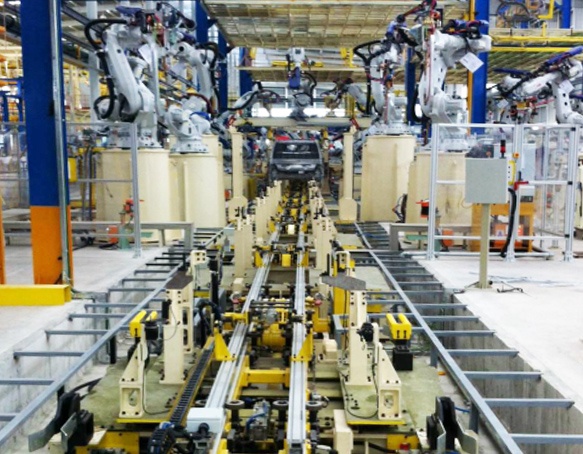 Automotive Body Welding Automated Manufacturing Solutions
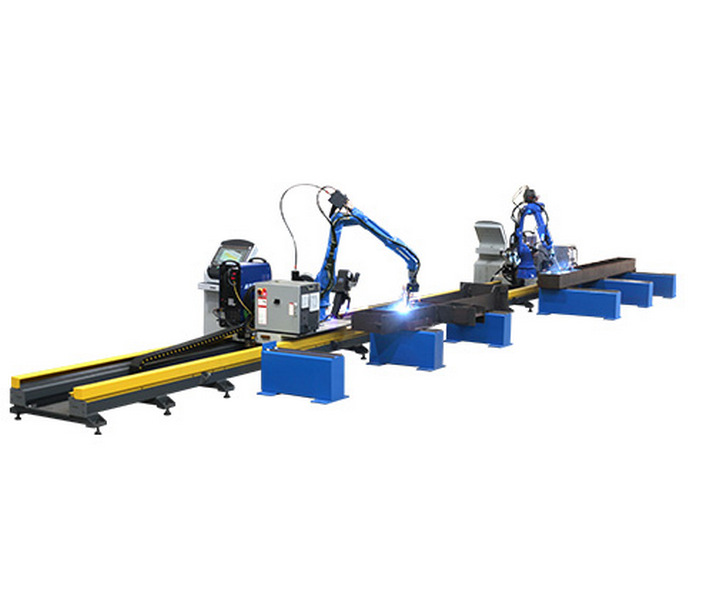 Free-Teaching Programming Welding Robot Cell For I Beam Welding
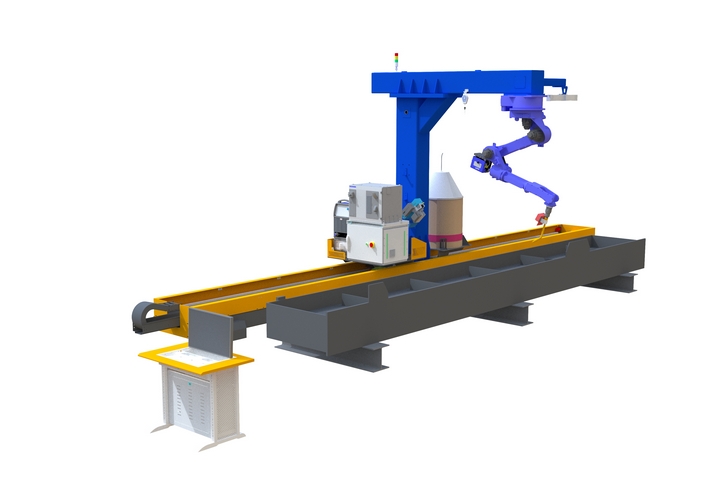 No Programming Required Robotic Welding Systems for H beam Welding Line