+86 15633683072
We ran an automatic welding tractor on a pressure vessel production line for two weeks—not a demo bay, not a controlled lab. The job was 1,800 mm diameter cylinder-to-cylinder circumferential seams, 22 mm wall thickness, SAW process, carbon steel. The goal was simple: measure what changes when a track welding tractor replaces a manual welder on the same joint, same WPS, same shift pattern.
The short version: arc-on time moved from 38% to 67%. Repair rate on first-pass RT dropped from 4.2% to 0.7%. And the operator stopped fighting the torch at the end of a 12-hour shift.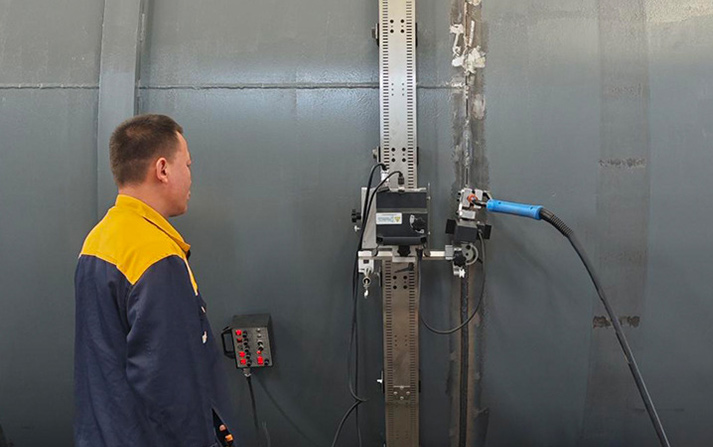
A pressure vessel girth seam isn't a flat plate weld turned sideways. The joint is a full 360-degree loop around a cylinder that may be rotating on turning rolls. The welder either walks around the vessel or stands still while the vessel turns. Both options introduce variables: walking speed drift, cable management, helmet position changing as the angle shifts from flat to vertical to overhead and back.
A seam welding tractor removes that variable entirely. The carriage travels at a fixed speed around a fixed track. The torch angle stays constant. The only thing that changes is the position on the clock face—and the machine doesn't care whether it's welding at 3 o'clock or 9 o'clock.
Raw travel speed is the least interesting number. A track welding tractor can run at 180 cm/min, but you're not welding a pressure vessel at that speed with SAW on 22 mm wall. The efficiency gains come from three places:
Arc-on time. Manual welding on a large girth seam involves repositioning, cable adjustment, electrode changes, and the simple human need to step back and look at what you just welded. Automated travel keeps the arc lit. In our test, the track welding tractor logged 6.2 hours of arc time per 9.5-hour shift versus 3.6 hours for manual.
Consistency across the circumference. The repair rate number tells the story better than any speed metric. A 4.2% first-pass repair rate on manual GTAW root and SAW fill becomes a 0.7% repair rate when the automatic welding tractor for pressure vessel work handles the fill and cap passes. On a vessel with 12 girth seams, that's the difference between 5 repairs and 1.
Setup amortization. The track welding tractor needs rail installation, alignment, and removal. On a 1.8 m diameter vessel, that's roughly 25–30 minutes per joint. On a one-off weld, that's a dealbreaker. On a production run of 40 identical vessels, that setup time disappears into the per-unit math. The seam welding tractor earns its place when the joint repeats.
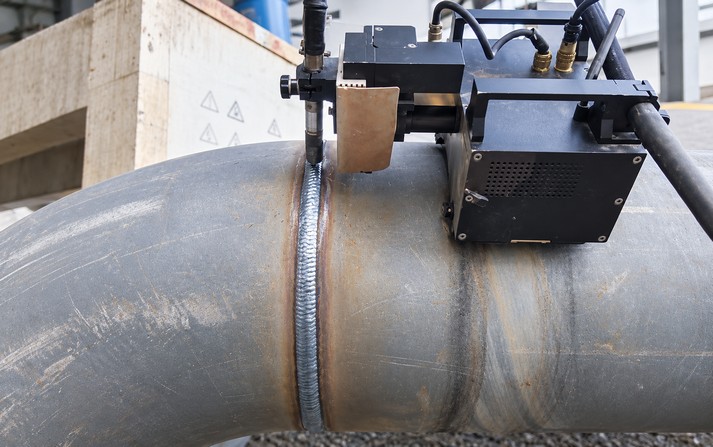
| Metric | Manual Welding | Automatic Welding Tractor | Change |
|---|---|---|---|
| Arc-on time per shift | 3.6 h | 6.2 h | +72% |
| First-pass RT repair rate | 4.2% | 0.7% | −83% |
| Travel speed (fill passes) | 18–22 cm/min | 28–32 cm/min | +35% |
| Operator fatigue-related stoppages | 4–6 per shift | 0–1 per shift | −90% |
| Setup time per joint | 8–10 min | 25–30 min | +200% |
The setup time increase is real and it matters. If your shop runs one vessel at a time and changes diameter every job, the track welding tractor's setup overhead eats the efficiency gain. If you run batches—same diameter, same wall, same joint prep—the math flips hard in favor of automation.
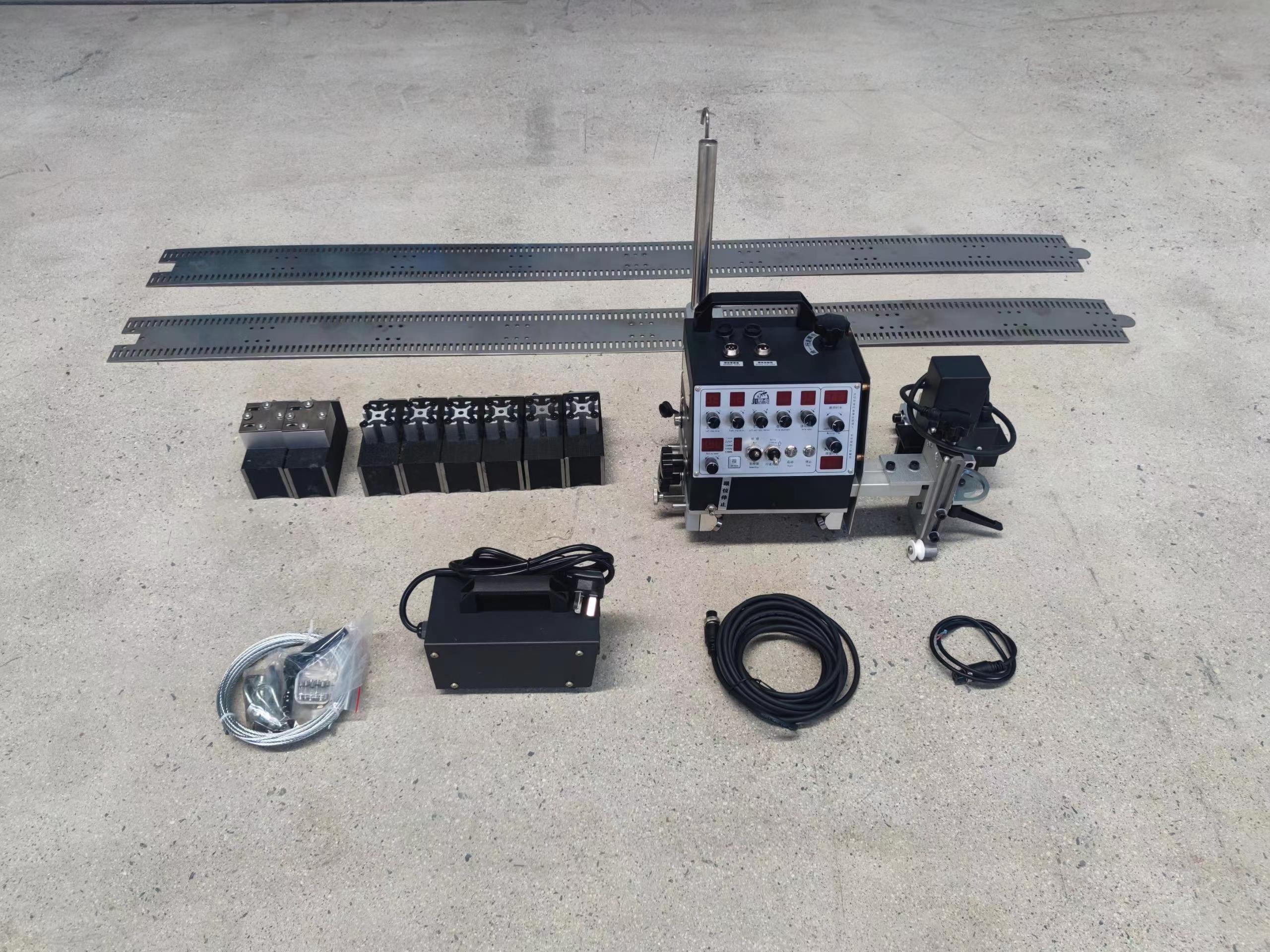
Pressure vessel shops rarely run the same diameter forever. A 1,800 mm shell today, a 2,400 mm shell next week, a 3,000 mm reactor the week after. Every diameter change means rail repositioning, and on some track systems, a different rail entirely.
This is where flexible track welding tractor designs earn their premium. A semi-flexible track that conforms to different curvatures reduces the changeover penalty. Rigid rail systems are faster on identical repeats but slower to adapt when the vessel diameter shifts. The selection question isn't “which is better”—it's “what's your diameter change frequency.”
As wall thickness climbs past 40 mm, pressure vessel circumferential seam welding moves toward narrow-gap preparations to control weld volume and distortion. Narrow gap welding with a track welding tractor demands precise torch positioning and reliable seam tracking. If the joint wanders—thermal distortion does this—the sidewall fusion suffers, and you get lack-of-fusion defects that RT catches every time.
The tractor itself isn't the bottleneck here. The seam tracking system is. Laser-guided tracking or mechanical probe tracking adds cost and complexity, but without it, narrow-gap pressure vessel welding automation becomes a defect factory.
Magnetic-base tractors don't work on stainless or aluminum pressure vessels. Track systems with mechanical clamping or vacuum mounting are the alternative, but they add setup complexity. If your pressure vessel welding automation strategy needs to cover carbon steel, stainless, and clad materials, the tractor selection gets narrower.
Three questions decide whether an automatic welding tractor makes sense for a given pressure vessel shop:
What's your joint repeat frequency? If you run the same diameter and wall thickness for at least 10–15 consecutive vessels, the setup amortization works. Below that, manual welding or a faster-setup magnetic carriage may be more economical.
What's your wall thickness range? Under 20 mm, travel speed gains are modest. Over 30 mm with narrow-gap prep, the tractor becomes essential for consistent sidewall fusion. The middle range—20 to 30 mm—is where the economics are most sensitive to production volume.
What's your RT rejection rate costing you? A 3–4% manual repair rate on pressure vessel girth seams is common. If your shop is absorbing that cost, the track welding tractor's consistency improvement—even before speed gains—often justifies the investment. A 0.7% repair rate on a $50,000 vessel weld package is real money.
The ESAB Tracfinder Rail is a useful reference point for what a modern track welding tractor delivers: rack-and-pinion drive for slip-free travel, travel speeds up to 180 cm/min, programmable multipass sequences, and battery-powered operation with 10–20 hours of runtime.The rack-and-pinion drive specifically matters for circumferential work because it eliminates the wheel slip that friction-drive carriages experience when the track angle shifts from horizontal to vertical to overhead.
For shops running SAW on heavy-wall vessels, the tractor is only half the system. The power source, wire feeder, flux recovery, and turning rolls need to work as one coordinated setup. A tractor that travels perfectly but fights a mismatched power source isn't automation—it's a different kind of manual welding.
Arc-on time increases by 50–70%, and first-pass repair rates drop from 3–5% to under 1% in well-controlled production settings. Raw travel speed gains are smaller—typically 30–40%—because the real efficiency comes from continuous arc time and reduced rework, not from welding faster.
Yes, but seam tracking becomes critical. Narrow-gap joints have limited sidewall access, and thermal distortion can cause the groove to wander. Laser or mechanical tracking systems are necessary for consistent sidewall fusion on narrow-gap pressure vessel welding automation.
Roughly 25–30 minutes for a 1.8–2.0 m diameter vessel, including rail mounting, alignment, and removal. Setup time is the primary constraint on the tractor's economic viability—it only pays off when the same joint repeats across multiple vessels.
The terminology overlaps heavily. “Seam welding tractor” is often used for SAW systems on long straight or circumferential seams in tank and vessel fabrication, while “welding carriage” is the broader category covering track-mounted and trackless systems. The functional difference is in the drive system and load capacity, not the name.
No. The decision hinges on joint repeat frequency and wall thickness. One-off vessels with frequent diameter changes are better served by manual or semi-automatic welding. Production runs of identical vessels, especially with wall thickness above 25 mm, are where the automatic welding tractor for pressure vessel work delivers measurable return.
Zhengzhou Kehui Technology Co., Ltd
Email: info@zzkehui.com





 Chinese
 English
 OA
OA Current location:
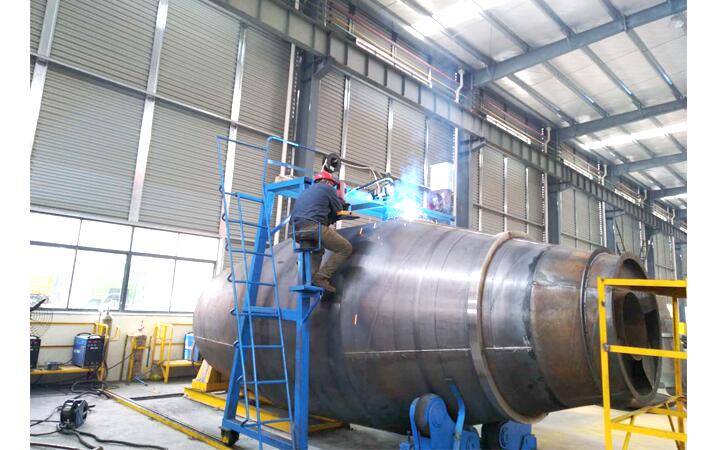 Concrete Mixer Drum Robotic Welding Solutions
 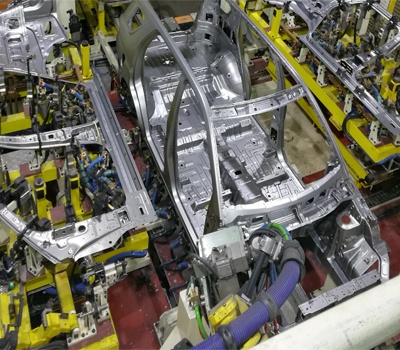 Automobile Body Production Line Welding Fixtures
 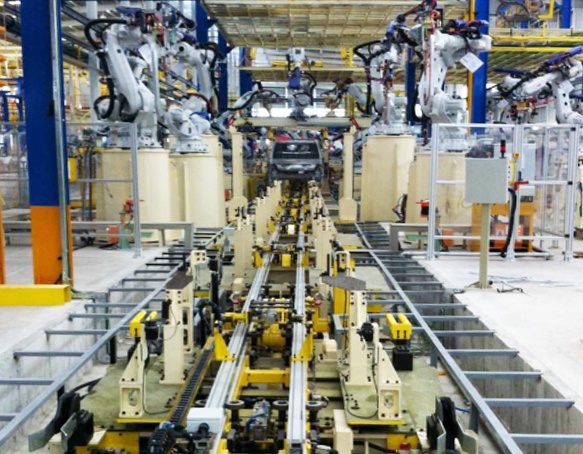 Automotive Body Welding Automated Manufacturing Solutions
 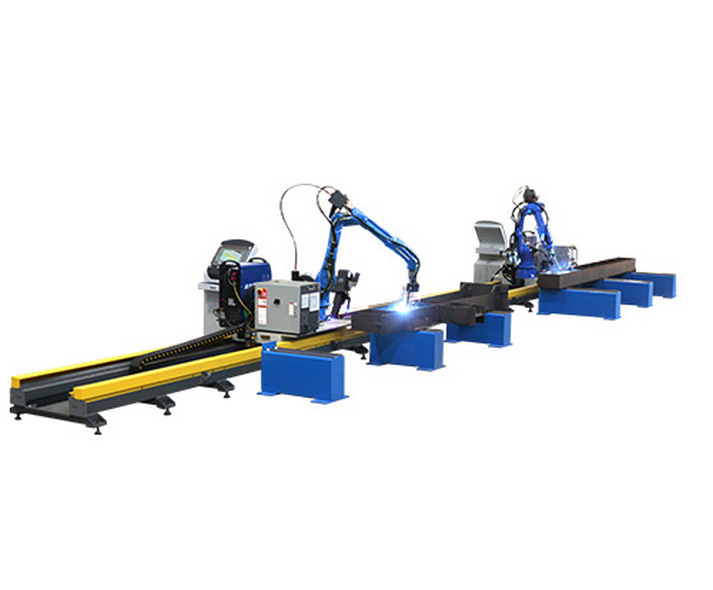 Free-Teaching Programming Welding Robot Cell For I Beam Welding
 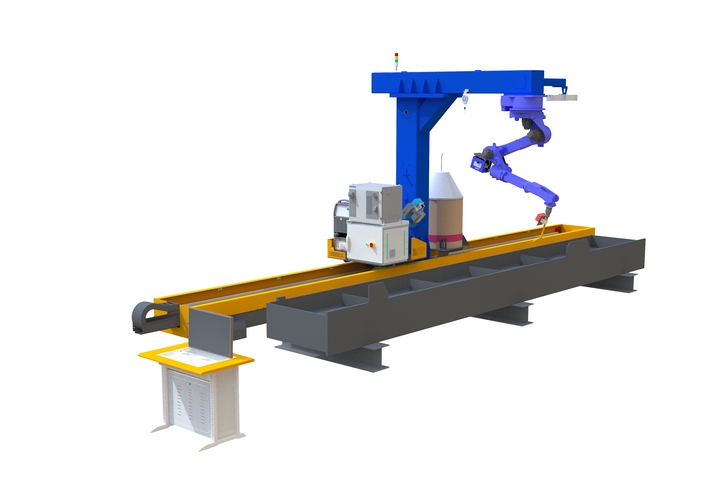 No Programming Required Robotic Welding Systems for H beam Welding Line