+86 15633683072
When purchasing a tube-to-tubesheet welding system, buyers often compare machine price, welding diameter, and basic specifications. However, these numbers do not tell the whole story.
A capable tube to tubesheet welding machine factory should provide more than a standard machine. It should be able to understand your tube to tubesheet joint, select the right welding head, conduct sample welding, customize the equipment when necessary, and support installation and production after delivery.
For buyers comparing a tube to tubesheet welding machine China supplier with other manufacturers, the key question is therefore not simply “How much does the machine cost?” but “What engineering capability does the factory provide behind the machine?”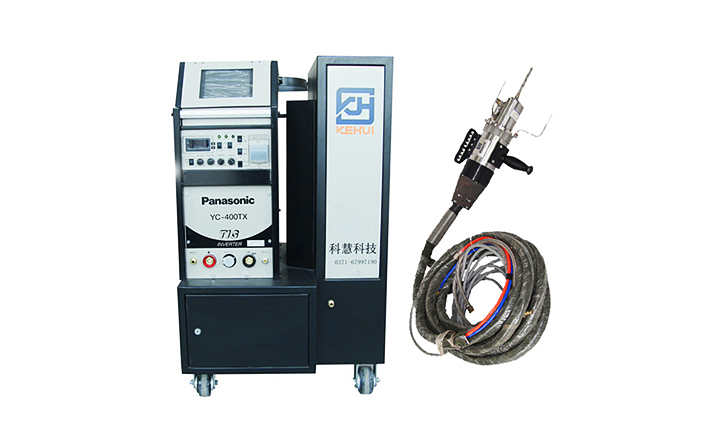
A practical factory capability can be evaluated in five areas:
These capabilities are particularly important for heat exchanger, boiler, condenser, and other tube-sheet applications where workpiece dimensions and production requirements can vary considerably.
A professional tube to tubesheet welding machine factory should first understand the actual workpiece instead of immediately recommending a standard model.
The factory may need information such as:
The geometry of the tube to tubesheet joint directly affects welding-head access and machine configuration.
For example, a tubesheet with closely spaced tubes may require a more compact welding head, while a different tube projection may require another torch position or collet configuration.
The welding head is one of the most important parts of an automatic tube-sheet welding system.
A suitable tube to tubesheet welding head should match the tube diameter, joint geometry, accessibility, and welding process.
Depending on the application, a system may require:
A tube sheet to tube orbital welding head is typically used to rotate the welding torch around a stationary tube-to-tubesheet joint.
The right tube sheet to tube orbital welding head is not selected simply according to its maximum tube diameter. The factory should also consider whether the head can physically enter the tube pitch, reach the weld area, and maintain stable torch positioning.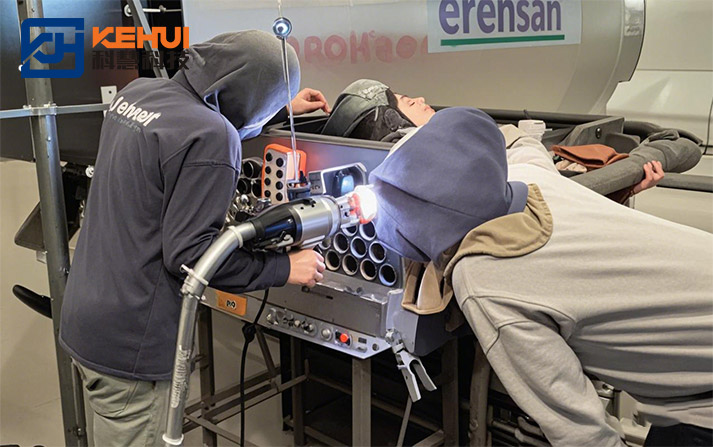
Not every heat exchanger manufacturer has the same workpiece dimensions. This is why customization capability can be an important factor when choosing a tube to tubesheet welding machine China supplier.
Different tube sizes and joint configurations may require different collets, torch arrangements, gas cups, cooling systems, or wire-feeding configurations.
A factory with its own engineering team can adapt the tube to tubesheet welding head instead of forcing every project into one standard configuration.
Customization may also involve the machine structure and positioning system.
For larger tubesheets, for example, the equipment may require additional support, positioning, lifting, or indexing mechanisms.
The objective is to make the welding head reach each tube to tubesheet joint accurately and repeatedly while keeping operation practical for the worker.
A tube-sheet welding machine can also be configured with programmable welding sequences and stored welding procedures.
This becomes useful when a factory produces several heat exchanger models with different tube diameters or welding requirements.
Instead of manually resetting every parameter, operators can select the corresponding welding program and follow a standardized production sequence.
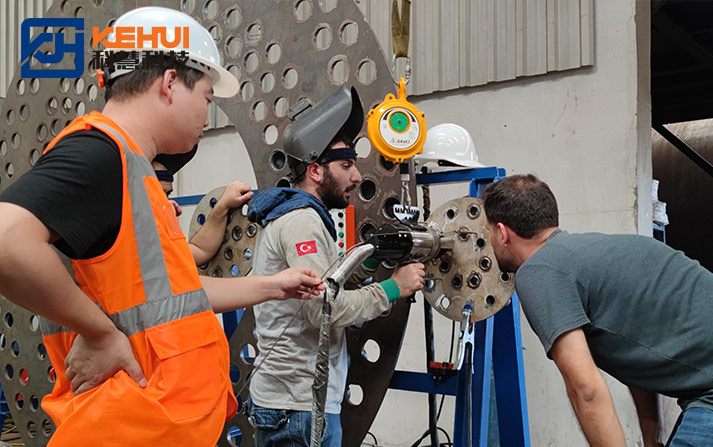
One of the most useful services a tube to tubesheet welding machine factory can provide before an order is a sample welding test.
A specification sheet can tell you the machine's theoretical working range. A welding test tells you whether the proposed configuration actually works with your materials and joint.
Ideally, provide:
The factory can then test the actual tube to tubesheet joint using the proposed equipment.
A useful trial should evaluate more than weld appearance.
The factory should check:
The purpose is to determine whether the proposed tube-sheet welding machine is suitable for real production, not just whether one test weld can be completed.
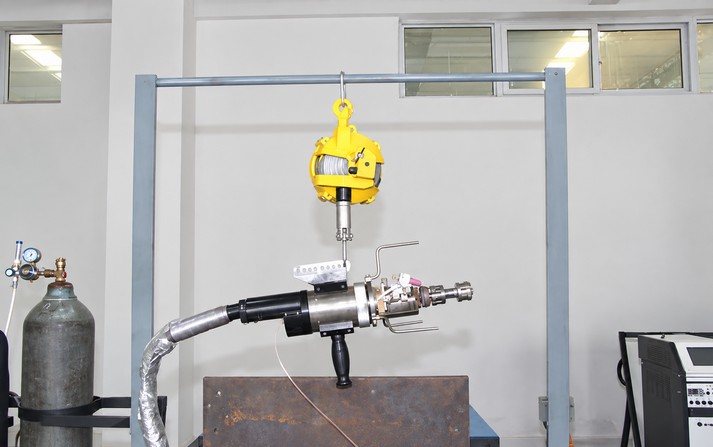
When evaluating a tube to tubesheet welding machine China manufacturer, it is useful to understand how much of the equipment development is handled by the factory itself.
A complete project may involve:
Engineering design → mechanical fabrication → electrical design → control integration → welding-head assembly → machine assembly → welding test → debugging → factory acceptance
This process matters because a tube-sheet welding system is not simply a welding power source connected to a torch.
The welding head, mechanical structure, electrical controls, software, positioning system, and welding power source must work together.
For customized projects, this integration capability can make a significant difference.
A professional tube to tubesheet welding machine factory should also have a final debugging stage.
During commissioning, engineers may check:
The machine should be tested as a complete system before shipment.
For customized equipment, factory acceptance testing (FAT) provides an opportunity to verify the machine before shipment.
The FAT can be based on previously agreed requirements, such as:
For an overseas buyer, FAT can reduce the risk of discovering configuration problems only after the machine arrives at the production site.
A reliable tube to tubesheet welding machine factory should be willing to discuss what will be tested before shipment and what acceptance criteria apply.
Buying a machine is not the end of the project.
For a tube to tubesheet welding machine China supplier, overseas support can include:
This is particularly important for manufacturers that are introducing automatic tube-sheet welding for the first time.
The factory should be able to explain not only how to operate the equipment, but also how the equipment fits into the customer's actual production workflow.
Instead of relying only on company brochures, ask practical questions.
Can you test my actual tube and tubesheet?
A sample test provides more useful information than a standard product specification.
Which tube sheet to tube orbital welding head would you recommend for my joint?
The answer should be based on tube size, pitch, projection, joint geometry, and accessibility.
Can the machine be customized?
Ask specifically what can be changed: welding head, tooling, positioning system, control functions, wire feeding, cooling, or machine structure.
What will be tested before shipment?
A clear FAT procedure shows how the factory verifies the completed equipment.
What support is available after installation?
This is particularly important when purchasing a tube to tubesheet welding machine China for overseas production.
The more complete the technical information, the more accurate the factory's proposal can be.
| Information | Why the Factory Needs It |
|---|---|
| Tube OD and wall thickness | Determines welding-head range |
| Tube material | Helps define welding process |
| Tubesheet material | Confirms material compatibility |
| Tubesheet thickness | Affects accessibility |
| Tube projection | Affects torch position |
| Tube pitch | Determines available head space |
| Hole diameter | Helps evaluate joint geometry |
| Joint drawing | Defines the actual weld |
| Production quantity | Helps determine automation level |
| Photos/videos | Shows real working conditions |
A good tube to tubesheet welding machine factory should use this information to build a suitable configuration rather than sending the same quotation to every customer.
Two machines may have similar advertised tube diameters and welding functions but perform very differently in a real production environment.
The difference may come from:
This is why buyers searching for a tube to tubesheet welding machine China manufacturer should evaluate the complete engineering chain.
A factory that can move from application analysis → welding-head selection → machine design → sample welding → assembly → FAT → installation support is providing more than a standard piece of equipment.
You should expect application analysis, welding-head selection, equipment customization when required, sample welding, machine assembly, testing, commissioning, and technical support.
Yes. Depending on the application, the welding head, tooling, positioning system, wire feeder, cooling system, control system, and machine structure can be customized.
A tube to tubesheet welding head positions and guides the welding torch around the tube-to-tubesheet joint. Its configuration should match the tube diameter, joint geometry, tube pitch, and welding process.
A tube sheet to tube orbital welding head is designed to perform circumferential welding around a tube where it meets the tubesheet, while the workpiece generally remains stationary.
Yes. A sample welding test can verify whether the proposed welding head, tooling, positioning, and welding system are suitable for your actual tube to tubesheet joint.
Provide tube and tubesheet dimensions, materials, tube projection, tube pitch, hole dimensions, joint drawings, production quantity, and photos. These details help the factory recommend the appropriate configuration.
Compare their ability to analyze your application, perform sample welding, customize the tube-sheet welding machine, conduct FAT, and provide installation and technical support—not only their quoted machine price.
Zhengzhou Kehui Technology Co., Ltd
Email: info@zzkehui.com





 Chinese
 English
 OA
OA Current location:
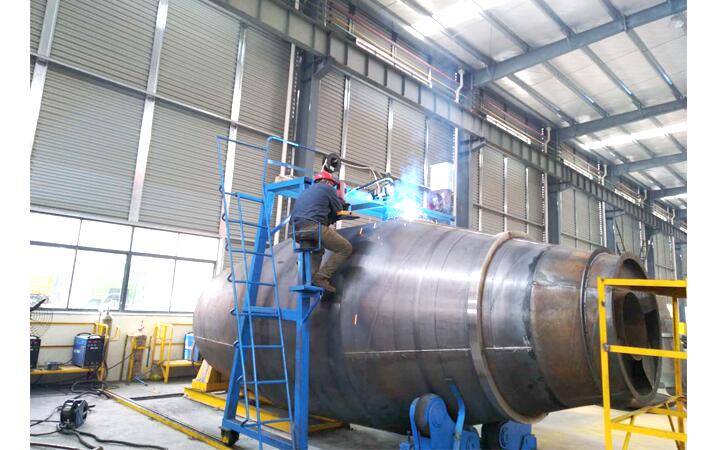 Concrete Mixer Drum Robotic Welding Solutions
 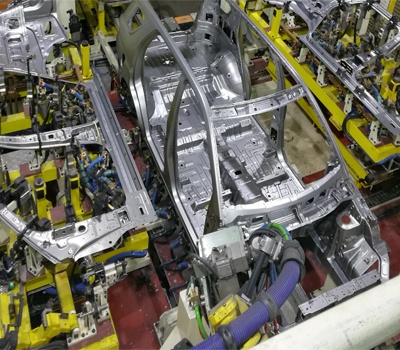 Automobile Body Production Line Welding Fixtures
 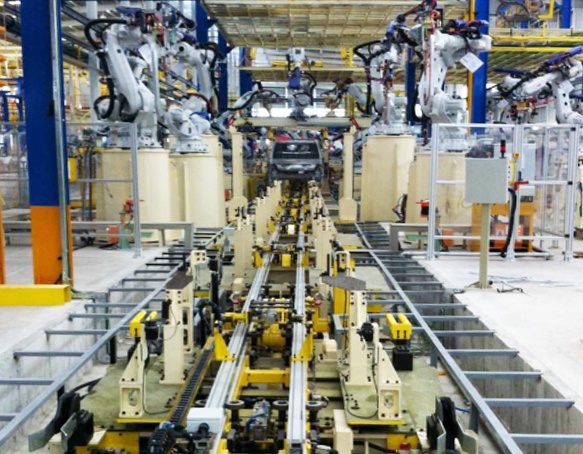 Automotive Body Welding Automated Manufacturing Solutions
 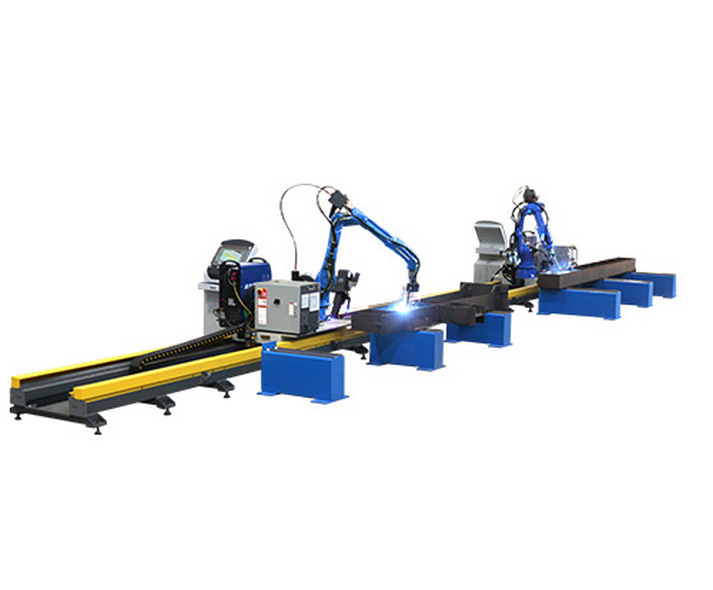 Free-Teaching Programming Welding Robot Cell For I Beam Welding
  No Programming Required Robotic Welding Systems for H beam Welding Line