+86 15633683072
TIG welding is widely used for tube-to-tubesheet connections because it provides precise control of arc characteristics, heat input, and weld formation. This makes it suitable for shell-and-tube heat exchangers, condensers, boilers, and other equipment containing large numbers of tube joints.
From a factory perspective, the challenge is not producing one good weld. It is producing hundreds or thousands of similar joints with consistent quality while working within a dense tube pattern. This is why manufacturers increasingly consider a dedicated tube to tubesheet seal welding machine for repetitive production.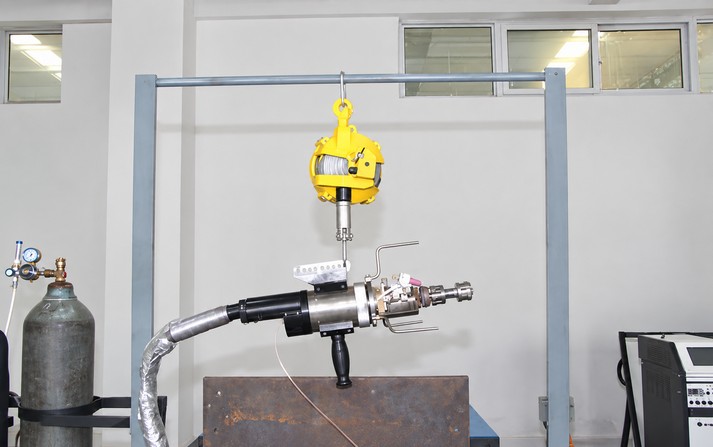
TIG provides accurate control of the welding arc without a consumable electrode. For tube-to-sheet connections, this allows the manufacturer to control the weld profile and fusion around the tube circumference.
This is particularly useful when the tube wall is relatively thin or when the joint requires a clean, controlled weld.
Tube sheets are generally much thicker than the tubes being welded. Excessive heat can therefore affect the tube, while insufficient heat may result in poor fusion.
TIG allows current, travel speed, pulse parameters, and shielding gas to be adjusted according to the material and joint design. This level of control is one reason TIG tube sheet welding remains widely used.
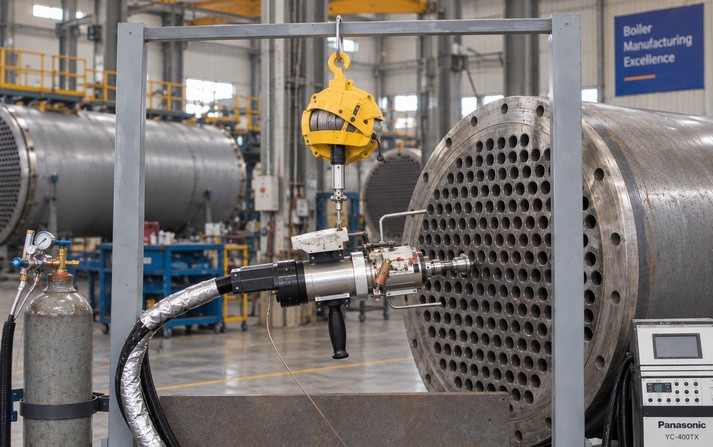
A heat exchanger tube sheet may contain hundreds or thousands of holes. Once the tubes are installed, the space available for the welding torch becomes limited.
The welding head must reach the joint without interfering with neighboring tubes. Therefore, accessibility is an important factor when selecting a tube to tubesheet seal welding machine.
Tube projection, tube diameter, tube pitch, and tube sheet thickness all influence the welding process.
Inconsistent tube projection can change torch positioning and weld geometry from one joint to another. A reliable tube sheet welding solution should therefore consider tube preparation as well as the welding machine itself.
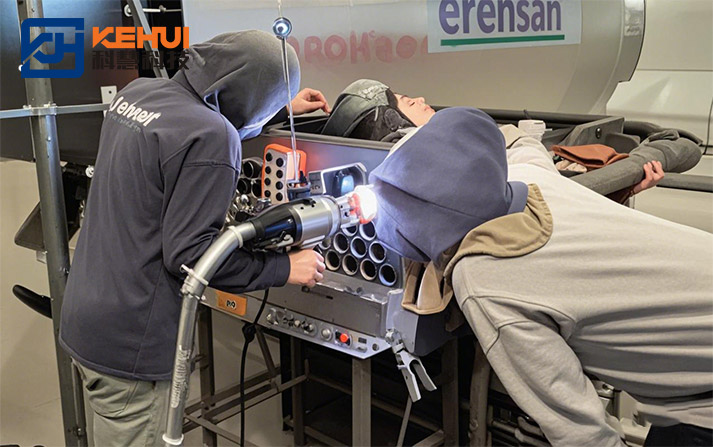
Tube to tube sheet seal welding is used to create a leak-resistant connection between a tube and the tube sheet.
For heat exchangers handling water, steam, chemicals, refrigerants, or other process fluids, leakage at the tube-to-sheet interface can lead to contamination, pressure loss, or equipment downtime.
Consider a tube sheet with 600 tube joints. A skilled TIG welder may produce an excellent individual weld, but manually repeating the same torch movement 600 times is a different challenge.
Small variations in torch angle, arc length, or travel speed can affect weld appearance and heat input. A tube to tubesheet seal welding machine can control repetitive torch movement and help make the welding cycle more consistent.
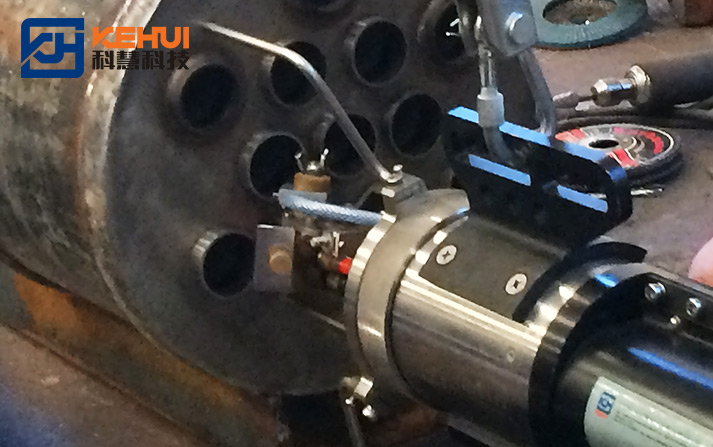
Automatic tube to tube sheet welding becomes increasingly useful as tube joint quantities increase.
Instead of manually controlling every movement, the operator establishes the welding procedure and positions the welding head. The equipment can then repeat the programmed cycle across similar joints.
Depending on the equipment configuration, an automated system may control:
This makes automatic tube to tube sheet welding more repeatable and reduces variations caused by manual torch manipulation.
An orbital welding machine for tube to tubesheet welding uses controlled rotational movement to guide the torch around the tube-to-sheet connection.
During manual TIG welding, the torch path depends on the operator's hand movement. An orbital welding machine for tube to tubesheet welding mechanically controls the rotational movement, helping maintain a more consistent welding path.
For a few repair joints, manual TIG may be sufficient. However, when a production tube sheet contains hundreds of identical connections, an orbital welding machine for tube to tubesheet welding can provide better repeatability and reduce operator fatigue.
A complete tube sheet welding solution should consider more than the welding power source.
The system should provide suitable control of current, pulse parameters, torch movement, and shielding gas for the intended material and joint.
The welding head must fit the actual tube pitch and reach the joint without contacting adjacent tubes.
The equipment should allow qualified welding parameters to be established and reproduced for similar tube and tube sheet combinations.
Automation cannot compensate for poor fit-up. Tube projection, tube cleanliness, tube sheet bore condition, and alignment remain essential to the overall tube sheet welding solution.
The machine must accommodate the actual tube OD and tube spacing. A suitable welding head should have enough clearance to operate within the tube pattern.
The equipment should match the tube sheet geometry and whether the application requires seal welding, strength welding, or another joint configuration.
Current control, pulse settings, rotation speed, shielding gas timing, and programmable welding cycles can all affect weld repeatability.
Selecting a tube to tubesheet welding machine supplier is not simply a matter of comparing prices. The supplier should understand tube materials, tube diameter, tube sheet thickness, joint configuration, and welding procedures.
For customized applications, technical support from the tube to tubesheet welding machine supplier can be just as important as the equipment itself.
Shell-and-tube heat exchangers are one of the most common applications because their tube sheets contain large numbers of repetitive tube connections.
Boilers, condensers, feedwater heaters, and other heat-transfer equipment can require precise tube-to-sheet welding.
Stainless steel and alloy heat exchangers often require controlled welding processes where joint consistency and cleanliness are important.
Sanitary heat exchangers and process equipment can also benefit from controlled TIG welding and repeatable tube-to-sheet connections.
Manual TIG remains practical for repairs, prototypes, low-volume production, and unusual joint configurations.
However, automatic tube to tube sheet welding becomes more attractive when a factory produces large numbers of repetitive joints or struggles with manual consistency.
The decision should consider production volume, tube accessibility, labor availability, quality requirements, and the cost of rework—not simply welding speed.
For manufacturers producing many similar exchangers, a tube to tubesheet seal welding machine can provide a more controlled and repeatable production process.
TIG provides precise control of the arc and heat input, making it suitable for many tube-to-tubesheet joints in heat exchangers, boilers, condensers, and process equipment.
A tube to tubesheet seal welding machine automates or assists the welding of tubes to a tube sheet where a leak-resistant welded connection is required.
Automatic tube to tube sheet welding uses controlled mechanical movement and programmable welding parameters to produce repetitive tube-to-sheet joints with less dependence on manual torch manipulation.
Yes. An orbital welding machine for tube to tubesheet welding can be suitable for repetitive circumferential joints when the welding head matches the tube diameter, pitch, and joint configuration.
Compare tube diameter range, minimum tube pitch, welding head dimensions, TIG power source, control functions, sample welding capability, and the supplier's ability to develop a suitable tube sheet welding solution.
Zhengzhou Kehui Technology Co., Ltd
Email: info@zzkehui.com





 Chinese
 English
 OA
OA Current location:
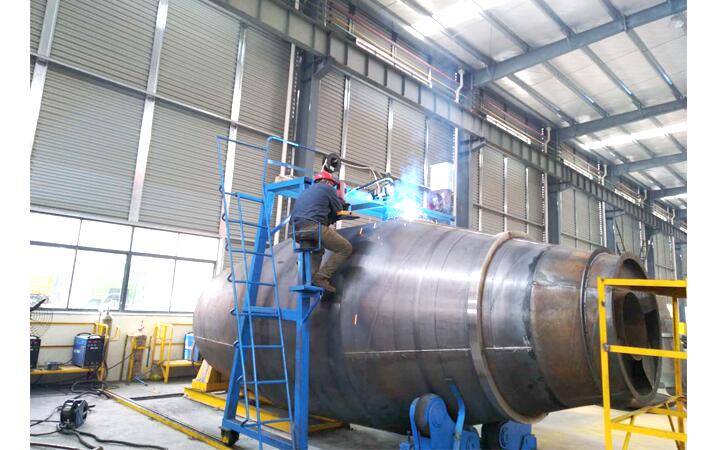 Concrete Mixer Drum Robotic Welding Solutions
 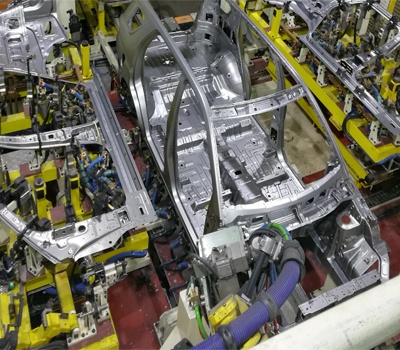 Automobile Body Production Line Welding Fixtures
 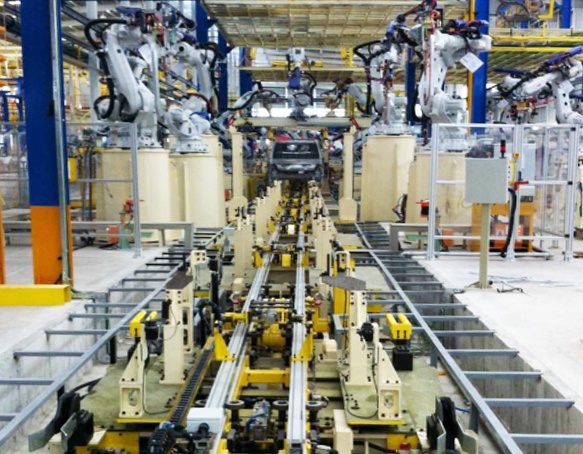 Automotive Body Welding Automated Manufacturing Solutions
 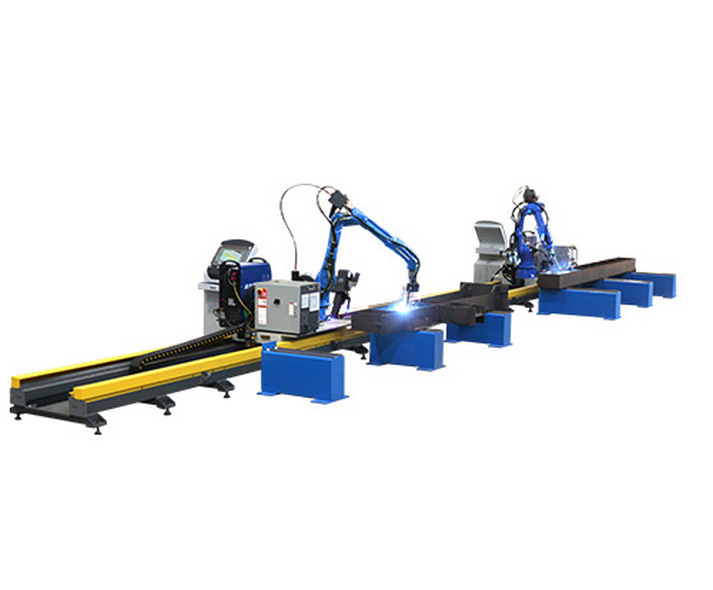 Free-Teaching Programming Welding Robot Cell For I Beam Welding
  No Programming Required Robotic Welding Systems for H beam Welding Line