Orbital Welding Stainless Steel Pipe | Orbital Welding Machine Manufacturer
2026-03-30 15:17:16
Ask most people about orbital welding stainless steel pipe, and they'll tell you it's straightforward. Set the parameters. Load the pipe. Let the machine run.
That's like saying playing piano is straightforward. Press the keys. The notes come out.
The reality of orbital welding stainless steel pipe is more complicated. We've been building equipment for TIG welding stainless steel pipe since 1994. We've sent engineers to over fifty countries. And we've watched the same mistakes happen again and again—people assuming that orbital welding stainless steel pipe is just carbon steel welding with different settings.
It's not. The material behaves differently. The heat management is different. The consequences of getting it wrong are different.
Here's what we've learned about orbital welding stainless steel pipe that you won't find in the manual.
Why Stainless Steel Demands a Different Approach
The first thing to understand about TIG welding stainless steel pipe is that stainless doesn't conduct heat like carbon steel. Carbon steel pulls heat away from the weld zone quickly. Stainless holds onto it.
This changes everything about orbital welding stainless steel pipe.
When you're running an orbital pipe welding machine on carbon steel, the heat you put into the root dissipates into the surrounding material. On stainless, that heat stays where you put it. The weld pool gets hotter. The penetration changes. The risk of burn-through increases.
We had a client who tried to use the same orbital pipe welding machine parameters for stainless that they'd developed for carbon steel. The welds looked fine on the outside. But when they cut cross-sections, the root penetration was inconsistent. Some areas were shallow. Others had burned through entirely.
The orbital welding stainless steel pipe process requires different thinking. Lower heat input. More passes. Better control of interpass temperature. The orbital pipe welding machine can execute the program. But the program has to be designed for stainless, not adapted from carbon.
This is why TIG welding stainless steel pipe demands more from the operator than carbon steel. Not more skill—more understanding of how the material responds to heat.
The Purge Problem That Ruins Stainless Welds
Here's something that surprises people about orbital welding stainless steel pipe.
You can run the perfect arc. You can have the perfect fit-up. You can have the most expensive orbital pipe welding machine on the market. And the weld can still fail from the inside.
The problem is oxidation. When stainless steel is exposed to oxygen at high temperatures, it forms chromium oxide. That oxide layer is what gives stainless its corrosion resistance. But if the inside of the pipe isn't properly purged during welding, the root oxidizes. The weld looks fine on the outside. But the inside is compromised.
We've seen this happen on projects ranging from pharmaceutical lines to offshore platforms. The orbital welding stainless steel pipe process produced beautiful beads. The X-ray passed. Six months later, corrosion started at the root where oxidation had gone undetected.
The solution isn't complicated, but it requires discipline. When you're doing TIG welding stainless steel pipe, the purge gas needs to displace all the air inside the pipe. It needs to maintain positive pressure throughout the weld. And on larger diameters, it needs to be managed carefully to avoid dead zones where oxygen accumulates.
We train every customer on this. The orbital pipe welding machine can't fix a bad purge. The machine does what you tell it. If you don't tell it to wait for proper purge conditions, it will happily weld through contaminated atmosphere.
This is one of the biggest differences between carbon steel and orbital welding stainless steel pipe. Carbon steel can tolerate some oxidation. Stainless cannot.
The Tungsten Factor
Another thing that changes with orbital welding stainless steel pipe is tungsten management.
On carbon steel, tungsten contamination is visible. The arc starts to wander. The operator sees it and changes the tungsten. The impact on weld quality is usually minimal.
On stainless, tungsten contamination is more subtle—and more damaging. A contaminated tungsten can destabilize the arc in ways that aren't obvious to the naked eye. The orbital pipe welding machine keeps running the program. But the heat distribution changes. The penetration profile drifts. And the root quality degrades over multiple welds before anyone notices.
We learned this from a client doing high-volume TIG welding stainless steel pipe for the food processing industry. They were running the same tungsten for eight-hour shifts. The first hundred welds looked perfect. By the afternoon shift, they were seeing porosity and inconsistent penetration.
The orbital pipe welding machine wasn't the problem. The tungsten was. After hours of continuous welding, it had picked up contamination from the material. The arc was no longer stable, but the change was gradual enough that nobody noticed until the defects started showing up.
Now we train customers to change tungsten on a schedule—not when it looks bad. For orbital welding stainless steel pipe, we recommend changing after a set number of welds, regardless of appearance. The cost of a tungsten is nothing compared to the cost of a failed weld on a stainless pipe that has to be cut out and rewelded.
Open Head vs. Closed Head for Stainless
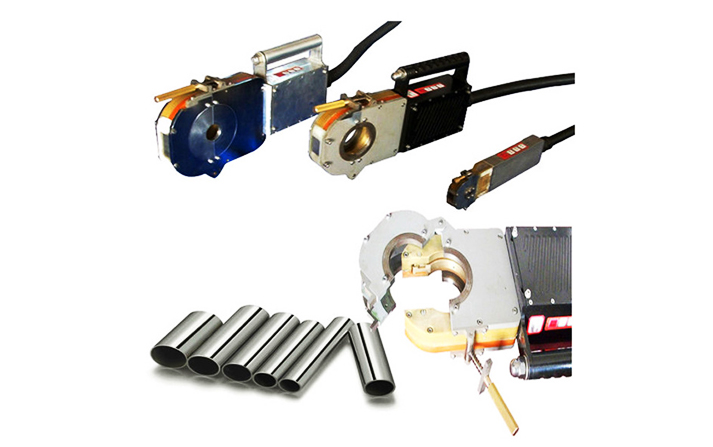
If you're shopping for an orbital pipe welding machine for stainless work, you'll face a choice: open head or closed head.
The open head clamps around the pipe from the outside. It's faster to set up. It handles a wider range of diameters. It's the standard choice for most orbital welding stainless steel pipe applications where the work is done in a shop with stable conditions.
The closed head encloses the weld zone completely. It provides better gas coverage. It protects the arc from drafts. For TIG welding stainless steel pipe in field conditions—or for high-purity applications where root quality is critical—the closed head is often the better choice.
We've seen clients try to use open heads for sanitary tubing in pharmaceutical plants. The welds looked fine. But the open head couldn't maintain consistent gas coverage in a facility with significant airflow from HVAC systems. The closed head solved the problem.
The orbital welding stainless steel pipe process doesn't care which head you use. But the conditions you're working in do. When you're evaluating orbital pipe welding machine options, ask about the environment where you'll be welding. The right head depends on where the work happens, not just what you're welding.
The Material Batch Problem
Here's something that stainless steel pipe welding companies don't usually tell you.
Not all 316L is the same.
The chemistry spec allows variation. Sulfur content can range from 0.005% to 0.030%. That range doesn't matter for most applications. But for orbital welding stainless steel pipe, it matters a lot.
We had a client who certified a procedure on one batch of 316L. The orbital welding stainless steel pipe process worked perfectly. Then they bought a different batch from a different mill. Same grade. Same certs. Suddenly they were getting porosity and inconsistent penetration.
The problem was sulfur. The first batch had sulfur around 0.020%. The second batch was below 0.008%. The lower sulfur changed the surface tension in the weld pool. The arc behavior changed. The orbital pipe welding machine was doing exactly what it was programmed to do. The program was wrong for the material.
Now, when we help clients set up TIG welding stainless steel pipe procedures, we ask about material sourcing. If they switch suppliers frequently, we build procedures with wider parameter windows that can accommodate normal chemistry variations. If they have consistent material sources, we can optimize more tightly.
The orbital welding stainless steel pipe process is precise. That precision is a strength—until the material changes. Then the precision becomes a liability if you haven't planned for variation.
What Stainless Steel Pipe Welding Companies Should Ask
If you're looking for an orbital pipe welding machine for stainless work, here are the questions that matter:
How does your machine manage heat input for stainless? The answer should include something about interpass temperature control, not just amperage and travel speed.
What's your approach to purge management? If they don't have a clear answer about oxygen levels, flow rates, and dam placement, keep looking. The orbital welding stainless steel pipe process lives or dies on purge quality.
Can you help us qualify procedures on our actual material? Not on sample coupons. On the pipe that's sitting in your shop. Because as we've learned, material variation matters.
Where else is your equipment running TIG welding stainless steel pipe? We can give you references in over fifty countries. Talk to them about how the orbital pipe welding machine performed on their stainless work.
How long have you been doing this? 1994. That's 31 years of watching what works and what doesn't on orbital welding stainless steel pipe. We've made the mistakes so you don't have to.
The Bottom Line
Orbital welding stainless steel pipe is not carbon steel welding with different settings. It's a different discipline. Heat management matters more. Purge quality matters more. Tungsten condition matters more. Material consistency matters more.
We've been building equipment for TIG welding stainless steel pipe since 1994. We've sent engineers to over fifty countries to train operators. We've seen what works and what doesn't. And the thing that separates success from failure isn't the orbital pipe welding machine alone—it's understanding how stainless behaves and building your process around that behavior.
If you're doing stainless work and your current equipment is giving you trouble, call us. Tell us what you're welding. Tell us where you're working. We'll help you figure out whether the problem is the machine, the material, or the process.
Because after 31 years, we've learned that the best stainless steel pipe welding companies aren't the ones with the most expensive equipment. They're the ones who understand what's actually happening inside the arc.





 Chinese
 English
 OA
OA Current location:
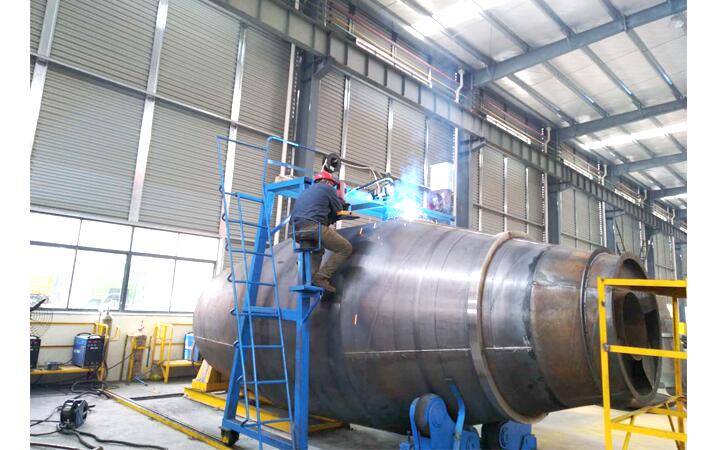 Concrete Mixer Drum Robotic Welding Solutions
 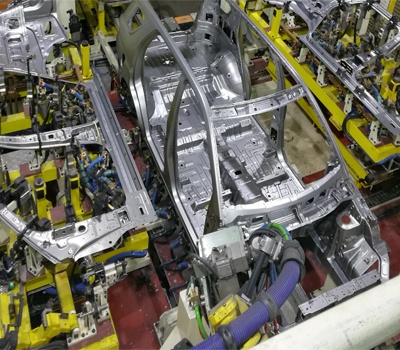 Automobile Body Production Line Welding Fixtures
 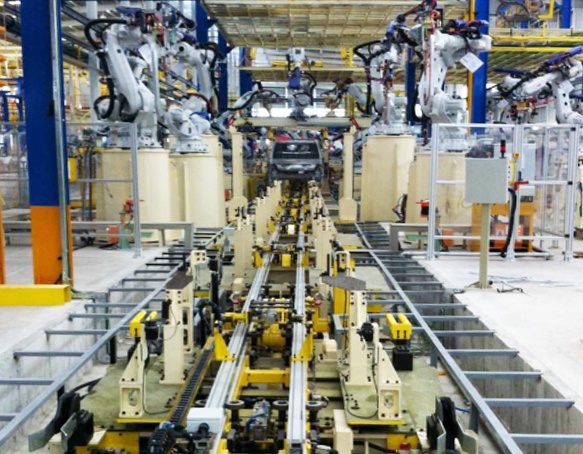 Automotive Body Welding Automated Manufacturing Solutions
 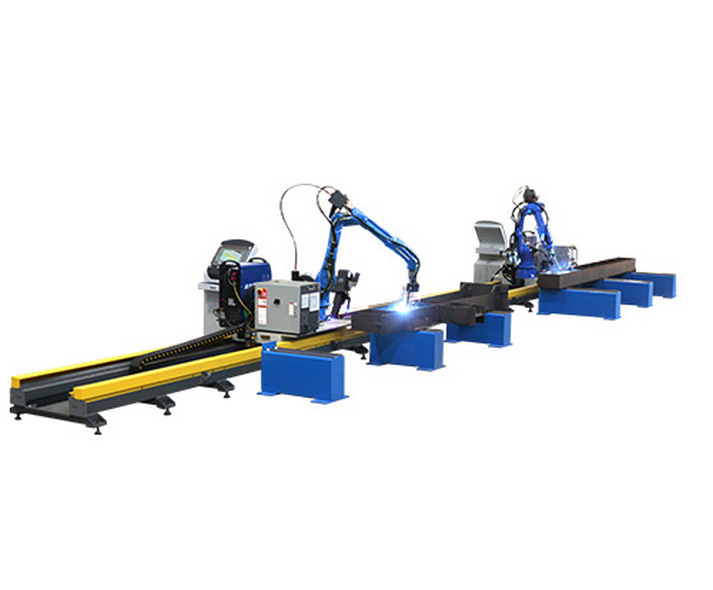 Free-Teaching Programming Welding Robot Cell For I Beam Welding
 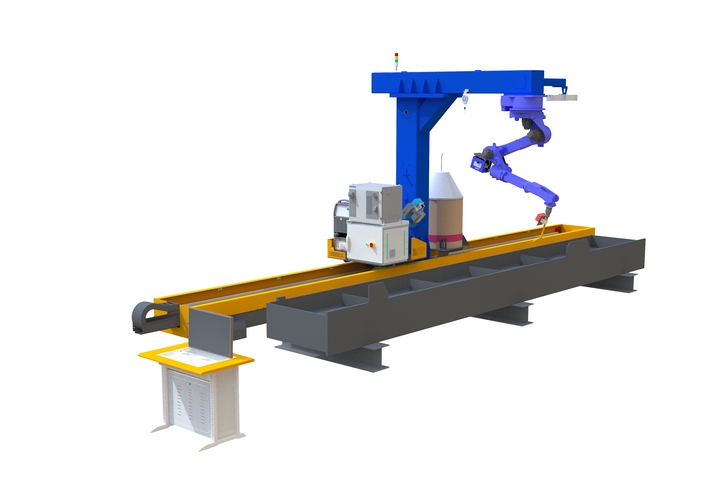 No Programming Required Robotic Welding Systems for H beam Welding Line