Orbital Welding Process | China Orbital Welding Machine Manufacturers
2026-03-24 15:10:44
Ask most people what the orbital welding process is, and they'll give you a definition. The torch rotates around the pipe. The arc stays on. The weld happens.
That's technically correct. It's also almost completely useless.
Here's what actually happens when you run an orbital TIG welding process on real pipe in a real shop with real deadlines. The machine does exactly what you tell it to do. The problem is that most people don't know what to tell it.
We've been running orbital TIG welding systems since 1994. We've watched the orbital welding process evolve from something only aerospace and nuclear shops used to something that's now standard in food processing, pharmaceutical, semiconductor, and pipeline construction. And we've watched a lot of people struggle with it because they assumed the machine did the thinking.
It doesn't. The orbital welding process is still welding. The machine just holds the torch steadier than a human hand can.
The Misconception About "Automation"
Here's the biggest mistake people make when they first encounter the orbital welding process.
They assume "automated" means "foolproof."
It doesn't. The orbital TIG welding process removes the variable of hand instability. It doesn't remove the variables of fit-up, purge, tungsten geometry, material chemistry, or heat management. Those still exist. They still matter. And when they go wrong, the orbital welding process will reproduce the same mistake on every joint until someone stops it.
We had a client who bought an orbital TIG welding system from a competitor before coming to us. They ran the orbital welding process on a batch of 304L pipe and got perfect welds. Then they switched to a different batch of material—same spec, different mill—and suddenly every weld had a small porosity cluster in the same location on the root.
They blamed the machine. They blamed the orbital welding process. They blamed everything except the material.
When we tested the second batch of pipe, the sulfur content was below 0.005%. That changed the surface tension in the weld pool. The orbital TIG welding process was doing exactly what it was programmed to do. The program was wrong for that material.
That's what the orbital welding process does. It executes. It doesn't improvise. If you don't understand what it's executing and why, you're going to have a bad time.
What Actually Makes the Orbital TIG Welding Process Work
People ask us all the time: what's the secret to making the orbital TIG welding process reliable?
There isn't one secret. There are about twenty, and most of them have nothing to do with the machine.
The purge matters more than the arc. The orbital welding process can produce a perfect bead on the outside while the inside looks like a rusty pipe. We've seen it happen hundreds of times. If your purge gas isn't clean, if your dams aren't sealed, if your flow rate isn't right for the diameter, the orbital TIG welding process will happily weld contaminated metal.
The tungsten is the weakest link. Most people running the orbital welding process change tungsten when it's obviously damaged. By then, the damage has already affected multiple welds. We train our customers to change tungsten on a schedule—not when it looks bad. A tungsten that looks fine can have microscopic contamination that destabilizes the arc in ways the orbital welding process will dutifully reproduce on every weld.
The fit-up determines the outcome. The orbital TIG welding process can tolerate some variation. It can't tolerate bad fit-up. If your pipe ends don't meet consistently, if the gap varies around the circumference, the orbital welding process will weld the variation into the joint. You'll see it in the root. You'll see it in X-ray. You'll see it in the rejection rate.
These aren't machine problems. They're process problems. And they're why the orbital welding process frustrates people who expect the machine to solve everything.
Why Orbital Welding Certification Matters More Than You Think
Here's something that surprises a lot of people.
You can buy the most expensive orbital TIG welding system in the world. You can hire the most experienced operator. If you don't have orbital welding certification for the specific job you're doing, none of it matters.
Orbital welding certification isn't just a piece of paper. It's proof that the orbital welding process has been validated on your material, your diameter, your wall thickness, and your fit-up conditions. Without it, you're guessing. And in industries like pharmaceutical, semiconductor, and aerospace, guessing isn't allowed.
We've watched projects get delayed for months because someone assumed the orbital welding certification from the last job would transfer to the next one. It doesn't. The orbital TIG welding process for 2-inch schedule 10s 316L is different from 4-inch schedule 40s. Different heat input. Different purge requirements. Different cooling rates. Different certification.
Orbital welding certification exists because the orbital welding process is repeatable. That repeatability means you can prove the weld quality. But it also means you have to prove it for every combination of variables you actually use. There's no shortcut.
What 31 Years of the Orbital Welding Process Taught Us
We started building orbital TIG welding systems in 1994. Back then, the orbital welding process was niche. Expensive. Mysterious.
Now it's everywhere. And we've learned a few things along the way.
The orbital welding process doesn't make welders obsolete. It makes good welders better. The best operators we've trained over the years aren't the ones who treat the orbital TIG welding process like a black box. They're the ones who understand what's happening inside the arc. They can hear when the purge isn't right. They can see when the tungsten is degrading before the machine detects it. They know when to stop and adjust rather than letting the orbital welding process run through a joint that's going to fail.
We send engineers to train customers in over fifty countries now. Every time, we tell them the same thing: the machine is the easy part. The orbital welding process is the skill. And skill takes time to build.
Orbital welding certification is part of that skill. It's not the end. It's the beginning of knowing what you're actually doing.
The Cost of Getting It Wrong
We've seen customers approach the orbital welding process two ways.
The first way: buy the cheapest orbital TIG welding system they can find, watch a few videos, and start welding. They save money upfront. Then they spend the next year chasing defects, scrapping pipe, and trying to figure out why the orbital welding process isn't giving them the results they expected.
The second way: invest in proper training, get orbital welding certification for their applications, and treat the orbital welding process as what it is—a precision manufacturing process that requires discipline.
The first group usually calls us eventually. They've already spent more on rework than a proper system would have cost. They've already lost customers. They've already burned through the savings they thought they were getting.
The second group is still running the orbital TIG welding process we helped them set up years ago. They call when they need new consumables or when they're adding a new material to their certification. That's it. Because they did it right the first time.
What to Look For in Orbital Welding Certification
If you're building out your capability with the orbital welding process, here's what matters in orbital welding certification:
Procedures qualified on your actual pipe. Not on sample coupons. Not on material from the supplier's inventory. On the pipe that's sitting in your shop right now.
Welders certified on your actual equipment. A certification from a training center on their machine doesn't transfer to your orbital TIG welding system. Different controls. Different arc characteristics. Different muscle memory.
Documentation that follows the job. When a client asks for proof that the orbital welding process meets their specification, you need to be able to show them. Not a generic certificate. The specific procedure that ran on their pipe.
We help our customers build their orbital welding certification programs. Not because we're generous—because we've seen what happens when they try to figure it out alone. It takes longer. It costs more. And it usually ends with a phone call asking us to fix something that shouldn't have been broken.
The Bottom Line
The orbital welding process is powerful. It can produce welds that no human hand can match. It can run for hours with perfect consistency. It can document every parameter so you have traceability for years.
But the orbital TIG welding process is still welding. It still needs someone who understands what's happening inside the arc. It still needs proper qualification through orbital welding certification. It still needs attention to the details that matter—purge, fit-up, tungsten, material chemistry.
We've been running the orbital welding process since 1994. We've sent engineers to over fifty countries to teach it. We've seen what works and what doesn't. And the thing that separates success from failure isn't the machine.
It's the person running the orbital TIG welding process. The one who knows when to trust the machine and when to stop it. The one who gets the certification, understands the variables, and treats every joint like it matters.
If you're building that capability, we'd like to help. Not just with equipment—with the training, the procedures, the orbital welding certification that makes the whole thing work. We've been doing this long enough to know that selling a machine without teaching the process is like selling a car without teaching someone to drive.
That conversation doesn't cost anything. And if we're not the right fit for what you're trying to do with the orbital welding process, we'll tell you that too. We've been doing this long enough to know when someone else's approach makes more sense.





 Chinese
 English
 OA
OA Current location:
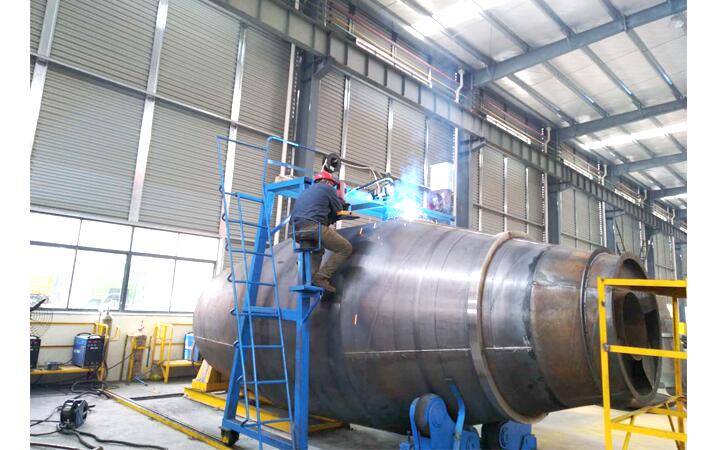 Concrete Mixer Drum Robotic Welding Solutions
 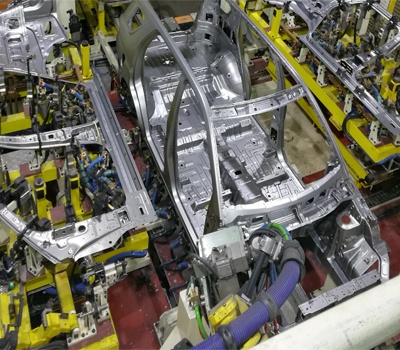 Automobile Body Production Line Welding Fixtures
 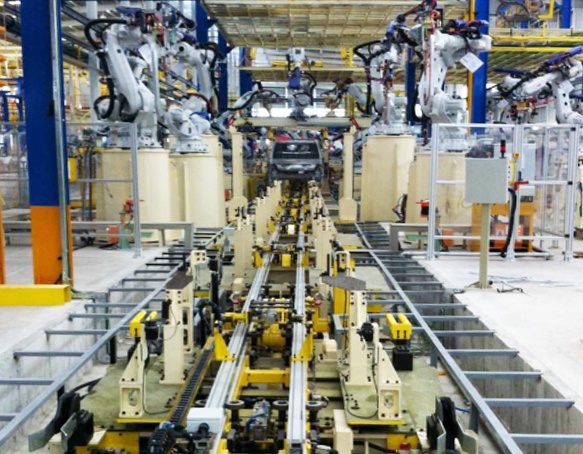 Automotive Body Welding Automated Manufacturing Solutions
 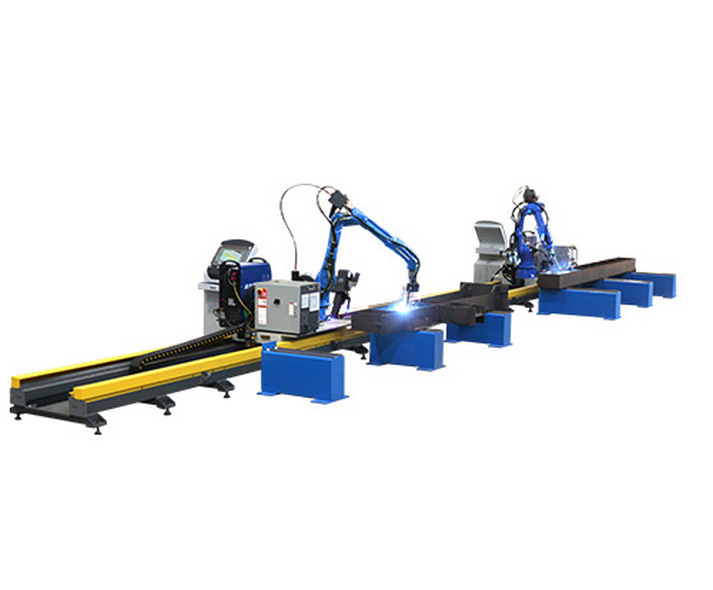 Free-Teaching Programming Welding Robot Cell For I Beam Welding
 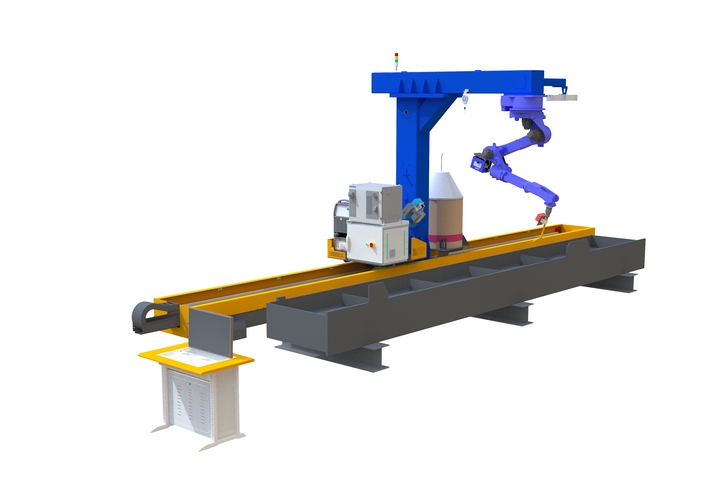 No Programming Required Robotic Welding Systems for H beam Welding Line