+86 15633683072
A magnetic welding tractor can automate circumferential and longitudinal welding on large steel pipes, storage tanks, and other ferromagnetic structures. Magnetic wheels or an integrated magnetic attachment system hold the carriage against the workpiece while it moves the welding torch along the planned path.
However, magnetic attachment alone does not guarantee stable travel or good weld quality. Pipe curvature, material properties, surface condition, and torch access all affect performance. This guide explains where a magnetic welding tractor works best, what to check before purchasing, and when a track-guided system may be more suitable.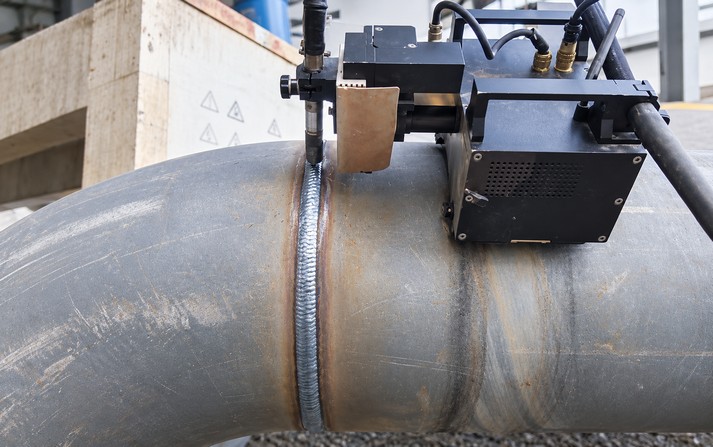
A magnetic welding tractor is suitable for consideration when the workpiece is magnetic steel, the carriage can maintain stable attachment, and the welding path is accessible.
Typical applications include:
Circumferential weld on large steel pipes and cylindrical shells.
Longitudinal and circumferential seams on steel storage tanks.
Repetitive welding on large steel structures that are difficult to rotate.
Mechanized welding where consistent torch travel is important.
It may be unsuitable for non-magnetic materials, severely irregular surfaces, incompatible pipe curvature, or locations where the carriage cannot be secured safely.
Important: Magnetic travel, automatic seam tracking, and orbital welding are different capabilities. Confirm which functions the actual machine provides.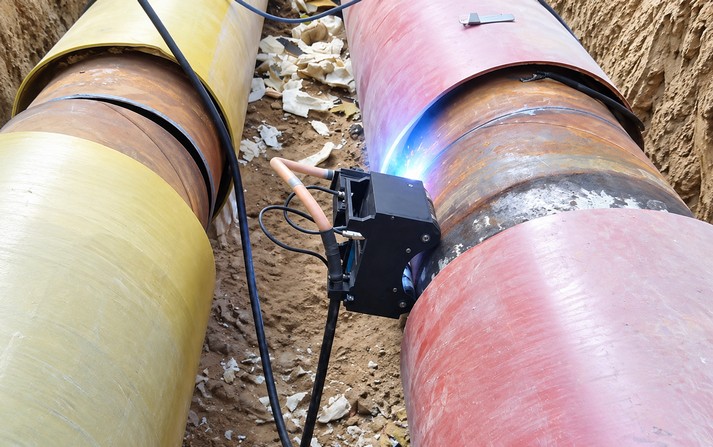
A magnetic welding tractor combines a travel mechanism, magnetic attachment, torch mounting hardware, and controls. Depending on the model, it may also require a compatible welding power source, wire feeder, or other accessories.
The magnetic system holds the carriage against the steel surface while the drive mechanism moves it along the seam. The torch then welds according to the selected process and parameters.
A magnetic welding tractor is not necessarily a complete automatic pipe welding machine. Some models mainly provide mechanized travel, while other systems integrate additional controls or welding functions. Buyers should confirm the actual scope of supply.
Three factors deserve particular attention:
Material: Carbon steel and many low-alloy steels are ferromagnetic. Aluminum and many austenitic stainless steels generally do not provide suitable magnetic attraction.
Surface condition: Thick coatings, loose rust, scale, spatter, and debris can interfere with wheel contact and stable movement.
Curvature and thickness: Wheel geometry, magnetic circuit design, and workpiece dimensions affect the available holding force.
Test the actual workpiece instead of relying only on a catalogue holding-force figure measured under ideal conditions.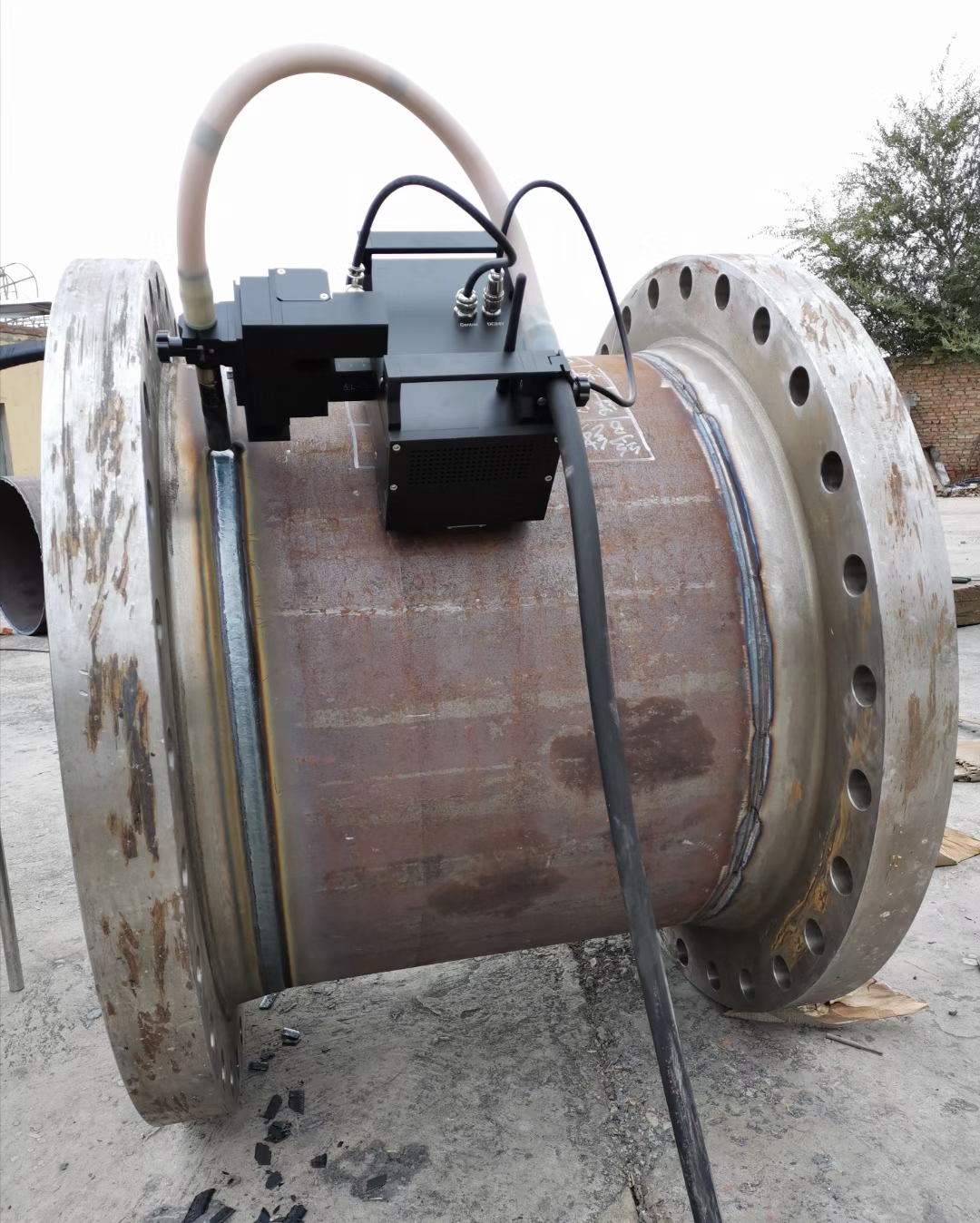
A magnetic welding tractor can travel around a stationary pipe when its attachment system and chassis are designed for the pipe's curvature. This arrangement can be useful for field fabrication and large pipes that are difficult to rotate.
For pipe circumferential seam welding, check whether the carriage maintains wheel contact and torch position throughout the route. Supports, fittings, local distortion, and obstacles can interfere with travel.
A magnetic welding machine for large pipe should therefore be selected according to the actual diameter range, wall thickness, joint configuration, and welding position—not maximum diameter alone.
Tank fabrication may involve both longitudinal seams and horizontal circumferential weld. Magnetic carriages can reduce continuous manual torch movement when the steel surface and travel path are suitable.
However, tank curvature, plate distortion, coatings, and nearby attachments may vary across the same project. A magnetic welding tractor for large pipes may also suit cylindrical tank shells, but compatibility must be verified.
For elevated work, assess cable management, emergency stops, retrieval arrangements, and fall-prevention measures. Magnetic attraction alone should never be treated as the only protection against a falling machine.
For long, accessible seams, mechanized travel can reduce variation caused by manual torch movement. The benefit depends on repeatable joint preparation, torch positioning, and welding parameters.
If each joint requires extensive repositioning or has substantially different geometry, compare total setup time and production cycle time rather than travel speed alone.
Confirm that the workpiece is suitable for magnetic attachment. Stainless steel grades differ in magnetic response, so the material name alone is not enough.
If the workpiece is non-magnetic or attachment is uncertain, consider a mechanically secured track or another approved mounting method.
Wheel spacing, chassis geometry, and torch offset affect how the carriage follows a curved surface. Confirm the permitted operating range and test it on a representative pipe section.
A magnetic welding machine for large pipe must maintain stable contact throughout the intended route.
Paint, thick scale, corrosion, spatter, and debris may reduce effective contact or cause unstable travel. Prepare the contact path according to the manufacturer's requirements.
Include any necessary surface preparation in the production plan.
Evaluate the complete assembly under realistic conditions, including the effect of welding leads and control cables pulling on the carriage.
Follow the manufacturer's safety instructions and site procedures. Do not operate the equipment if attachment stability is uncertain.
A carriage may move steadily but still deviate from the joint. Check seam straightness, fit-up variation, and local distortion before welding.
Automatic seam tracking is a separate function that uses a sensing and control system to detect joint position and correct the travel path or torch position. It is not standard on every magnetic welding tractor.
If automatic seam tracking is required, confirm the sensing method, correction range, and compatibility with the actual joint and welding process.
Check that the torch can reach the seam at the required angle without interference from the chassis, wheels, cables, or fixtures. Consider access for tack welds, starts and stops, and multi-pass welding.
The welding process and parameters must suit the material, thickness, joint design, and applicable welding procedure. Mechanized movement does not automatically guarantee penetration or weld quality.
Review travel-speed adjustment, emergency stops, cable routing, power-source compatibility, and maintenance access.
For work on elevated tank surfaces, establish an appropriate retrieval and fall-prevention plan. Never rely on magnetic attraction alone when a dropped carriage could endanger personnel.
These designs are related but not identical.
A magnetic welding tractor typically attaches directly to the steel surface through magnetic wheels or an integrated magnetic system. Its route depends on wheel design, steering, initial alignment, and any guidance functions.
A magnetically fixed flexible track carriage runs along a flexible rail or track that is attached to the workpiece, potentially using magnets.
| Feature | Magnetic welding tractor | Magnetic flexible track carriage |
|---|---|---|
| Attachment | Directly to the workpiece | Track attaches to the workpiece |
| Path guidance | Depends on wheel layout and guidance system | Defined mainly by track position |
| Setup | Check contact and travel path | Install, secure, and align the track |
| Curved surfaces | Depends on chassis and wheel design | Depends on track flexibility and permitted radius |
| Main concern | Attachment stability and path deviation | Track fixing and alignment |
Neither design is always better. A direct magnetic tractor may reduce track-installation work, while a track-guided system can provide a more defined travel path.
For a detailed comparison, see Welding Track Carriage vs. Magnetic Welding Carriage: Which One Fits Your Job?.
The term magnetic orbital welding machine can be used inconsistently in product listings. Buyers should confirm the mechanism and functions rather than relying on the name.
In conventional orbital welding, a dedicated head or mechanism moves the welding arc around a pipe or tube. A magnetic welding tractor usually travels over the surface of a large steel workpiece while carrying a torch.
Some suppliers may use magnetic orbital welding machine to describe a magnetic carriage for circumferential weld. However, that label does not prove the machine has a dedicated orbital head, closed-loop orbit control, or automatic seam tracking.
Before comparing a magnetic orbital welding machine with a conventional orbital system, ask:
Does the torch travel around a stationary pipe, or does the workpiece rotate?
Does the carriage attach directly to the surface or run on a track?
How is the travel path controlled or corrected?
Which pipe diameters, materials, and welding positions have been verified?
If the requirement is mechanized welding on a large steel shell, a magnetic carriage may be suitable. For precision orbital welding of smaller tubes, a dedicated orbital welding system may be more appropriate.
The main limitations of magnetic welding tractors relate to material compatibility, surface condition, geometry, path control, and safety.
Conventional magnetic attachment is generally unsuitable for aluminum and many austenitic stainless steels. An alternative mounting system may be necessary.
Deep corrosion, heavy spatter, sharp transitions, and local deformation can affect contact and movement. A chassis suitable for a large cylindrical shell may not fit a smaller pipe radius.
A basic carriage may require manual alignment and operator supervision. Where the joint wanders significantly, automatic seam tracking or track guidance may be needed.
Nearby nozzles, stiffeners, fixtures, and cables can prevent the torch from reaching the joint. Elevated work also requires appropriate retrieval and fall-prevention measures.
A magnetic welding tractor can improve travel consistency, but it cannot compensate for poor joint preparation, incorrect parameters, contamination, inadequate shielding, or an unsuitable welding procedure.
For installation and alignment guidance, see How to Set Up a Welding Track Carriage for Pipe Circumferential Weld. Some setup principles also apply to magnetic carriages, although their attachment and safety checks differ.
Before production, confirm that:
The material is suitable for the magnetic attachment system.
Pipe diameter and curvature are within the permitted range.
The contact surface is clean and suitable.
Attachment stability has been checked in the actual operating orientation.
The torch can reach the joint at the required angle.
The travel path is aligned and the need for automatic seam tracking has been assessed.
Cables, emergency stops, and retrieval arrangements are ready.
A dry run has been completed.
A representative trial weld has been inspected against the applicable acceptance criteria.
A successful dry run confirms movement, not weld quality. The trial weld must also be evaluated under the relevant welding procedure.
Yes, if the pipe is compatible with the magnetic attachment system and the carriage geometry, travel range, torch access, and safety arrangements suit the application.
That depends on the stainless steel grade and attachment design. Many austenitic grades have weak or negligible magnetic attraction, so conventional magnetic wheels may not hold reliably.
No. Some models rely on manual alignment and operator supervision. Confirm that the machine includes a suitable sensing and correction system if automatic seam tracking is required.
Not necessarily. Conventional orbital welding generally uses a dedicated head or mechanism to move the arc around a pipe or tube. A magnetic tractor usually moves over the workpiece surface. Compare the actual mechanism and control functions.
Confirm material magnetism, pipe diameter, curvature, surface condition, attachment stability, torch access, path guidance, controls, and site safety. Complete a dry run and representative trial weld before production.
A magnetic welding tractor can be a practical option for circumferential and longitudinal welding on large steel pipes and tanks when the workpiece, surface, curvature, and travel path are suitable.
The key is to verify attachment stability and path control on the actual workpiece. A magnetic tractor, a magnetically fixed flexible track carriage, and a dedicated orbital welding system solve different problems. Selecting the right configuration can reduce setup issues and improve welding consistency without assuming functions the machine does not provide.
Zhengzhou Kehui Technology Co., Ltd
Email: info@zzkehui.com





 Chinese
 English
 OA
 Current location:
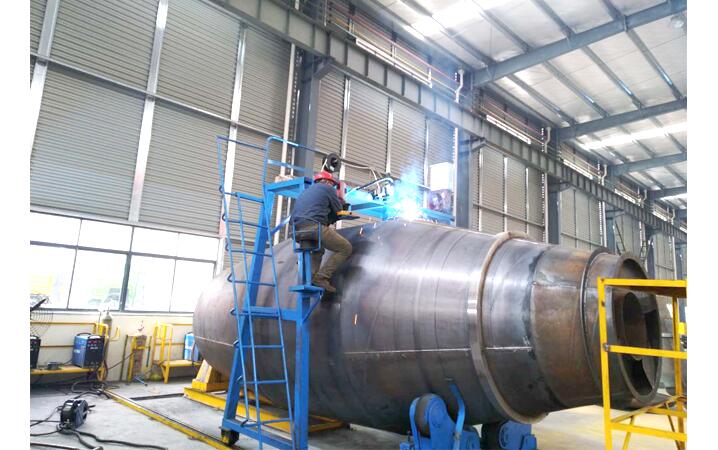 Concrete Mixer Drum Robotic Welding Solutions
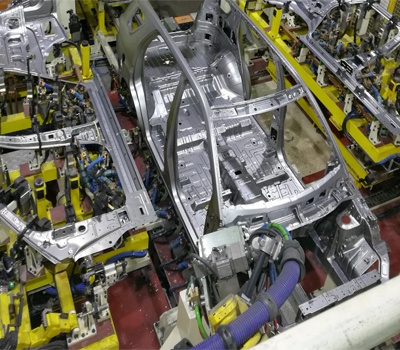 Automobile Body Production Line Welding Fixtures
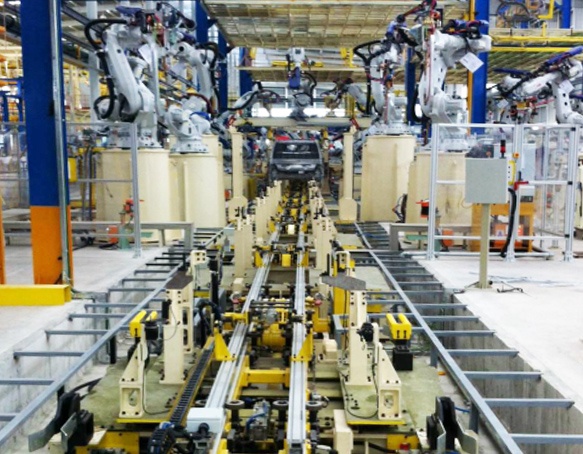 Automotive Body Welding Automated Manufacturing Solutions
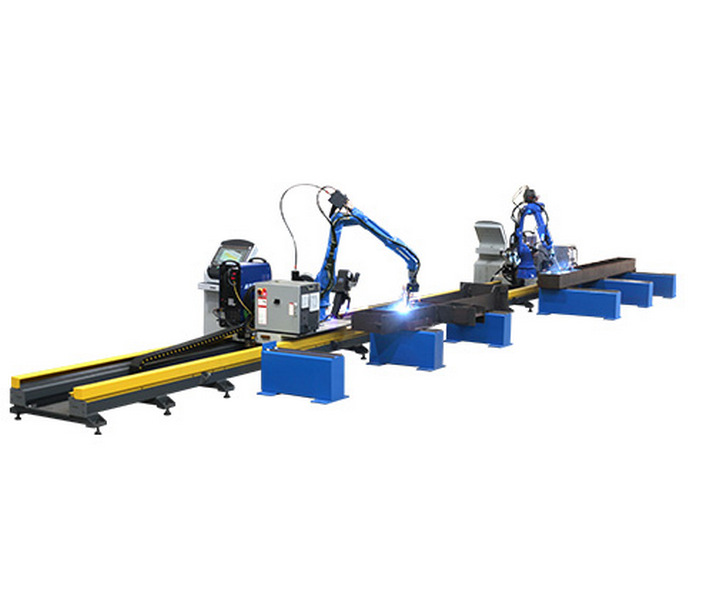 Free-Teaching Programming Welding Robot Cell For I Beam Welding
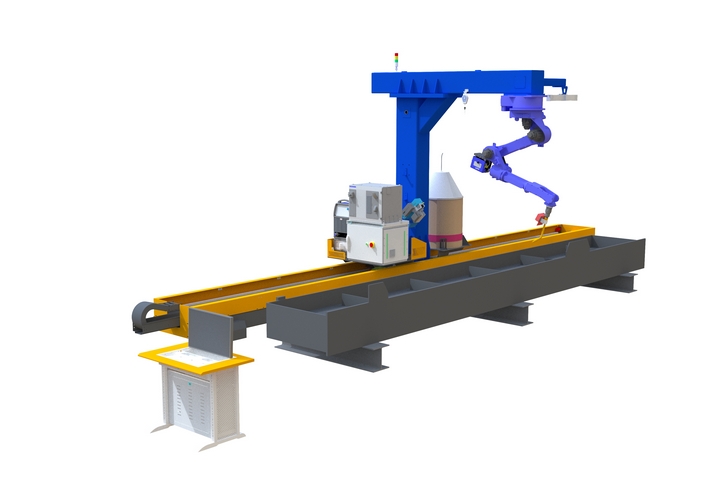 No Programming Required Robotic Welding Systems for H beam Welding Line