+86 15633683072
A welder working a 1,200 mm pipe girth weld walks or rotates through nearly 4 meters of travel per pass. On a 25 mm wall with six to eight fill passes plus cap, that’s 24 to 32 meters of torch travel per joint—often at elevation, in a trench, or inside a vessel. The physical demand alone limits how many joints a single operator can complete per shift, and the quality variance between the first joint and the fifth is predictable.
This is the reality behind the shift toward automated pipe welding. The question isn’t whether to automate large-diameter pipe circumferential weld—it’s which automation approach fits the geometry, volume, and site conditions of your specific project.
Two families of equipment dominate: orbital welding systems that wrap around the pipe with a guide ring, and magnetic welding tractors that travel directly on the pipe surface. Each has a clear application window. Here’s how to choose between them, based on what actually happens on the floor.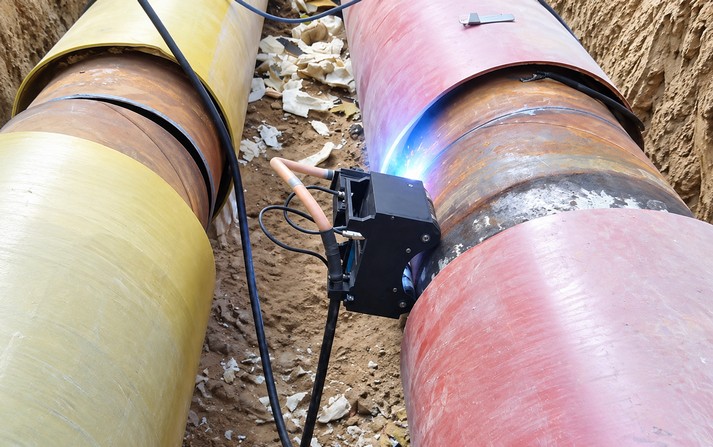
An orbital welder mounts on the pipe via a guide ring or track and rotates the torch around the circumference. The pipe stays stationary; the weld head does the traveling. This is the standard approach for pipe-to-pipe and pipe-to-fitting joints in process piping, power plants, and petrochemical facilities.
The Magnatech orbital welder platform is the reference point here. The Pipeliner series uses interchangeable guide rings to cover pipe sizes from 6 to 60 inches and larger, using GMAW or FCAW processes. For heavy-wall GTAW work on smaller diameters up to 14 inches, the D-Head 420 uses guide ring insert kits to span that range with a water-cooled torch rated at 200 A continuous. The E-Head goes down to 1.75 inches for fusion or wire-feed GTAW on stainless and high-alloy piping.
What makes the Magnatech orbital welder practical on large diameter pipe circumferential welding is the guide ring system. The ring mounts concentrically on the pipe OD, and the weld head travels around it with a positive drive system that maintains uniform rotation speed regardless of wear. The head doesn’t care about gravity—it welds the same at 12 o’clock as at 6 o’clock.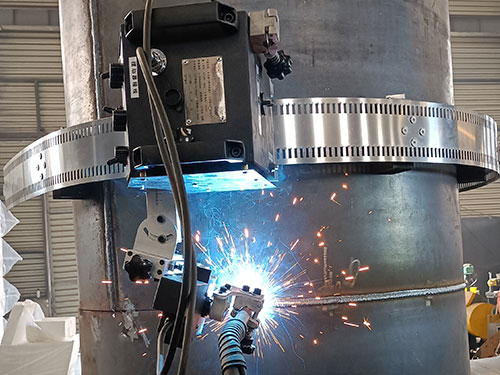
A magnetic welding tractor works differently. It attaches directly to the ferromagnetic pipe surface with permanent magnets and drives itself around the circumference. No guide ring, no track installation.
The WQ-III magnetic pipe welding tractor is a representative example: 16 kg, four magnetic wheels for continuous adhesion, travel speed adjustable from 0 to 700 mm/min, and a swing function with adjustable width, speed, and dwell time. It operates directly on the arc surface of the workpiece without external rails.
For large diameter pipe circumferential welding, the magnetic welding tractor’s advantage is deployment speed. Setup takes minutes instead of the 20–30 minutes typical for guide ring installation and alignment. The trade-off is precision: magnetic drive systems are more sensitive to surface conditions, pipe ovality, and coating than a mechanically mounted guide ring.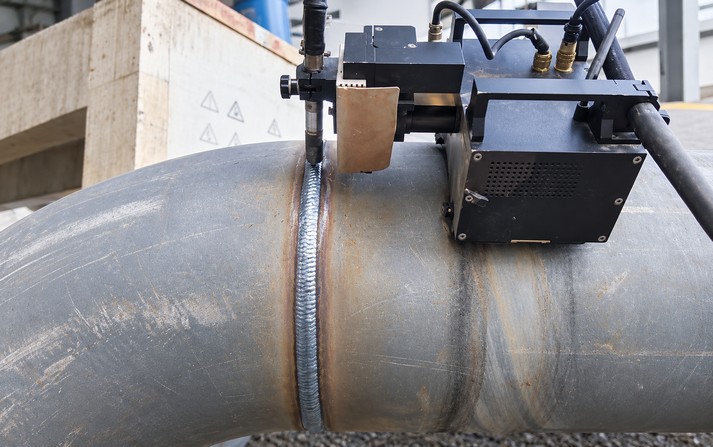
Pipe size repeats consistently. The guide ring is sized to the pipe OD. If you’re running the same diameter across dozens or hundreds of joints—pipeline spreads, spool fabrication, vessel shells—the setup time amortizes and the orbital welder delivers unmatched consistency.
The weld quality specification is demanding. A contractor at the Syncrude coker expansion in Alberta used a Magnatech Pipeliner with Flx-Track magnetic attachment to weld 3.25 m diameter pipes with 25 mm wall. Over 110 linear meters of weld deposit requiring 100% radiographic inspection to ASME Section VIII, the repair rate came in at 0.086%. That level of repeatability comes from the positive drive system and the controlled arc gap, not from operator skill.
The material is non-ferromagnetic. Stainless, aluminum, and duplex piping rule out magnetic adhesion. The guide ring mounts mechanically, so an orbital welder is the only automated option.
Joint locations vary. Field construction, repair work, and mixed-production shops rarely run the same diameter twice in a row. The magnetic welding tractor’s rail-free setup means you’re welding in minutes, not half an hour.
The pipe has coating or insulation. The magnetic tractor can run directly on bare steel, and for pipes with anti-corrosion coating, a simple rail can be laid on top of the coating without damaging it. Orbital guide rings need bare pipe OD for mounting.
Access is restricted. A magnetic welding tractor is compact and self-contained. It doesn’t need the circumferential clearance that a guide ring and rotating weld head require.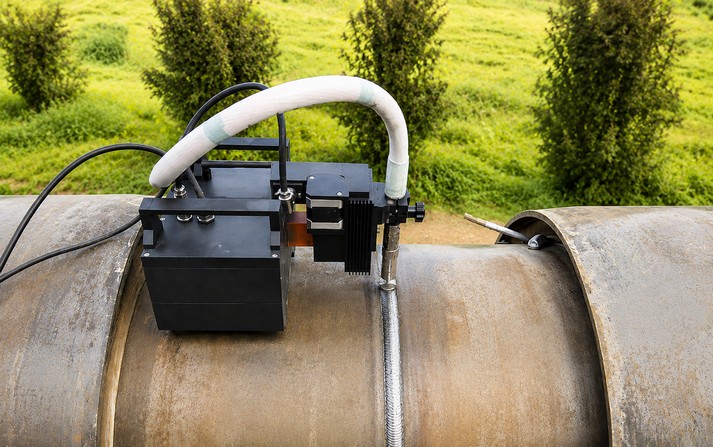
Automation doesn’t just weld faster. It changes the economics of the entire joint.
On China’s China-Russia East Route pipeline (1,422 mm diameter), manual welding required 7 hours per girth weld. Robotic welding completed the same joint in 1 hour—a 7x productivity gain on flat terrain and 4x in mountainous sections. First-pass acceptance rate reached 98% on the East African Crude Oil Pipeline with 610 mm diameter and 11.54 mm wall thickness. Filler metal consumption dropped from 2.9 kg to 1 kg per joint.
The National Pipeline Network Corporation reports that full circumferential weld automation now completes a 1.2 m diameter joint in approximately 40 minutes, with 100% automated ultrasonic inspection.
These numbers are achievable with either orbital welders or magnetic welding tractors—the automation method matters less than the consistency of travel speed and torch position. What changes between the two approaches is setup time, not weld quality potential.
A fabrication shop manager running pressure vessel girth seams once put it bluntly: “The guide ring is 15 minutes. Alignment is another 10. Removal is 5. That’s half an hour per joint that never shows up on the job cost sheet.”
Multiply that by 200 joints and you’ve lost 100 hours of arc-on time.
But flip the scenario: the same manager running 40 identical vessels in a batch. The guide ring goes on once, stays aligned, and the carriage runs the full circumference in one continuous pass. The 30-minute setup becomes irrelevant against the 6-hour weld.
The magnetic welding tractor avoids the setup cost entirely but introduces a different variable: surface preparation. The magnetic wheels need clean, bare steel to maintain adhesion. Mill scale, rust, and weld spatter all affect grip. On a pipeline spread where the pipe OD has been wire-brushed and the surface is consistent, that’s manageable. In a shop where the pipe has been sitting outside for months, it’s a daily fight.
| Your Situation | Recommended Approach | Why |
|---|---|---|
| Pipeline spread, same diameter, 100+ joints | Magnatech orbital welder with guide ring | Setup amortizes; repair rate under 0.1% achievable |
| Field repair, varying diameters | Magnetic welding tractor | Rail-free setup; minutes to first arc |
| Stainless or aluminum piping | Orbital welder only | Magnetic adhesion doesn't work |
| Vessel shells with coated ID | Magnetic welding tractor with rail on coating | No bare OD required |
| Heavy-wall GTAW root passes | Orbital welder with water-cooled head | Arc gap control follows pipe contour |
| High-mix shop, 5–20 joints per day | Magnetic welding tractor | Changeover time is the bottleneck |
The spec sheet tells you travel speed and oscillation range. It doesn’t tell you what happens on your pipe.
Ask for a demo on your actual diameter, your wall thickness, and your surface condition. A circumferential welding carriage that runs perfectly on a clean 12-inch pipe in a showroom may struggle on a 48-inch pipe with mill scale and light pitting. The Magnatech orbital welder’s guide ring mounting is less sensitive to surface condition than magnetic adhesion, but it requires the pipe OD to be accessible and reasonably round.
Ask about guide ring availability for your size range. If you’re welding 6-inch to 60-inch, you need the full set. If you’re welding one diameter forever, you need one ring and a spare.
And ask about the control system. The Magnatech platform’s digital technology eliminates periodic calibration for rotation and filler wire speed—heads can be interchanged without recalibration. That matters when you’re running multiple heads across different jobs in the same shop.
Yes—a magnetic welding tractor that attaches directly to the pipe OD works on large-diameter carbon steel. It eliminates guide ring setup but requires clean, bare, ferromagnetic surface for consistent adhesion. For stainless or coated pipe, a guide ring system like the Magnatech orbital welder is the practical choice.
On well-controlled projects, sub-1% repair rates are achievable. The Syncrude coker expansion reported 0.086% repair rate on 110 meters of weld deposit with 100% RT inspection. China's robotic pipeline welding achieved 98% first-pass acceptance on 610 mm diameter pipe. Manual welding on comparable joints typically runs 3–5% repair rate.
Yes. The tractor can run on bare steel, or a simple rail can be laid over the coating without removing it. The rail provides the travel path, and the tractor follows it. This makes the magnetic welding tractor practical for field joints where coating is already applied and you don't want to strip it for welding access.
The Pipeliner series with interchangeable guide rings covers 6 to 60 inches and larger. The D-Head 420 covers 1 to 14 inches for multipass GTAW. The E-Head covers 1.75 to 14 inches for fusion or wire-feed GTAW. Custom guide rings extend the range beyond 60 inches.
Typically 15 to 30 minutes for a 24-inch to 48-inch joint, including mounting, alignment, and removal. Magnetic welding tractors reduce this to 2–5 minutes. The orbital welder's setup time pays off when the same joint repeats across a production run.
Zhengzhou Kehui Technology Co., Ltd
Email: info@zzkehui.com





 Chinese
 English
 OA
OA Current location:
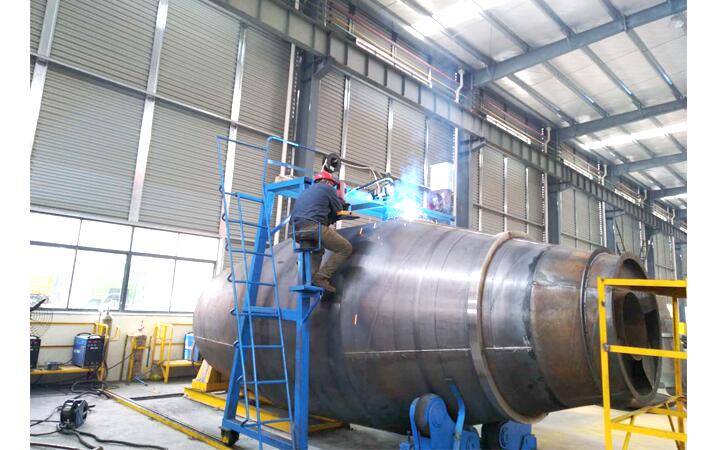 Concrete Mixer Drum Robotic Welding Solutions
 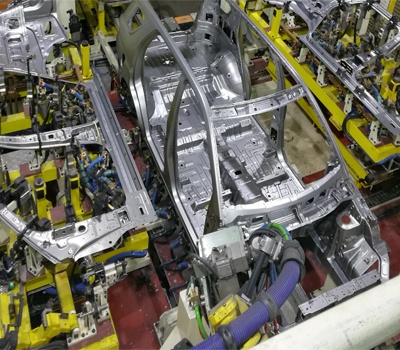 Automobile Body Production Line Welding Fixtures
 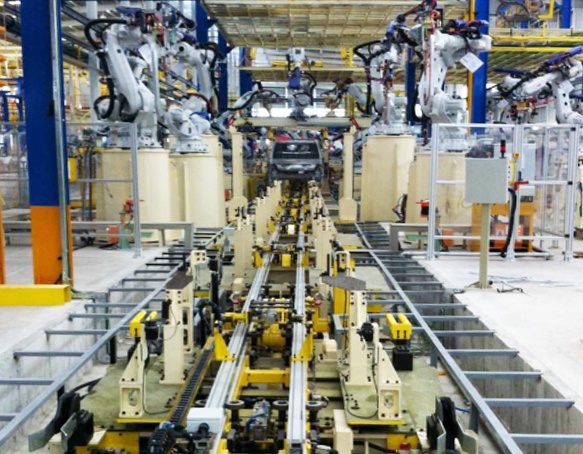 Automotive Body Welding Automated Manufacturing Solutions
 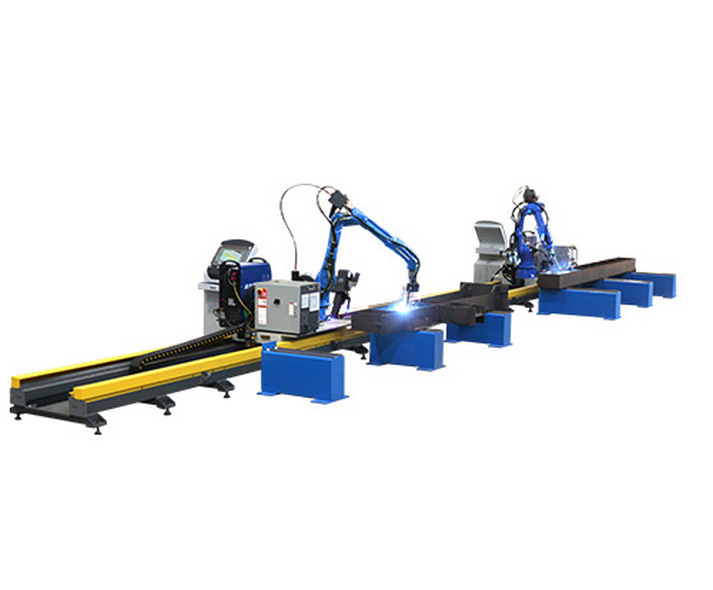 Free-Teaching Programming Welding Robot Cell For I Beam Welding
  No Programming Required Robotic Welding Systems for H beam Welding Line