Buying Robots vs. Buying Automotive Assembly Line Robots: What's the Difference?
2025-12-30 16:54:05
In the process of automating automotive manufacturing, many companies face a seemingly simple but actually crucial choice: Should they buy a few automotive assembly robots first, or build an entire automated assembly line?
On the surface, both involve using robots, but in a real automotive factory, the results of these two choices are often completely different.
1. A Single Robot Cannot Solve "System-Level Problems"
Many clients, when first encountering automotive assembly robots, often start with a single robot, hoping to replace a manual workstation. However, in actual operation, problems quickly arise:
The robot welds very stably, but loading and unloading are out of sync.
The welding rhythm is fine, but the entire line still lags.
When changing car models, the robot's program can be modified, but the fixtures cannot.
This is a typical manifestation of a single robot's inability to solve system-level problems.
Truly mature automotive assembly line robots, from the outset, are not "a single piece of equipment," but a system designed around the overall rhythm, logistics, and process.
2. Automotive assembly line robots are essentially "engineering systems."
From an engineering perspective, automotive assembly line robots are not simply "a collection of robots," but a highly coupled automated system, including:
Assembly cycle time design
Logical relationships between processes
Jig and positioning systems
Collaboration between robots and conveyor systems
Safety and control architecture
This is why, in automotive factories, if automotive assembly line automation is poorly planned, the cost of correcting it later is far higher than "doing more system design" initially.
3. Why are a few automotive assembly robots often not enough?
In multiple projects, we have observed a recurring phenomenon: Clients have purchased excellent automotive manufacturing robots, but the production line remains inefficient.
The reason is usually not a robot performance issue, but rather:
The robots and tooling were not designed together.
The assembly logic still follows a manual approach.
There is a lack of unified production line control and cycle time management.
These types of projects often ultimately return to one direction—re-implementing a complete automotive assembly line automation system.
4. Car assembly line robots are more like "collaborative teams" than individual devices.
In truly mature car assembly line robot projects, each robot is merely a "role" within the system, not the main player.
For example:
Some robots handle precision assembly.
Some handle welding or joining.
Some handle handling and transfer.
Only through collaborative design at the system level can automotive assembly robots truly realize their value, rather than becoming "single-point automation."
5. Cobots for the automobile assembly line are not a panacea.
Collaborative robots have become very popular in the automotive industry in recent years. Cobots for the automobile assembly line do have advantages in flexible assembly and human collaboration, but they still rely heavily on system design.
If collaborative robots are simply treated as "safer robotic arms" without redesigning the assembly logic, process division, and cycle time, the results often fall short of expectations.
Whether it's industrial robots or collaborative robots, the ultimate determinant of success remains the overall planning capability of the automotive assembly line robots.
6. Why are integrators more important than robot brands?
Many clients spend considerable time comparing robot brands upfront, overlooking a more crucial question: Who will transform these robots into a truly functional automotive assembly line?
The robot brand determines the "upper limit," while the system integrator determines the "implementation effect."
An experienced integrator focuses not on "which robot to use," but rather on:
Whether the process is suitable for automation
Whether the assembly sequence is reasonable
Whether it can be scaled for future vehicle models
Whether on-site maintenance is convenient
This is precisely why the value of system integration in automotive assembly line robots projects far exceeds the value of a single device.
7. From buying equipment to building a system: a mindset upgrade
From practical experience, automotive manufacturers typically go through three stages to truly complete automation upgrades:
Purchasing a single automotive assembly robot
Identifying system bottlenecks
Shifting to whole-line automotive assembly line automation
Companies that start by thinking from a system-level perspective tend to progress more steadily and quickly.
8. Our Role: Transforming Robots into “Sustainable Assembly Lines”
As an automated welding and assembly systems integrator founded in 1994, we have long provided automotive assembly line robot solutions to manufacturing companies in numerous countries worldwide.
We don't just deliver equipment; we build a complete, truly operational car assembly line robot system, encompassing processes, cycle times, fixtures, controls, and on-site commissioning. Our engineers can provide on-site guidance for installation and commissioning, ensuring long-term stable system operation.
In the automotive manufacturing industry, true competitiveness is never just about “having robots,” but about whether robots are correctly integrated into the production system.






 Chinese
 English
 OA
OA Current location:
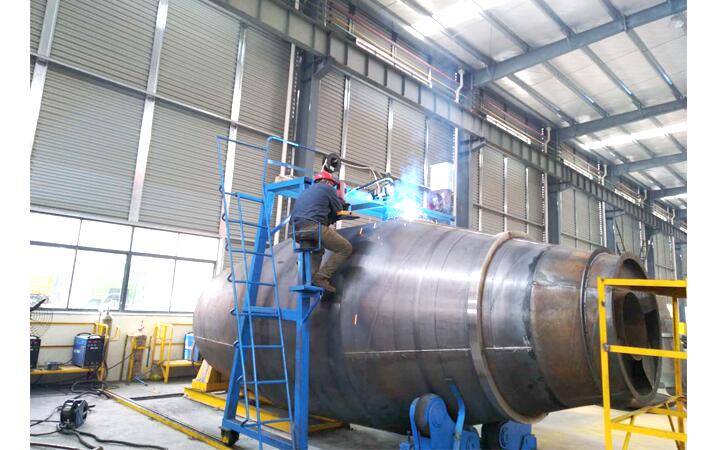 Concrete Mixer Drum Robotic Welding Solutions
 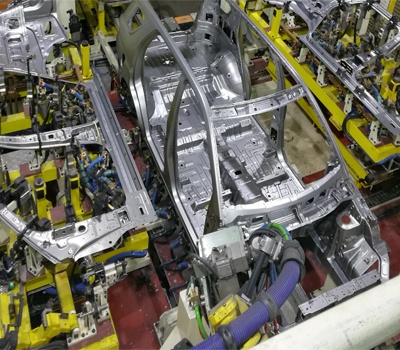 Automobile Body Production Line Welding Fixtures
 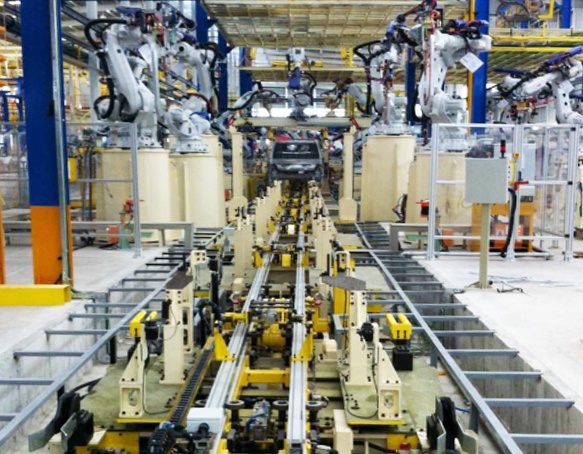 Automotive Body Welding Automated Manufacturing Solutions
 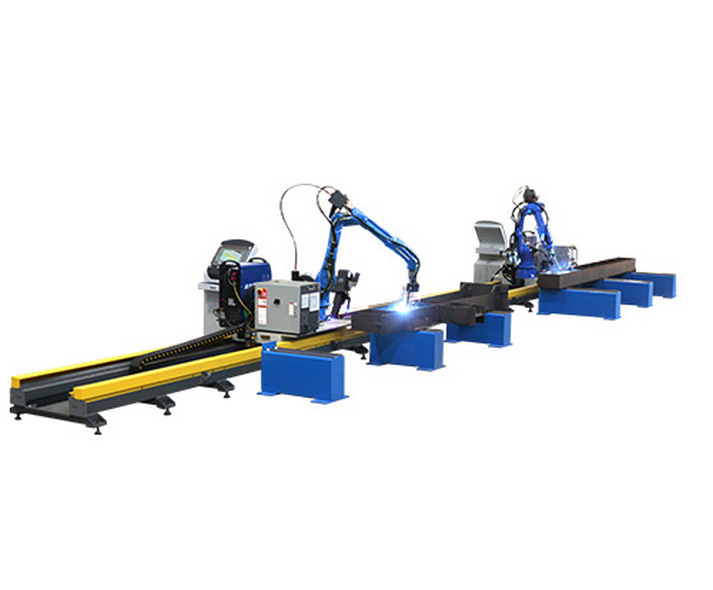 Free-Teaching Programming Welding Robot Cell For I Beam Welding
  No Programming Required Robotic Welding Systems for H beam Welding Line