+86 15633683072
If you open any exchanger after ten years of service, you’ll notice something interesting: failures rarely start in the shell or baffles. They begin inside the tube to tube sheet joint.
So when engineers talk about tube to tubesheet joint type as per ASME, they are really talking about load paths, thermal fatigue, and manufacturing discipline—not paperwork.
From the viewpoint of a factory building orbital systems, the joint is where design theory meets real metal.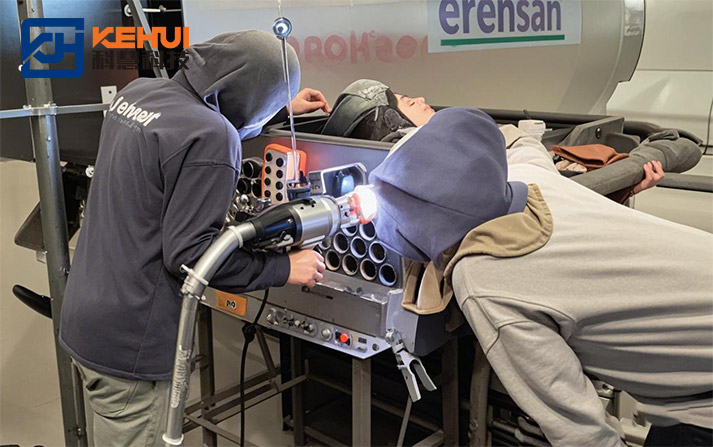
ASME doesn’t force a single tube to tubesheet joint method. Instead, it tells you what the joint must survive: pressure, corrosion allowance, thermal cycles, inspection criteria.
That leaves engineers with choices. The most common configurations are:
Pure expansion
Expansion plus seal weld
Full tube to tubesheet strength weld
Hybrid expansion + strength weld
Each tube to tube sheet joint option carries different stress distribution and inspection logic.
The standard is flexible. The physics is not.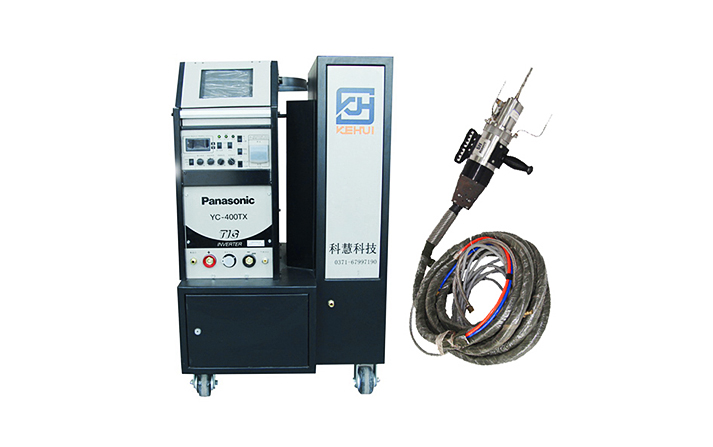
Tube to tubesheet expansion relies on controlled plastic deformation. Rollers expand the tube against the hole wall, creating frictional holding force.
A typical tube to tubesheet expansion joint is quick to produce and ideal for large tube counts. It’s also forgiving with slight hole tolerance variation.
But here’s the engineering truth: expansion creates contact pressure, not metallurgical bonding. Under long thermal cycles, relaxation can reduce sealing ability.
This tube to tubesheet joint works well in moderate duty exchangers, cooling water units, and systems with low pressure variation.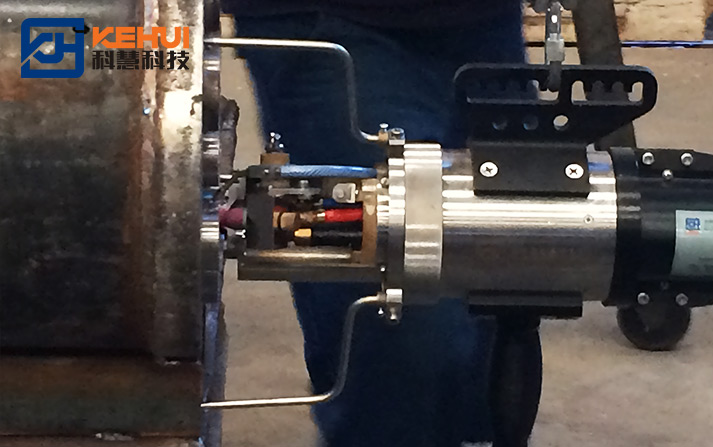
When pressure rises, designers switch strategy. They move to tube to tubesheet strength weld solutions.
In this approach, the weld itself becomes load-bearing. The tube to tube sheet joint must carry axial force, not just prevent leaks.
Advantages include:
Stable joint under vibration
Better high-temperature reliability
Predictable inspection results
But welding quality must be extremely consistent. In a bundle with 2,000 tubes, small arc variation becomes big reliability risk.
That’s why many manufacturers rely on an automatic tube to tubesheet welding machine. Orbital automation keeps arc length, travel speed, and heat input identical across every joint.
For critical exchangers, automation isn’t luxury—it’s insurance.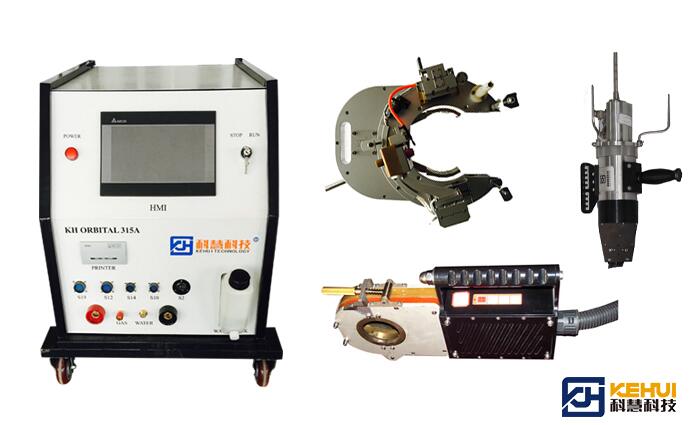
For high-pressure petrochemical or power plant exchangers, engineers often combine tube to tubesheet expansion with tube to tubesheet strength weld.
The expansion provides alignment and preload. The weld provides structural capacity.
This hybrid tube to tubesheet joint distributes stress more evenly across tube wall and weld toe. It also improves resistance to fatigue cracking.
However, sequence control matters. Expansion percentage must match welding parameters. Distortion must be predicted.
A precision automatic tube to tubesheet welding machine helps maintain repeatability, especially in dense tube layouts where manual access is limited.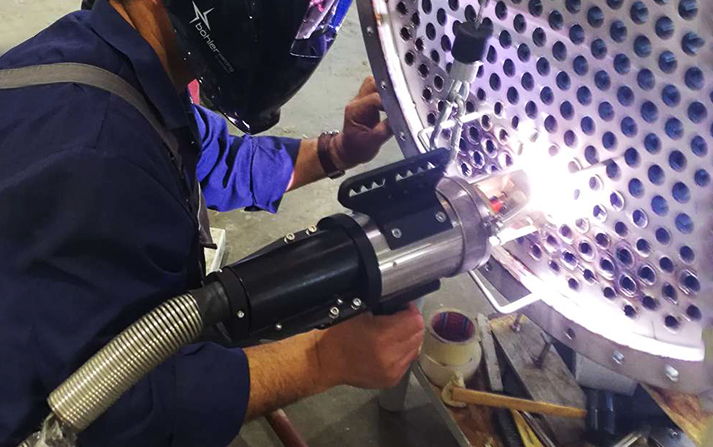
Selecting the correct tube to tubesheet joint is a design exercise backed by production reality. Engineers should evaluate:
Operating pressure and temperature
Tube material ductility
Corrosive environment
Inspection method
Maintenance interval
If the exchanger sees heavy cyclic load, a tube to tubesheet strength weld becomes necessary.
If service is mild and cost sensitive, a controlled tube to tubesheet expansion joint may be enough.
But in all cases, consistency of the tube to tube sheet joint determines real-world performance.
From our shop floor experience, the biggest improvement in exchanger reliability comes not from changing joint type—but from stabilizing the welding process.
A well-designed automatic tube to tubesheet welding machine removes operator variation, controls arc behavior, and ensures uniform penetration across thousands of tubes.
Design defines the tube to tubesheet joint concept.
Process control makes it real.
That’s the practical meaning behind tube to tubesheet joint type as per ASME: understanding not only which joint to choose—but how to produce it the same way, every single time.
Zhengzhou Kehui Technology Co., Ltd
Email: info@zzkehui.com





 Chinese
 English
 OA
OA Current location:
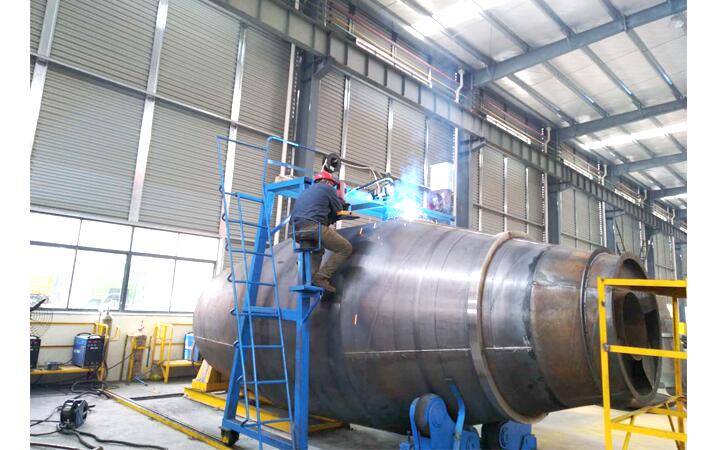 Concrete Mixer Drum Robotic Welding Solutions
 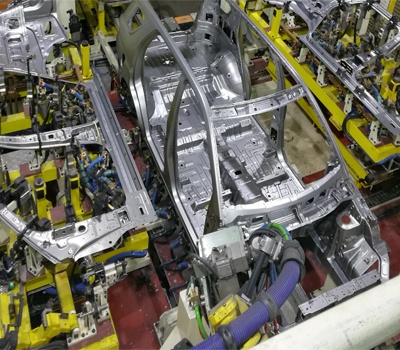 Automobile Body Production Line Welding Fixtures
 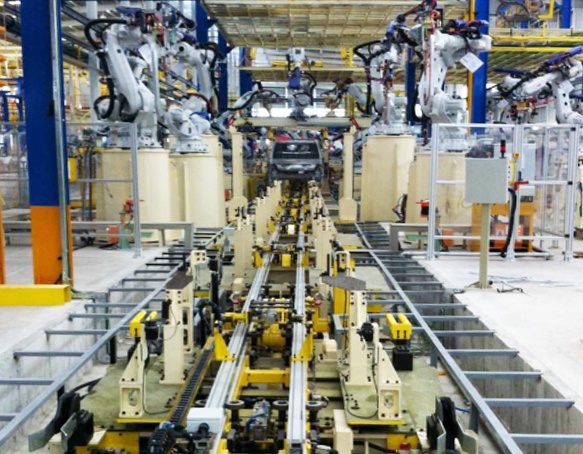 Automotive Body Welding Automated Manufacturing Solutions
 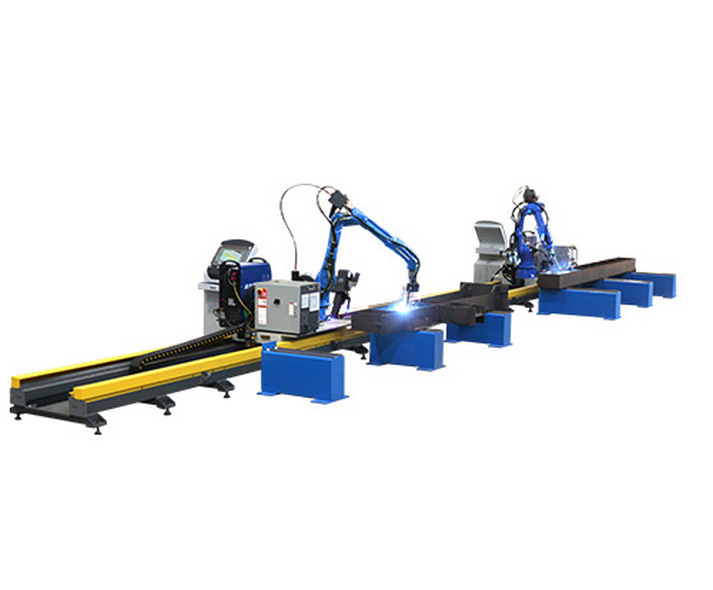 Free-Teaching Programming Welding Robot Cell For I Beam Welding
 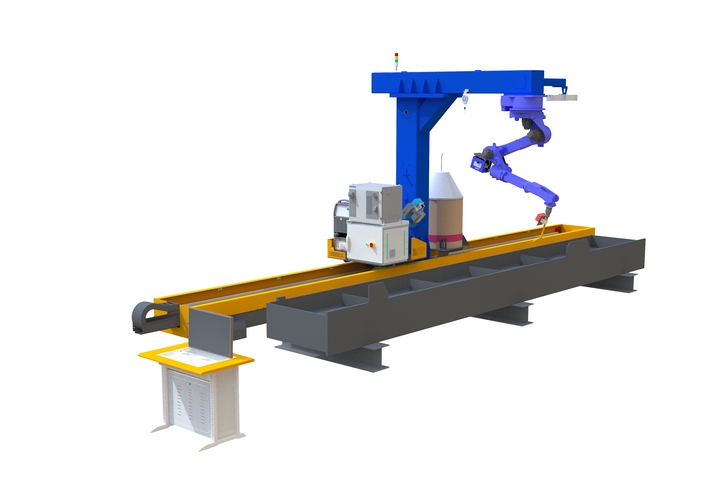 No Programming Required Robotic Welding Systems for H beam Welding Line