How Are Robots Used in the Manufacturing Industry?
2025-12-10 11:31:41
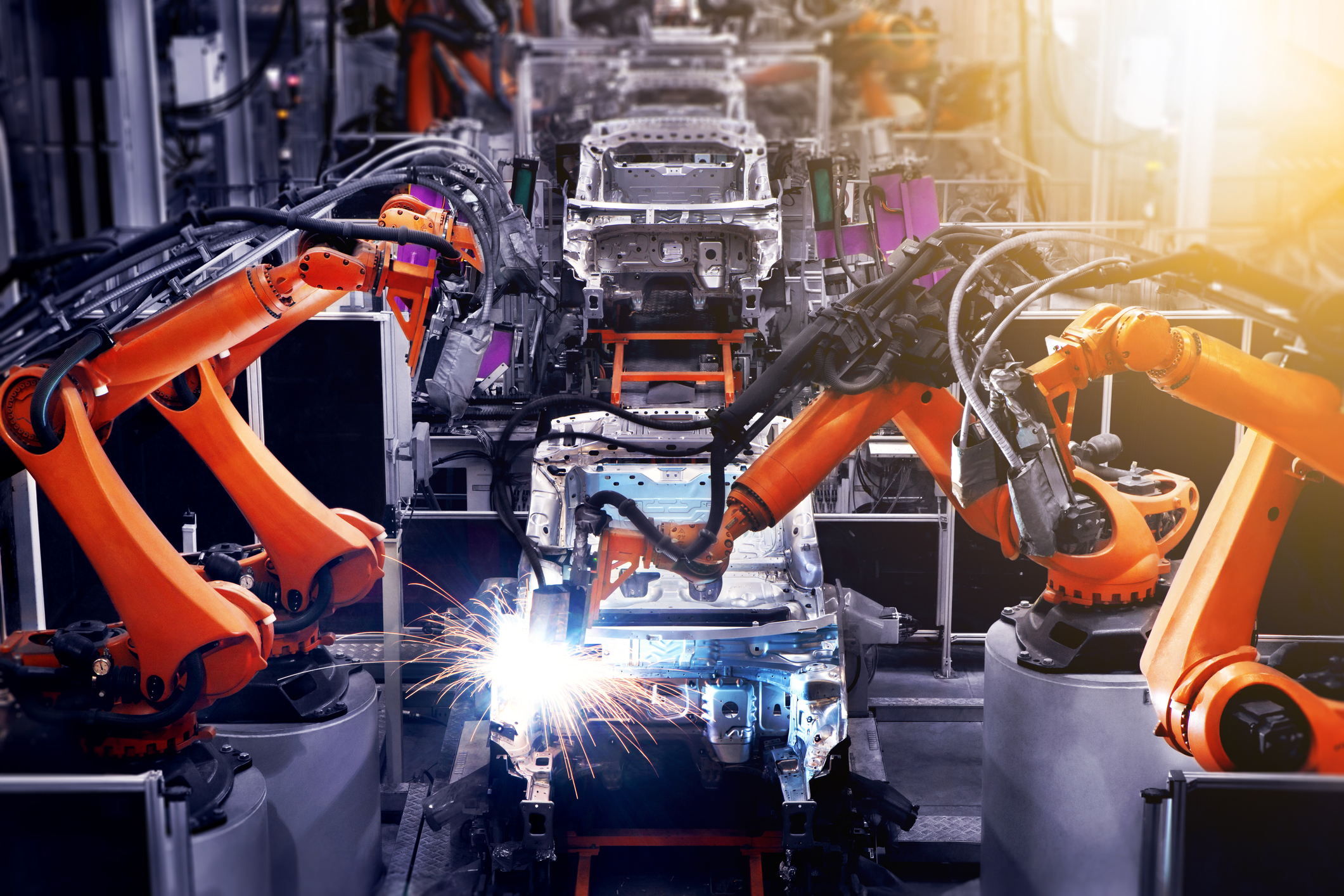
As automation accelerates worldwide, the question “how are robots used in the manufacturing industry” is moving beyond traditional welding or assembly tasks. Today, the application of robot in manufacturing industry extends into new, highly intelligent domains that redefine efficiency, flexibility and resilience in modern factories. Instead of simply replacing manual labor, robots used in industry are becoming strategic tools that enable manufacturers to build smarter, greener and more adaptive production ecosystems.
Below are future-driven, non-traditional trends that illustrate how the use of robots machines in industrial facilities is evolving far beyond what people usually imagine.
1. Robotics in Hyper-Flexible, Multi-Product Production Lines
Traditional robotic cells were designed for single-product, high-volume manufacturing. Modern factories, however, need fast SKU changes, customization and small-batch production.
The new generation of robots used in industry has the following characteristics:
AI-based auto-programming that generates welding or machining paths automatically
Multi-tool end-effectors enabling cutting, grinding, welding and inspection with one unit
Vision-guided positioning allowing robots to work with varying part sizes
This new flexibility answers the core question: how are robots used in the manufacturing industry when product cycles are only months long? They act as “universal operators” capable of adapting as quickly as the market.
2. Autonomous Material Flow and Intelligent In-Factory Logistics
AMRs that deliver materials to robotic welding cells
Robotic forklifts navigating without human drivers
Palletizing robots linked to real-time MES production scheduling
These systems eliminate bottlenecks caused by manual transportation and create a fully synchronized, data-driven manufacturing flow.
3. Human–Robot Collaboration for High-Skill Precision Tasks
In many plants, certain operations require the precision of a machine but the judgment of an expert. This is where collaborative robots (cobots) emerge as a new application of robot in manufacturing industry.
Cobots assist in:
Precision component fitting
Fine laser welding
Quality testing and tactile inspections
Medical device assembly
Robots used in industry do not replace workers, but rather enhance human capabilities and significantly reduce defect rates.
4. AI-Driven Predictive Welding, Cutting and Assembly
Next-generation industrial robots are no longer “repeaters”—they think.
AI-enhanced robots can:
Detect weld pool instability
Predict tool wear before failure
Auto-adjust cutting parameters in real time
Identify defects with 3D vision and deep learning
This type of intelligence explains how robots are used in the manufacturing industry to achieve previously impossible levels of precision and repeatability.
5. Robotic Sustainability and Energy Optimization
Manufacturers face increasing pressure to reduce carbon footprint. Robots are now essential tools for green manufacturing.
Emerging trends include:
Robots optimizing spray patterns to reduce paint waste
Robotic grinding systems that recycle abrasives
Energy-aware robots that adapt speed based on carbon intensity
Automated disassembly systems for recycling and end-of-life processing
Thus, the use of robots machines in industrial facilities contributes directly to sustainability goals.
6. Digital Twin Production Lines Driven by Robotic Data
One of the most innovative applications of robots in manufacturing industry is the creation of digital twins—virtual replicas that simulate processes in real time.
Robots provide live data for:
Cycle time optimization
Collision prediction
Layout design and capacity planning
Real-time process monitoring
Manufacturers can then modify production virtually before changing anything in the physical plant, saving major cost and downtime.
7. How Are Robots Used In The Manufacturing Industry Today?
Beyond welding and assembly, robots used in industry are becoming intelligent partners that support logistics, quality control, flexible manufacturing and sustainability. The use of robots machines in industrial facilities is no longer limited to heavy-duty tasks—it's expanding into strategy, decision-making and continuous optimization.
As factories shift toward digital-first, demand-driven production, the application of robot in manufacturing industry will continue to accelerate, powering a new era of adaptive, autonomous and future-ready manufacturing.





 Chinese
 English
 OA
OA Current location:
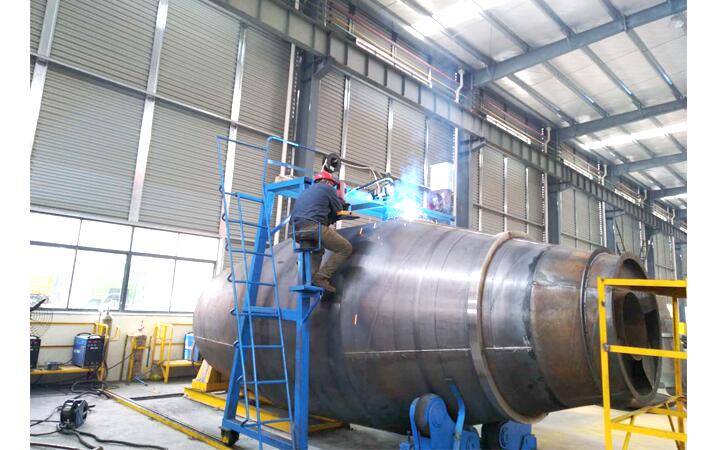 Concrete Mixer Drum Robotic Welding Solutions
 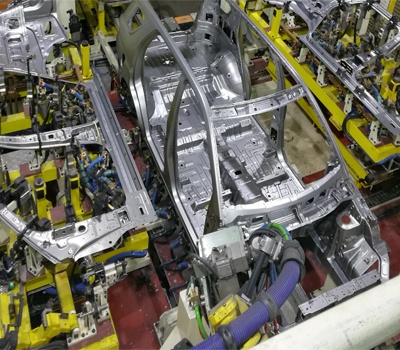 Automobile Body Production Line Welding Fixtures
 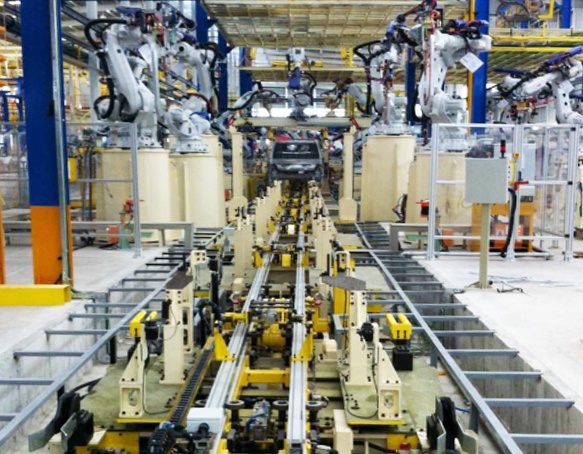 Automotive Body Welding Automated Manufacturing Solutions
 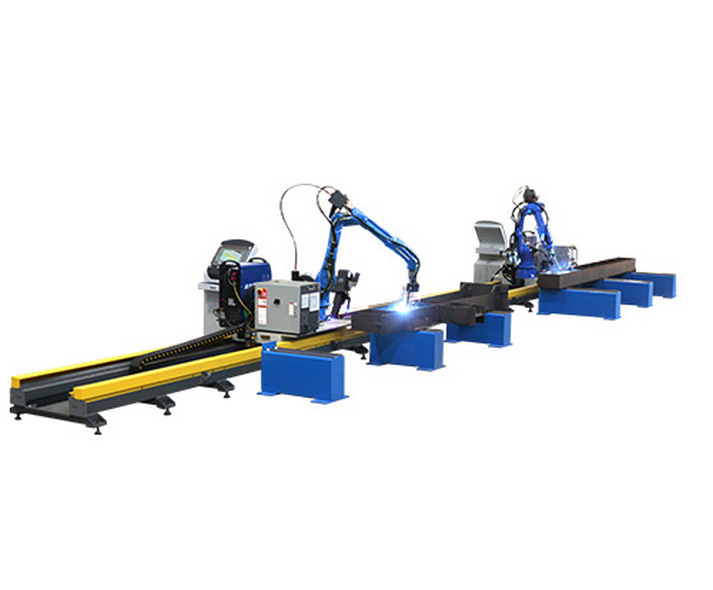 Free-Teaching Programming Welding Robot Cell For I Beam Welding
  No Programming Required Robotic Welding Systems for H beam Welding Line