Orbital Welding Tube to Tubesheet for Heating Equipment
2026-03-09 16:24:35
There is a specific sound when an orbital welding tube to tubesheet arc stabilizes—that high-frequency crackle settles into a steady hum, and you know the joint is going to hold. We have been building orbital welding machine for tube to tubesheet welding systems for over a decade, mostly for guys who build heating equipment. Boilers, heat exchangers, fired heaters—if it moves heat from one place to another, somebody had to weld every tube into every tubesheet.
Here is what we have learned watching customers do this work: heating equipment is brutally unforgiving. The orbital welding tube to tube-sheet weld head has to handle thermal cycles that would make most manufacturing equipment quit. The joint sees differential expansion, pressure spikes, and sometimes water chemistry that eats at everything. When that joint fails, somebody loses heat, loses production, or loses sleep.
What Heating Equipment Actually Demands from a Weld
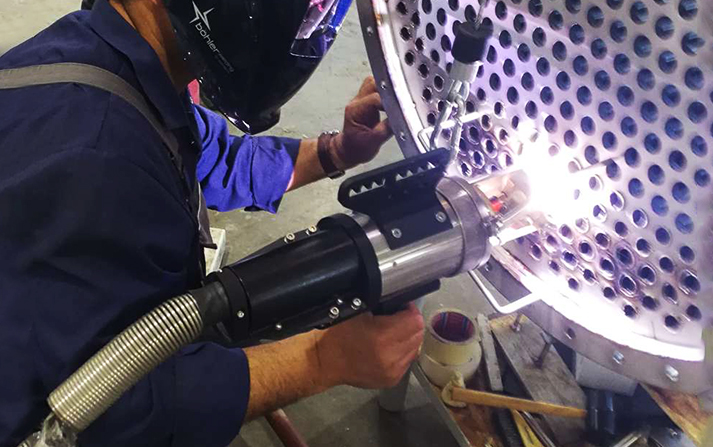
Let us get specific about what happens inside a boiler or heat exchanger. The tube sheet to tube orbital welding head is not just making a connection—it is creating a pressure boundary that separates two different environments. On one side, maybe combustion gases at 1000°F. On the other side, water trying to turn into steam. The orbital tube to tube sheet weld head has to deliver penetration that creates a full bond without burning through thin-walled tubing.
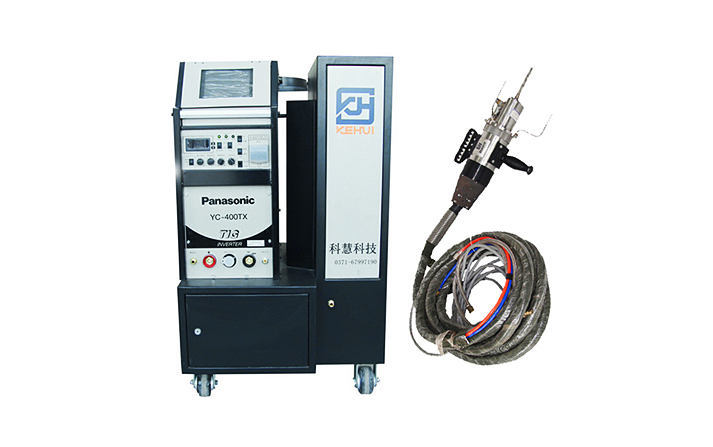
The tube-to-tube-sheet orbital welding heads we build are designed for exactly this. Water cooling runs through the entire head body, so you can run production all shift without thermal shutdown . The enclosed design keeps shielding gas exactly where it needs to be—around the weld puddle, not dissipating into the shop air . For oxidation-sensitive materials like titanium or stainless, that closed chamber makes the difference between a weld that looks good and one that hides porosity .
Why the Weld Head Design Matters More Than You Think
When a customer calls asking about an orbital welding machine for tube to tubesheet welding, they usually start with tube diameter and material. Those matter. But what really determines whether their heating equipment lasts twenty years is the orbital welding tube to tube-sheet weld head design.
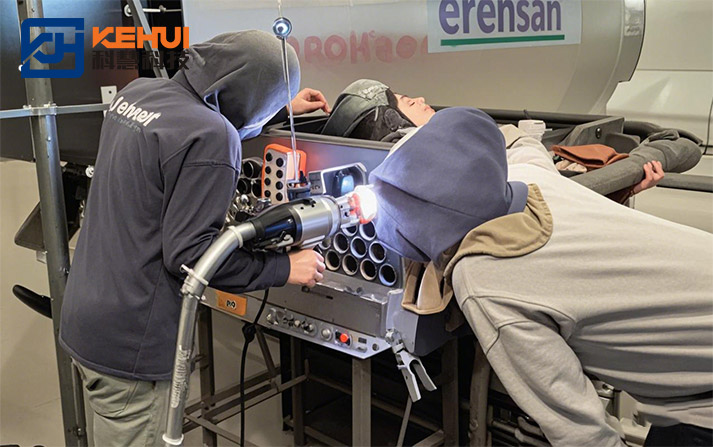
The centering system has to be dead accurate. Our heads use elastic positioning mandrels that expand inside the tube ID, locking the head concentric with the tube axis . If that centering is off by half a millimeter, your arc length varies around the circumference, penetration varies, and eventually you get a leak path that shows up during hydrotest—or worse, during operation.
Tungsten adjustment matters too. The orbital welding tube to tubesheet process needs the electrode positioned exactly relative to the joint. Too far, and the arc wanders. Too close, and you risk tungsten inclusion. Our heads allow adjustment in three axes, and once you set it for a given tube size, it stays there until you change collets . That repeatability is what lets a operator run multiple heads simultaneously, checking welds while the machine works.
The Physics of Welding Heating Equipment
Heating equipment joints see gravity working against you. When you are welding a vertical tubesheet, the puddle wants to sag at certain positions. A good tube sheet to tube orbital welding head compensates by pulsing current—high amperage to establish fusion, low amperage to let the puddle freeze before it can drip .
The power source has to respond faster than any human could. Pulse frequencies from 0.5 to 500 Hz let you tune the weld characteristics for different materials . Stainless needs different pulse parameters than carbon steel, which needs different settings than the nickel alloys showing up in high-efficiency boilers.
We also see more customers running filler wire, especially for thicker tubesheets where fusion welding alone might leave insufficient throat thickness. The orbital tube to tube sheet weld head has to integrate that wire feed without twisting or binding as the head rotates . That means the wire guide has to rotate with the torch, not fight it.
Joint Configurations That Actually Work
Heating equipment designers love to spec different joint geometries, and the orbital welding tube to tubesheet head has to handle all of them.
Flush tubes are the most common—the tube end sits even with the tubesheet face, and the weld fuses the two together without filler . This works for thin walls and lower pressures. For higher pressures, you see protruding tubes where the tube extends past the face, and you lay a fillet weld around the outside . That fillet adds throat thickness and increases load capacity.
Recessed tubes are the trickiest—the tube ends below the tubesheet surface, and you have to weld inside a cavity. The orbital welding tube to tube-sheet weld head needs a different torch geometry and usually requires filler wire to build up the joint . We have customers building high-pressure feedwater heaters that use this configuration exclusively, and the heads have to reach into that recess without crashing.
What We Tell Heating Equipment Manufacturers
When a boiler shop asks us about orbital welding machine for tube to tubesheet welding, we start with their production volume and joint requirements. If they are welding 500 tubes per heat exchanger and building one unit per month, maybe a single-head system makes sense. If they are running production lines, they need multiple heads and the ability to switch between them while one welds.
The tube-to-tube-sheet orbital welding heads we build handle tube diameters from 12mm to 80mm standard, with custom options for larger or smaller . Wall thickness up to 10mm is routine, though most heating equipment stays under 5mm. The heads weigh around 6.5kg, which means operators can position them by hand without cranes, but they are solid enough that vibration does not affect weld quality .
Cooling is non-negotiable for production. Water runs through channels in the head body, keeping the drive motor and bearings at stable temperatures even when running 300 amps continuously . Air-cooled heads overheat, duty cycles drop, and production stops. Water-cooled heads run all day.
The Bottom Line on Heating Equipment Welding
Industrial heating equipment is not getting easier to build. Tubes get thinner, pressures go higher, and efficiency demands mean every joint has to be nearly perfect. The orbital welding tube to tubesheet process exists because manual welding cannot deliver that consistency across thousands of joints.
The orbital welding machine for tube to tubesheet welding systems we build are tools—precision tools, but tools nonetheless. They execute procedures developed on mock-ups, run qualification tests, and then reproduce those results for every tube in every bundle. When the welding head closes around a tube and the arc starts its orbit, you know exactly what you are going to get: a joint that meets code, passes inspection, and keeps heat moving where it belongs.
Stop by our shop sometime. We will run samples on your material, show you how the orbital welding tube to tube-sheet weld head centers and clamps, and help you figure out which configuration actually makes sense for your heating equipment. No jargon, no pressure—just decades of watching arcs dance and helping people build better boilers.





 Chinese
 English
 OA
OA Current location:
 Concrete Mixer Drum Robotic Welding Solutions
 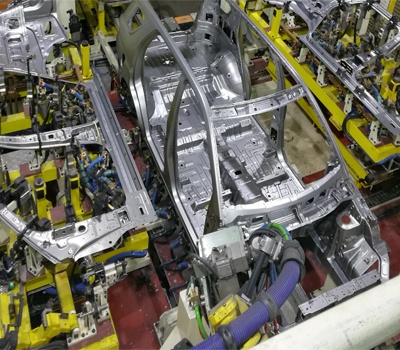 Automobile Body Production Line Welding Fixtures
 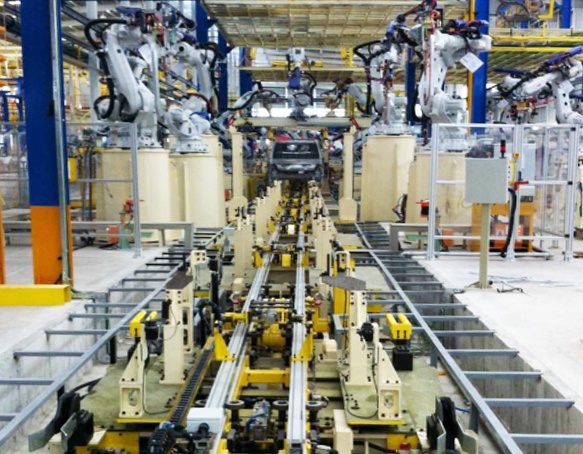 Automotive Body Welding Automated Manufacturing Solutions
 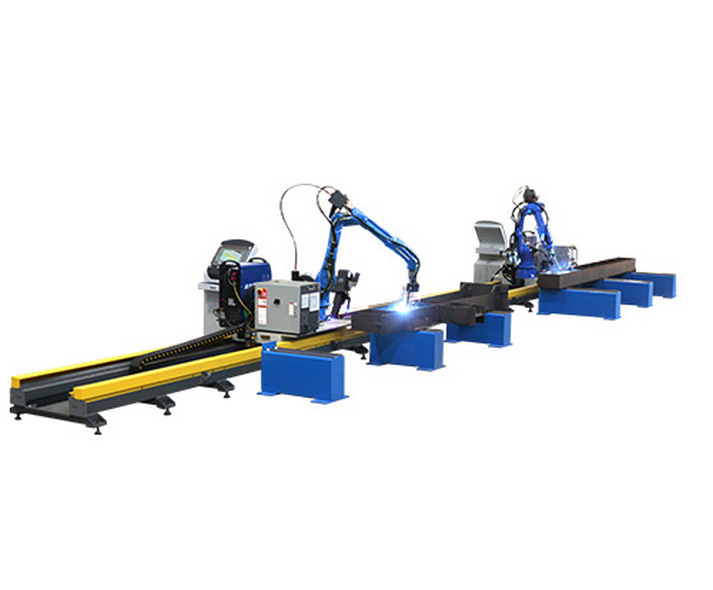 Free-Teaching Programming Welding Robot Cell For I Beam Welding
 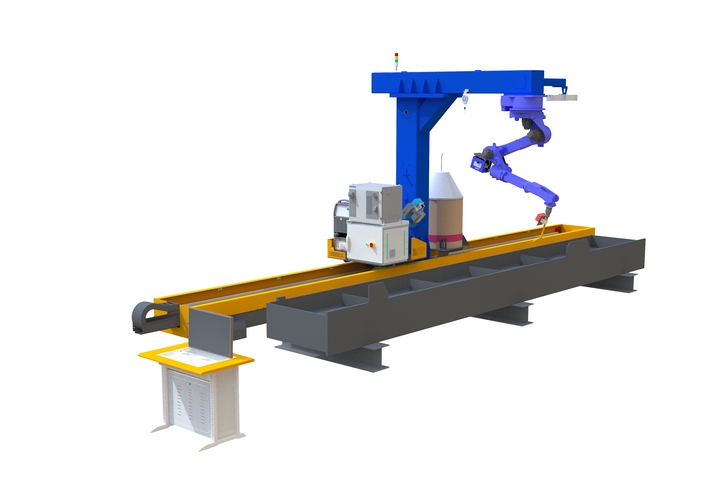 No Programming Required Robotic Welding Systems for H beam Welding Line